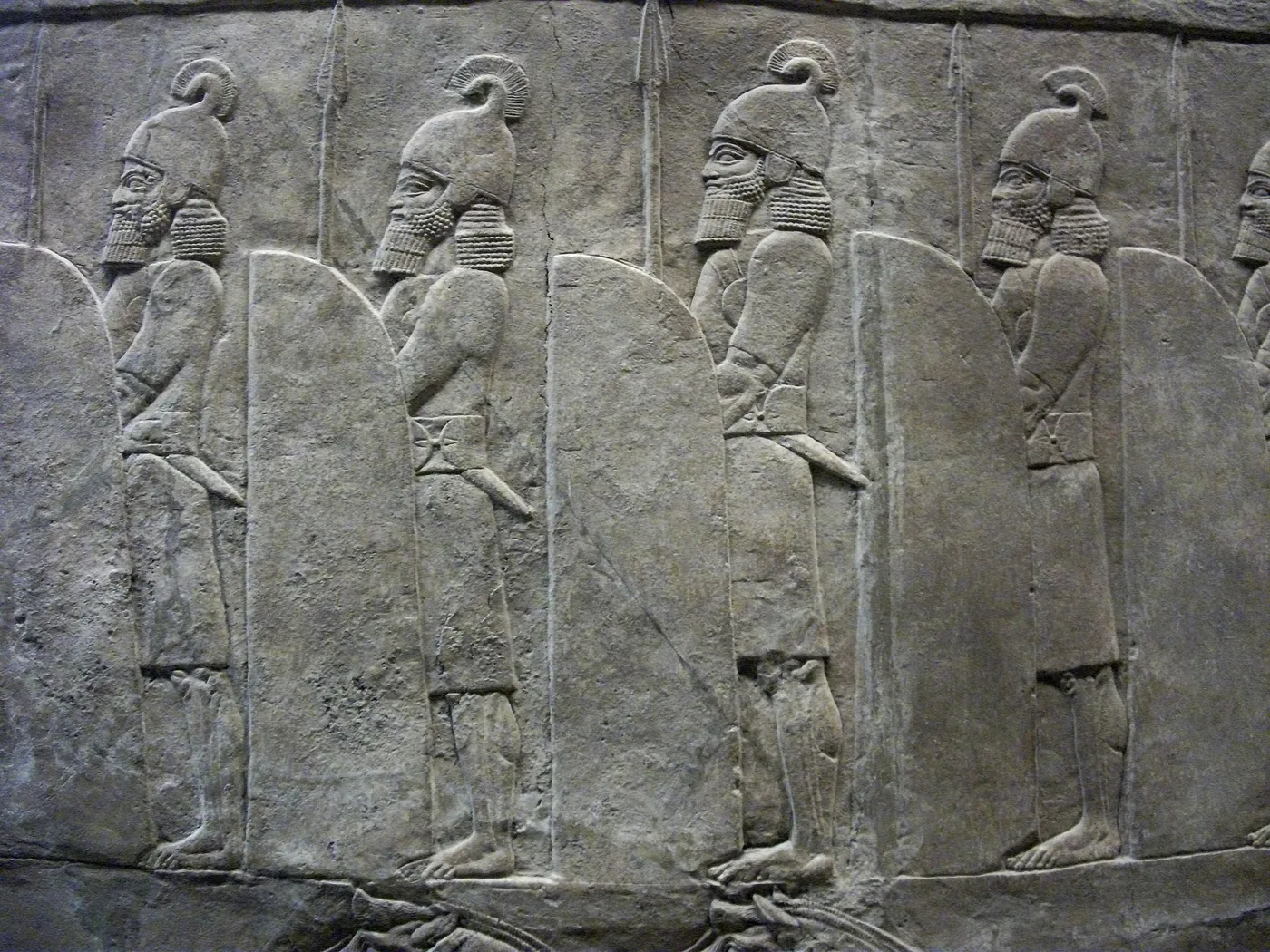
Description
The large shield was a long, oblong shield. It was about the height of a man since it was intended to protect the entire body. It could be made of wood, metal, leather stretched over wood, or even plaited strips of wood or reeds.
Usage
This shield was held with one hand by means of straps attached to its back. A warrior who held his sword in his right hand would hold his shield with his left hand, and vice versa. The shield was held between the warrior and his opponent and was used to ward off blows from swords, spears or clubs, as well as to stop any missiles such as arrows, stones, or javelins. In the story of David fighting the giant Goliath (1SA 17:0), a servant stood in front of Goliath holding the giant’s shield.
Translation
In some languages “shield” is rendered “protection a person carries when he fights” or “protection carried to prevent blows from the enemy.” In passages where “shield” is used figuratively, it is possible to preserve the element of protection while avoiding translating the actual piece of armor; for example, “his faithfulness is a shield and buckler” (PSA 91:4 in RSV) may be rendered “God keeps his promises and will protect and defend you.”
The Hebrew word tsinah is sometimes used metaphorically of God as protector (see PSA 5:13 and PSA 91:4 and the discussion at Small shield, buckler).
In EZK 26:8 the Hebrew word tsinah indicates a special large shield, known technically as a mantelet (see Mantelet), which was held above or in front of soldiers engaged in siege activities. While the Hebrew word is singular, such cover was normally made of many such shields. So for the last part of this verse, GNT has “make a solid wall of shields against you” and CEV says “set up rows of shields around you.”
In the Septuagint the Greek word kalumma refers to the veil or a cloth covering furniture in the Tabernacle. In 1MA 4:6 almost all translations render it as some piece of protective “armor” (RSV, CEV). In 1MA 6:2 some render it “shields” (RSV, CEV), while NAB and Goldstein prefer “helmets.”