Reference
Description and usage
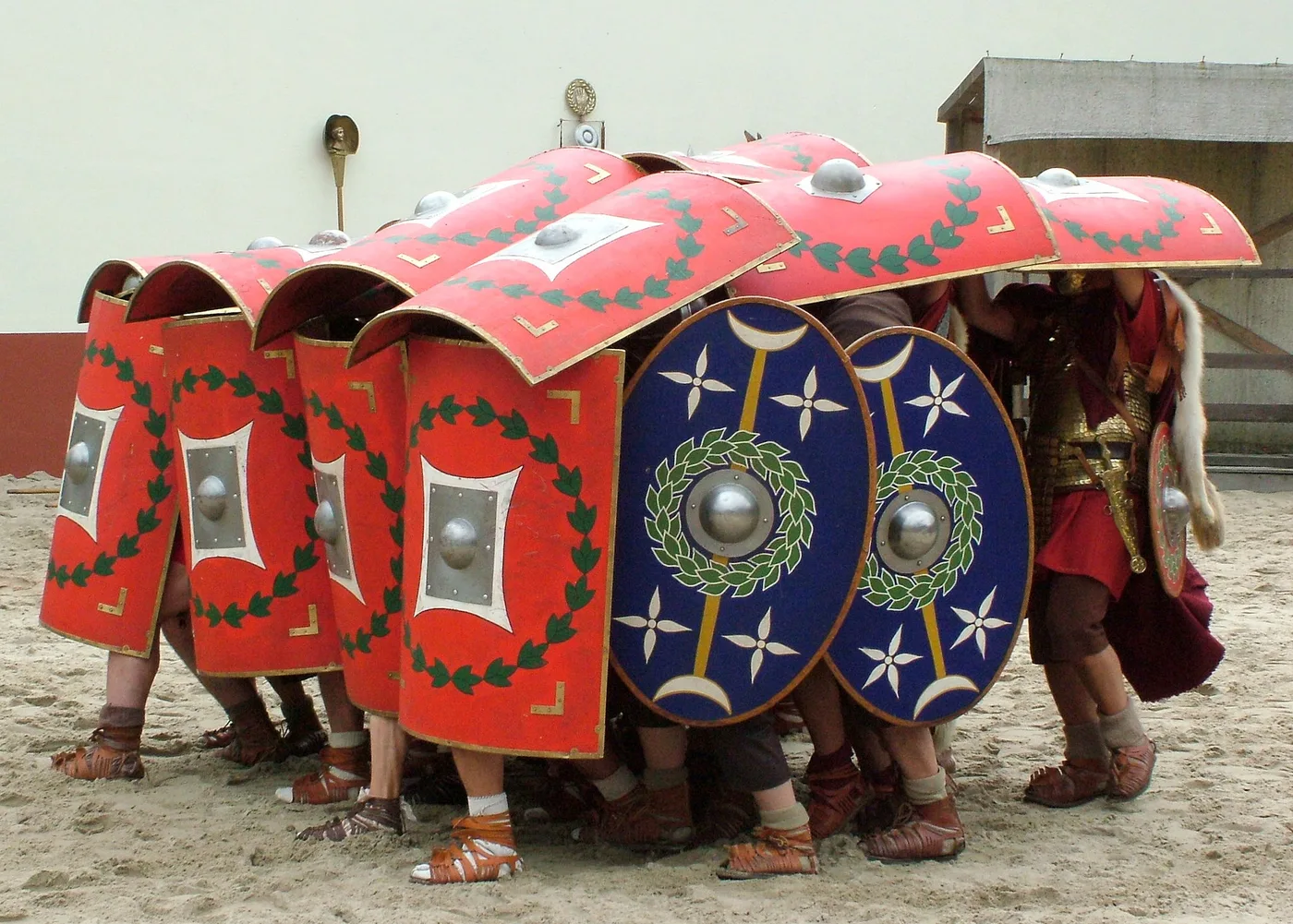
The soldiers who operated a battering ram were exposed to attack from above by the defenders of the city. In order to protect them, there was a large protective shield (called a mantelet) over their heads. Sometimes the mantelet was part of the mechanism that carried the battering ram; sometimes it was formed by other soldiers who overlapped individual shields (see Large shield) above their heads.
Translation
Many languages will have no word for this ancient warfare technique. In languages that do have a word, like English, it may be so obscure that the average reader will not be familiar with it. It will usually be best to use a descriptive phrase; for example, in NAM 2:6 b) CEV has “they hasten to build a shelter to protect themselves against rocks thrown down from the city wall” (CEV), and ITCL says “the enemies have launched an attack on the wall, all of them huddled tightly under their shields.” GECL “the enemy has already erected the protective shelters for his storm troops” could leave the impression that the “protective shelters” are a kind of barracks or secure camp. Where possible, it is advisable to add an explanatory footnote.