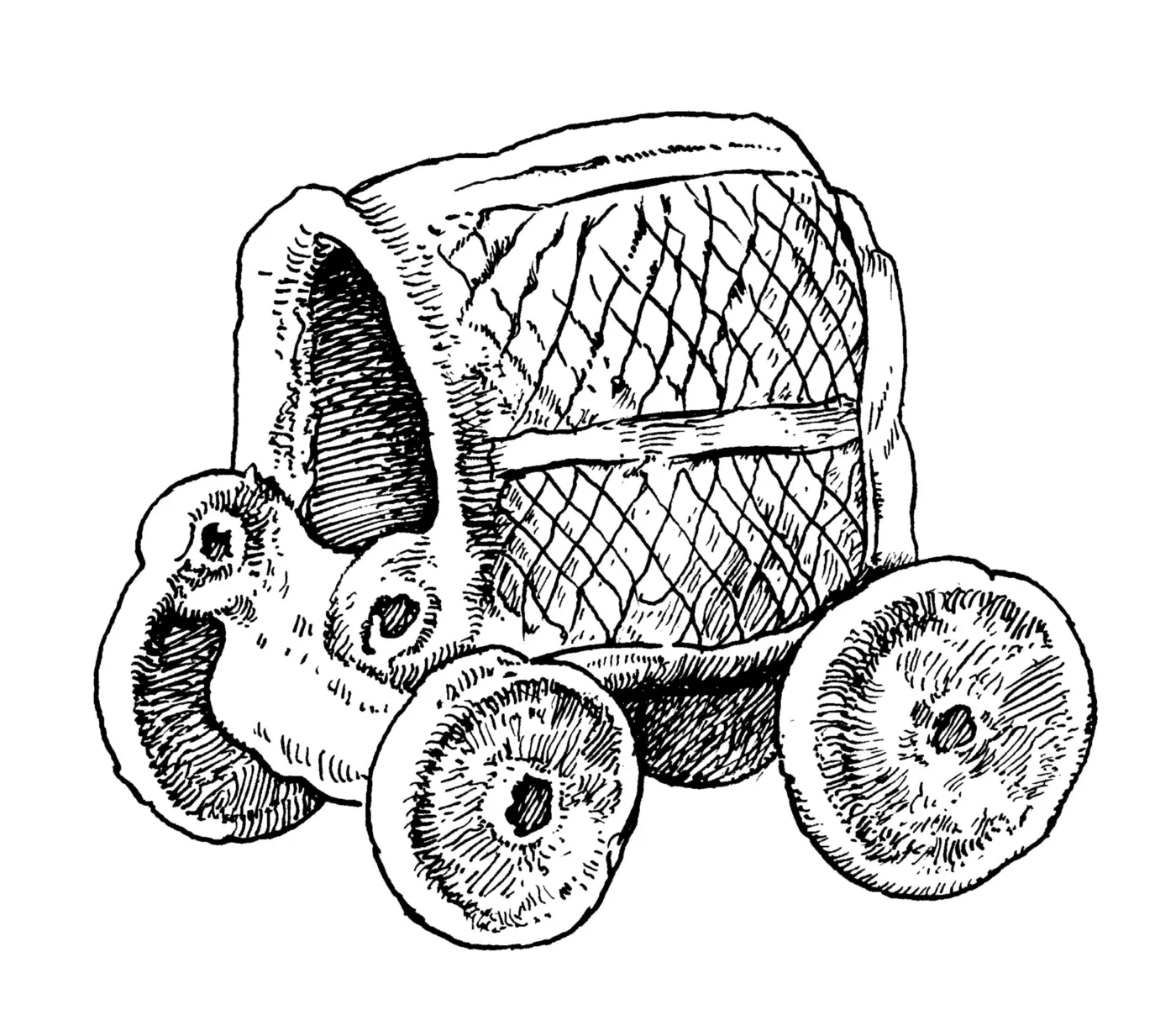
Description and usage
The wagon was a two or four-wheeled carriage or cart used for travel or the transport of loads. Such vehicles were usually made of wood. They were pulled by draft animals, usually oxen, donkeys, or horses. These animals were attached to a long pole that was in turn attached to the front of the wagon. The upper section of the wagon was often formed by crossed wooden bars in the shape of a cage.
Translation
Wagons and carts in the Bible were always pulled by animals. Translators should avoid any word for “wagon” that indicates a vehicle propelled by an engine.
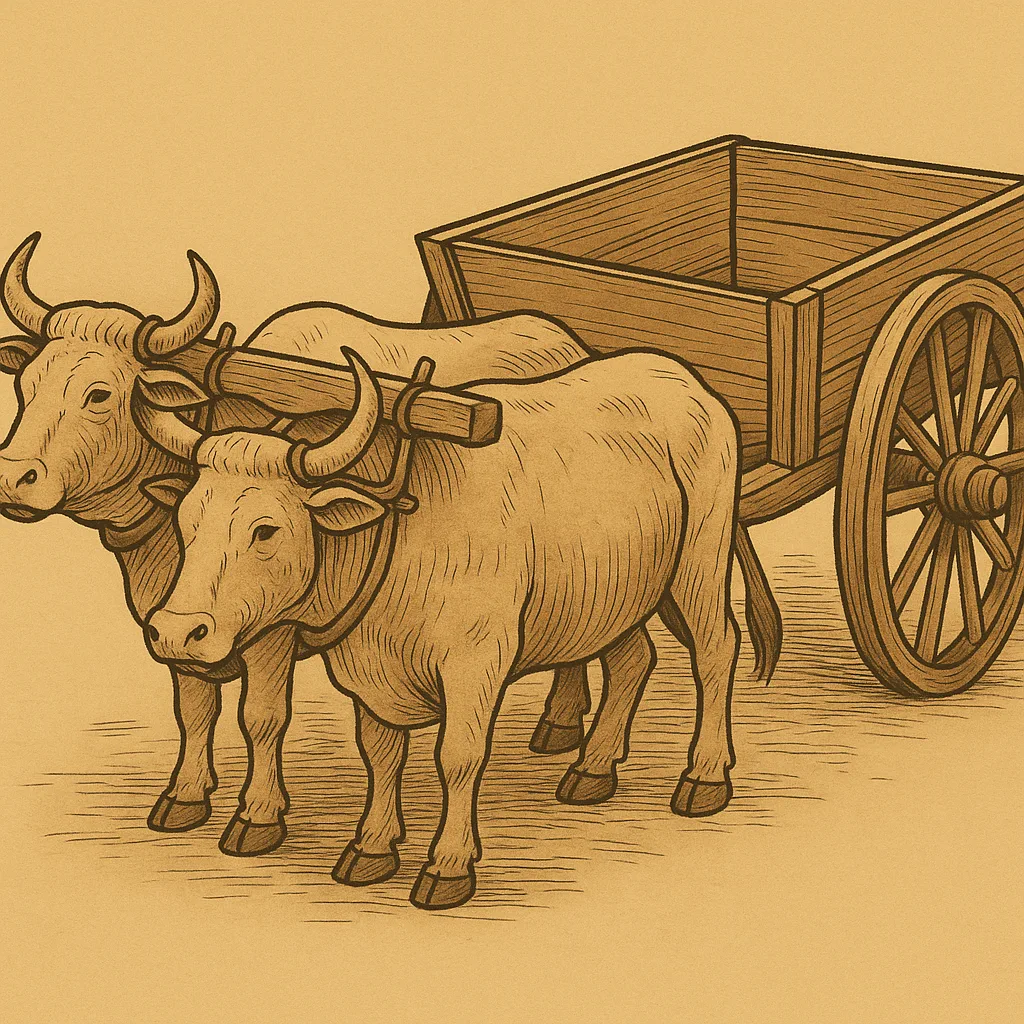
EZK 23:24; EZK 26:10: The Hebrew word galgal is literally “wheel.” In the context of these verses, it is clear that this is a metonym for a vehicle with wheels, that is, a cart or wagon.
1ES 5:53: In this verse some Greek manuscripts have the word chara (“joy”), which makes no sense in this context. One manuscript has the word karron, meaning “wagon” as described above.