Reference:"
Discussion
There is considerable disagreement about the meaning of the word choled. The root of the word may be a form related to a verb meaning “to dig". Those who accept this translate choled as either “mole” (which is not indigenous to the land of Israel) “mole rat” or “rat". However there is another more likely Semitic root for the word which means “to creep", or “wriggle". Those who accept this latter derivation translate choled as “weasel".
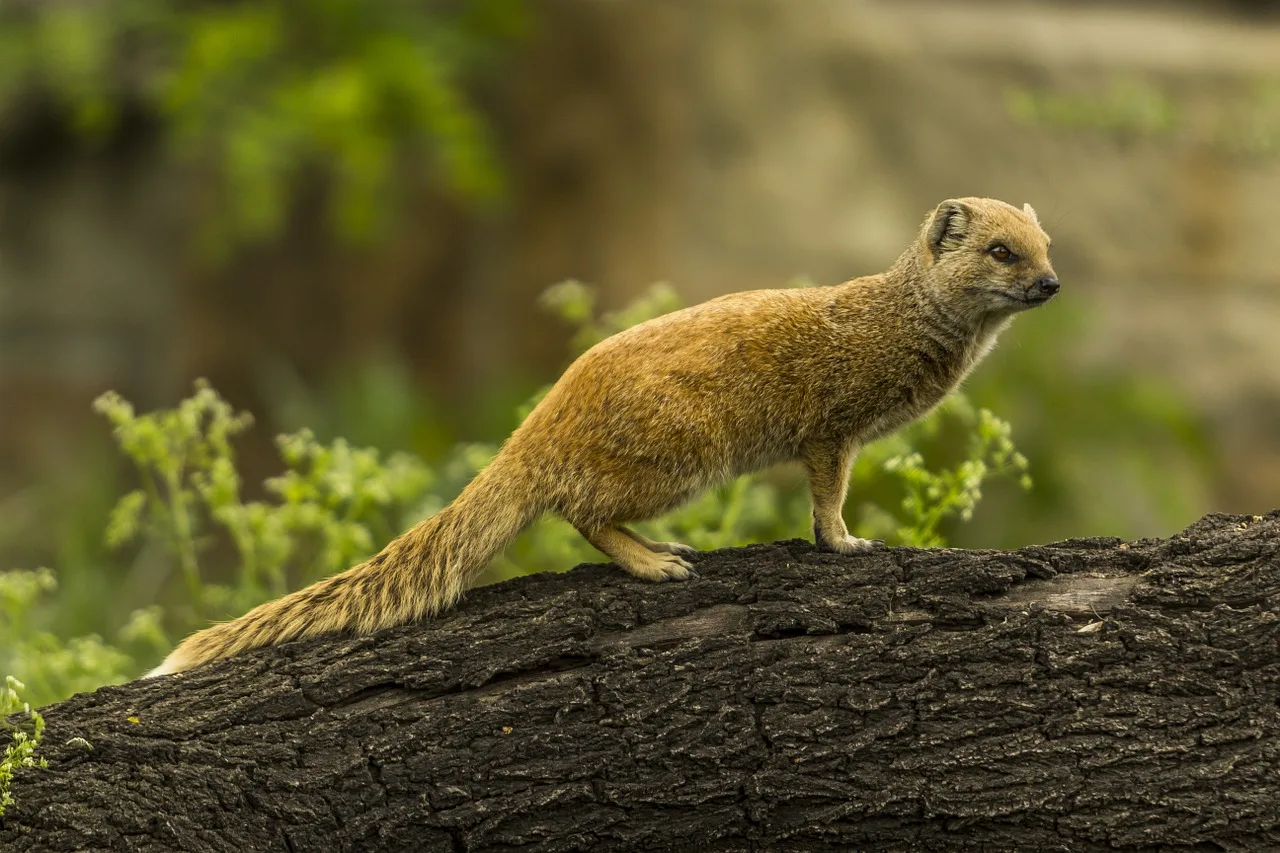
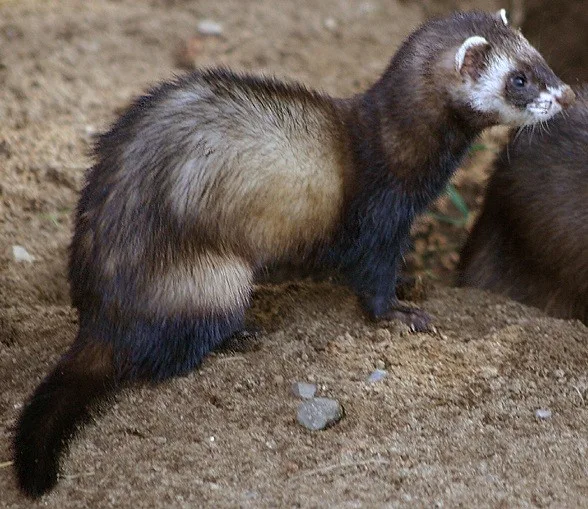
The true Weasel Mustela nivalis was found in Israel and Jordan perhaps as late as the nineteenth century. However a much more common animal is the weasel-like Egyptian Mongoose Herpestes ichneumon an animal that was sacred to the ancient Egyptians and associated with the moon goddess. Another weasel-like animal reported in Israel is the Marbled Polecat Vormela peregusna. Any of these three animals could be the choled of the Bible. A majority of zoologists support the mongoose its association with Egyptian religion would also make it a likely candidate.
Description
Weasels are small carnivorous animals with long bodies and short legs, a little larger than a big rat. They eat mice, small birds, frogs, and birds’ eggs. They are reddish brown with white underparts. They move very fast and are constantly moving. They seem to glide over the ground. They are small enough to fit into large mouse holes. They are active in the day and the night.
The Egyptian mongoose is larger than the weasel about eighty centimeters (2.5 feet) from nose to tail tip. It also has a long body and short legs. It is gray all over with a black tip to its tail. It lives in reed beds and thick undergrowth and eats mice, rats, lizards, snakes, chickens, birds, insects and eggs, hunting both day and night.
Special significance or symbolism
This animal is in the list of unclean animals in Leviticus.
Translation
In Asia one of the Asiatic mongooses or civets is the closest equivalent. In North and Central America one of the local weasels or skunks, and in Africa one of the larger mongooses or polecats are the obvious choices. In Australasia the Native Cat Dasyurus quoll or Dasyurops maculatus, or the Tasmanian Devil Sarcophilus harrisii would be reasonable equivalents. Elsewhere, a term like “rat-eater” or a transliteration will have to be used.