Discussion
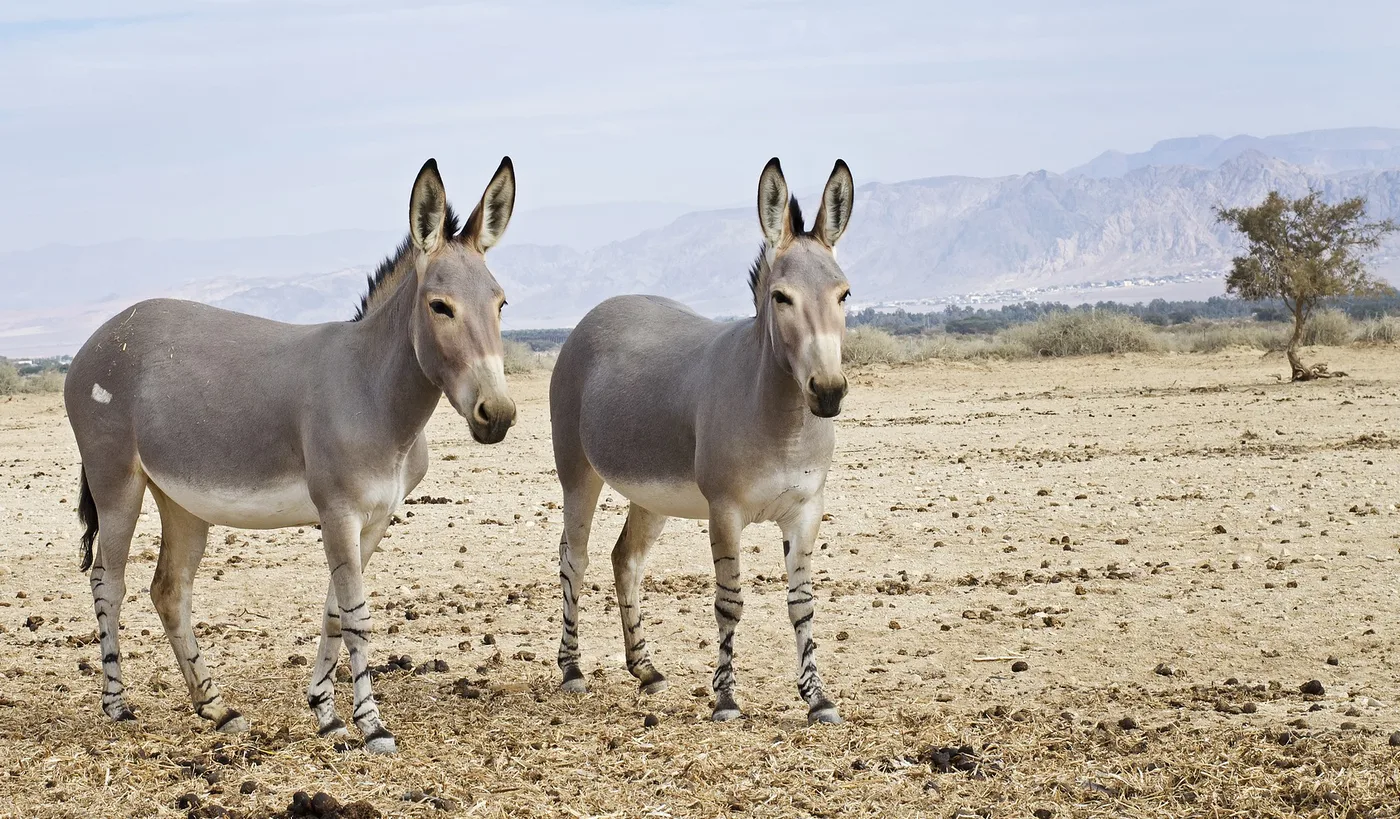
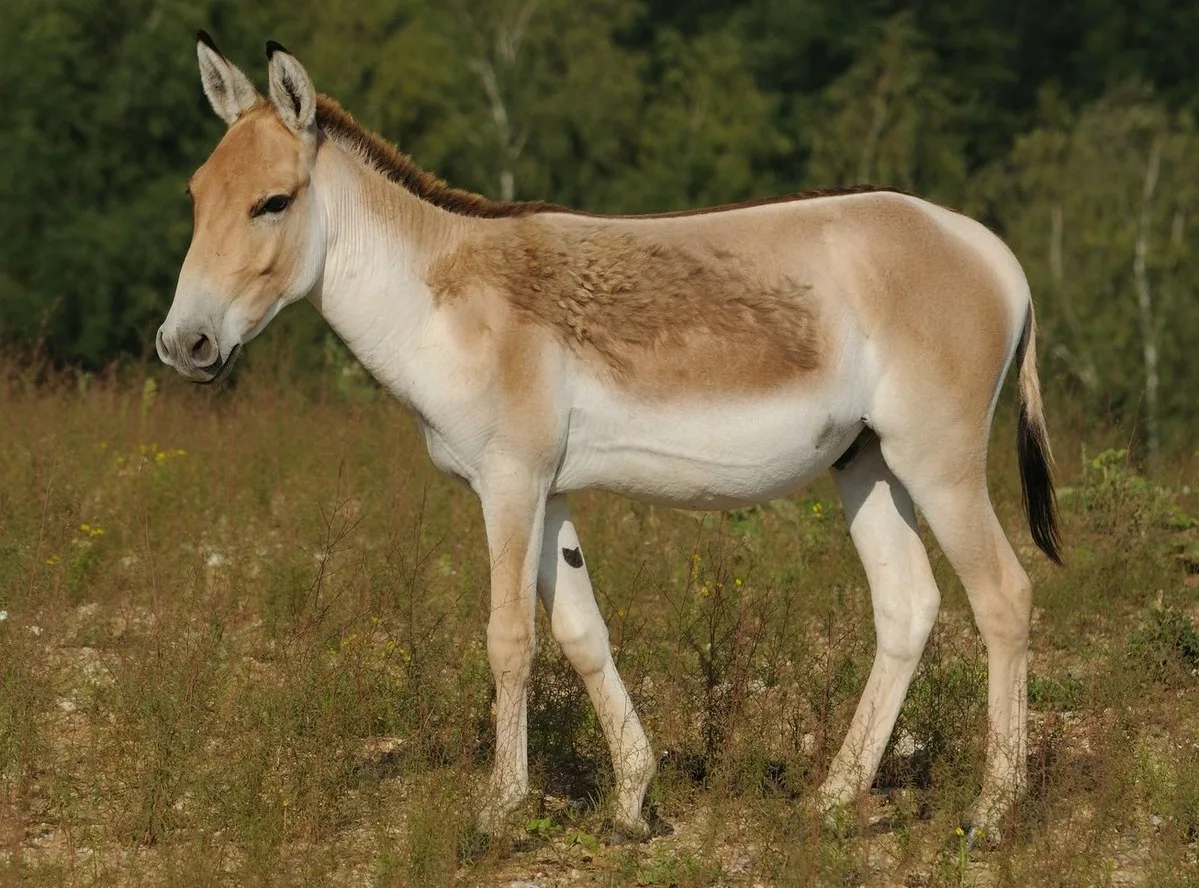
Two species of wild ass were known by the Israelites, the Nubian Wild Ass Asinus asinus africanus, which lived on the African side of the Red Sea, and the Persian Wild Ass or Onager Equus hemionus, which was common in the land of Israel, Syria, and Mesopotamia. It seems likely that the Hebrew ‘arod and the Aramaic ‘arad refer to the Nubian wild ass, and the Hebrew pere’ to the onager.
Both species of wild ass were hunted for their meat.
Description
The Nubian wild ass is probably the ancestor of virtually all domestic donkeys. It is a smallish, light brown donkey with a characteristic dark stripe down its spine and across its shoulders. It originally had stripes on the lower part of its forelegs. It has long ears and a tufted tail. It is still found in Ethiopia, Eritrea, and Somalia.
Special significance or symbolism
The onager was a symbol of untameable wildness, and thus the metaphor “wild ass” was used to describe anyone with wild uncontrolled behavior.
Translation
In Africa the closest equivalent to the wild ass is the zebra, which is about the same size and belongs to the same animal family. Like the onager, the zebra has never been widely domesticated. Where the phrase “wild donkeys” would refer to domestic donkeys that have returned to living in a wild state ("feral donkeys"), a phrase meaning “wild horse” is a better choice, since feral donkeys are easily captured and domesticated, whereas feral horses are harder to domesticate. Languages that use the same word for horse and zebra may still have a problem.
The same word or expression can be used for both Hebrew words and for the Aramaic ‘arad, since no distinction between the wild ass species is intended in the biblical text, except in JOB 39:5. In this verse, the Hebrew pere’ and ‘arod are both used:
Who set the wild horse (pere’) free?
Who untied the ropes of the wild ass (‘arod)?
The parallelism can be preserved either by using a pronoun in the second line (Who untied its ropes?) or by using “zebra” or “wild horse” for pere’ and “wild ass” for ‘arod.