Discussion
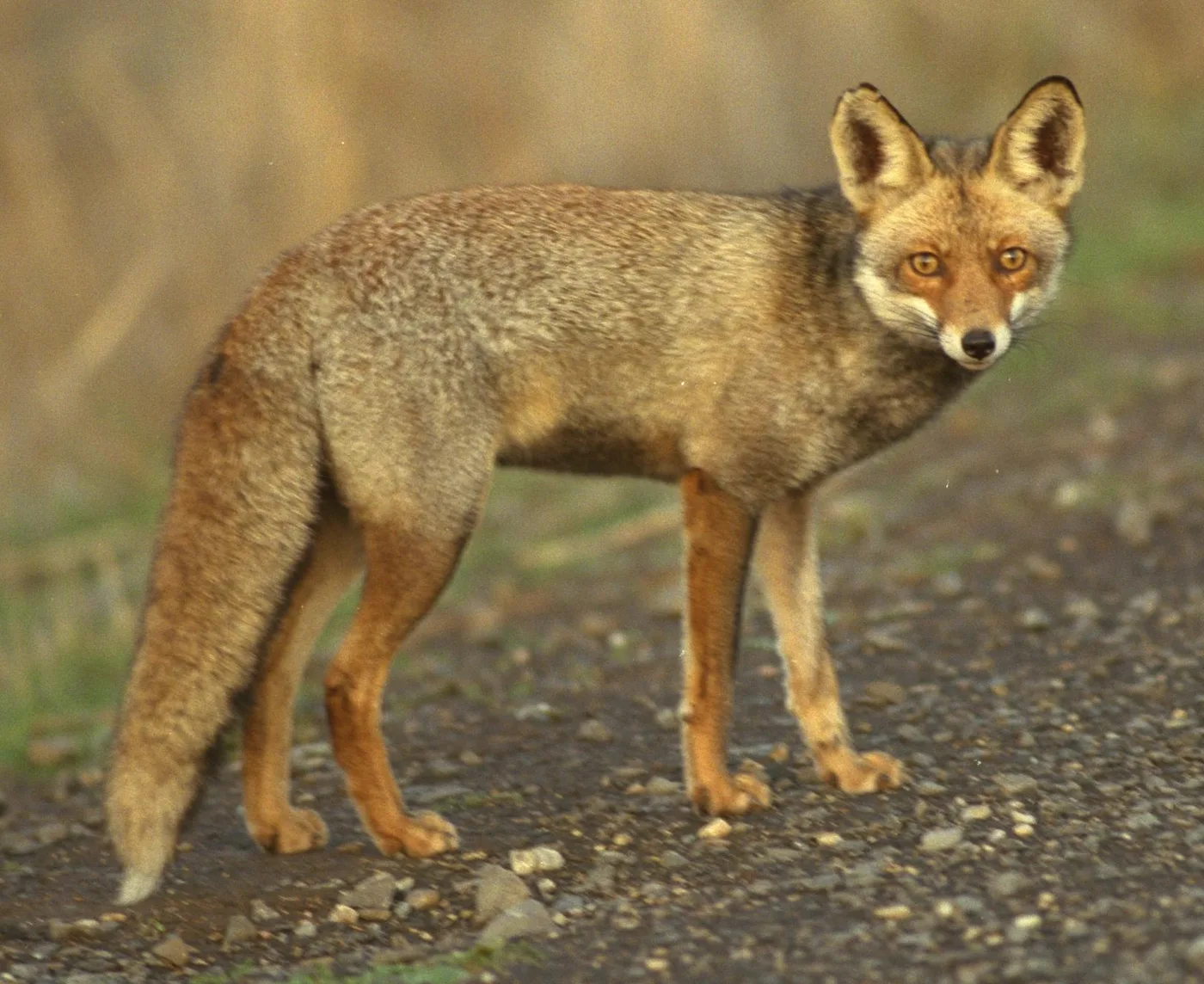
In biblical times and even today there are three species of fox found in Israel and one type of jackal. An additional type of fox was found in Egypt. In the Bible the Hebrew word shu‘al and its Greek equivalent alōpēx refer to any of these animals. These are members of the same animal family which includes the wolf and the dog. The word “jackal” was borrowed from the Arabic jakal which is from the same Semitic root as the Hebrew word shu‘al. In the days of KJV the word “jackal” had not yet been introduced into the English language and so in that version “fox” is used throughout for shu‘al.
Modern scholars are almost unanimous in agreeing that the word ’iyim (plural of ’iy) is derived from a root meaning “to howl” and that it refers to howling jackals in particular. The word usually occurs in conjunction with the word tsiyim ("hyenas") which is derived from a root meaning “to wail". The pair together could justifiably be interpreted as “wild animals wailing and howling.” This is usually taken to refer to hyenas and jackals.
The context will usually indicate which animal is being referred to in a particular passage. It is possible that the fox was known as the small shu‘al and the jackal as the large one.
In early Hebrew the plural form tanin from tan meant a type of snake. This usage is found in EXO 7:9; EXO 7:10; EXO 7:12; DEU 32:33; PSA 91:13. The same word was the name of a mythical monster or sea serpent. This usage occurs in GEN 1:21; JOB 7:12; PSA 74:13; PSA 148:7; ISA 27:1; ISA 51:9; JER 51:34; EZK 29:3; EZK 32:2. However, it is well accepted now that, in later Hebrew, tan is a poetic name for the jackal. It derives from a stem meaning to recite, or lament. In the passages where snakes or the monster tanin is referred to the context usually indicates that it cannot refer to jackals. These passages are discussed further in Snake and Dragon, sea monster.
Description
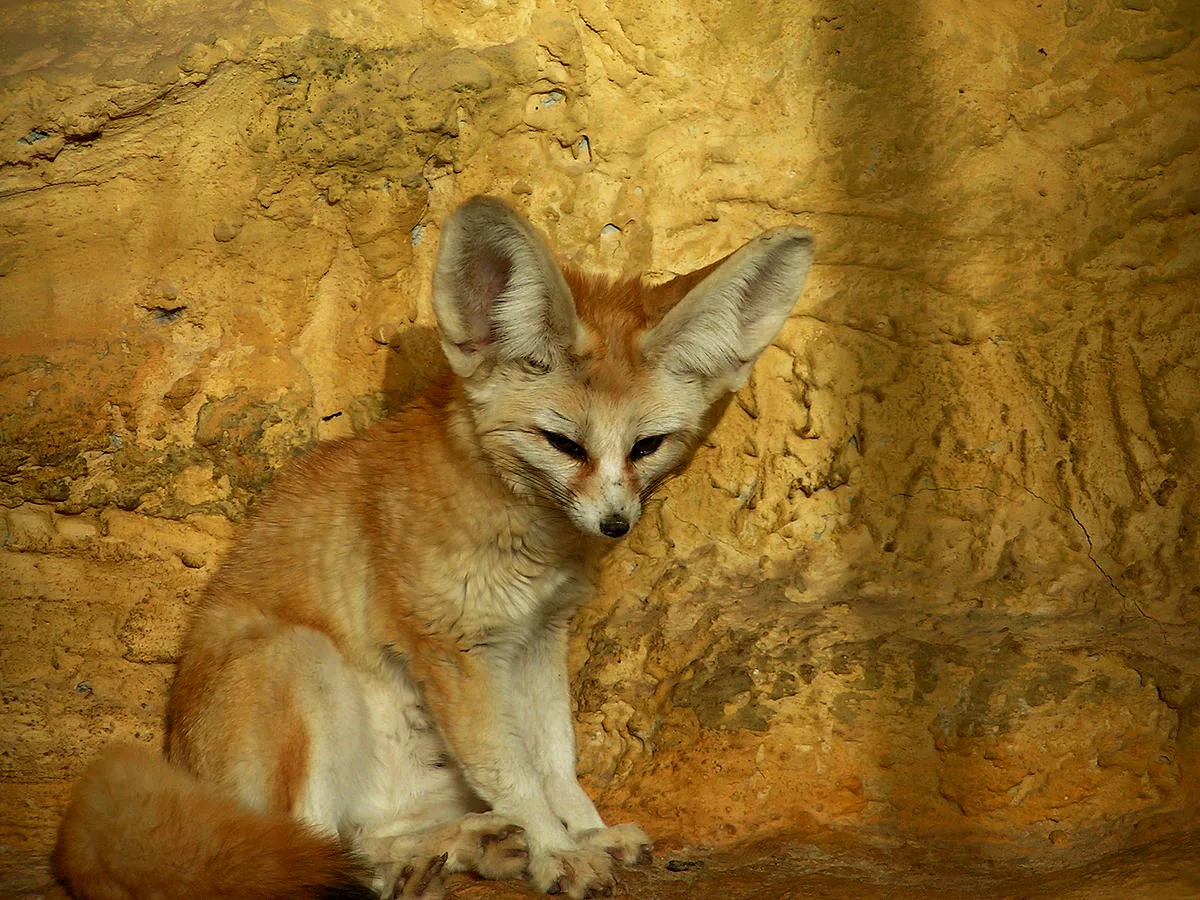
The Desert Fox Vulpes ruppelli and the Egyptian Fox Vulpes nilotica are slightly smaller and yellowish brown, but they are otherwise very similar to the red fox. The Fennec Vulpes zerda is a very small fox with large ears. It is now found in the Middle East and Egypt and was probably found in Israel also in earlier times. It feeds on insects and mice.
Foxes live in pairs, singly or in small family groups when they have young. During the day they live in holes in the ground usually dug by some other animal and come out at night to feed. When chased by dogs they are very clever at escaping, often doubling back on their tracks and then jumping sideways and heading in a new direction, thus confusing the scent trail. They also run up streams and thus avoid laying a scent trail altogether.
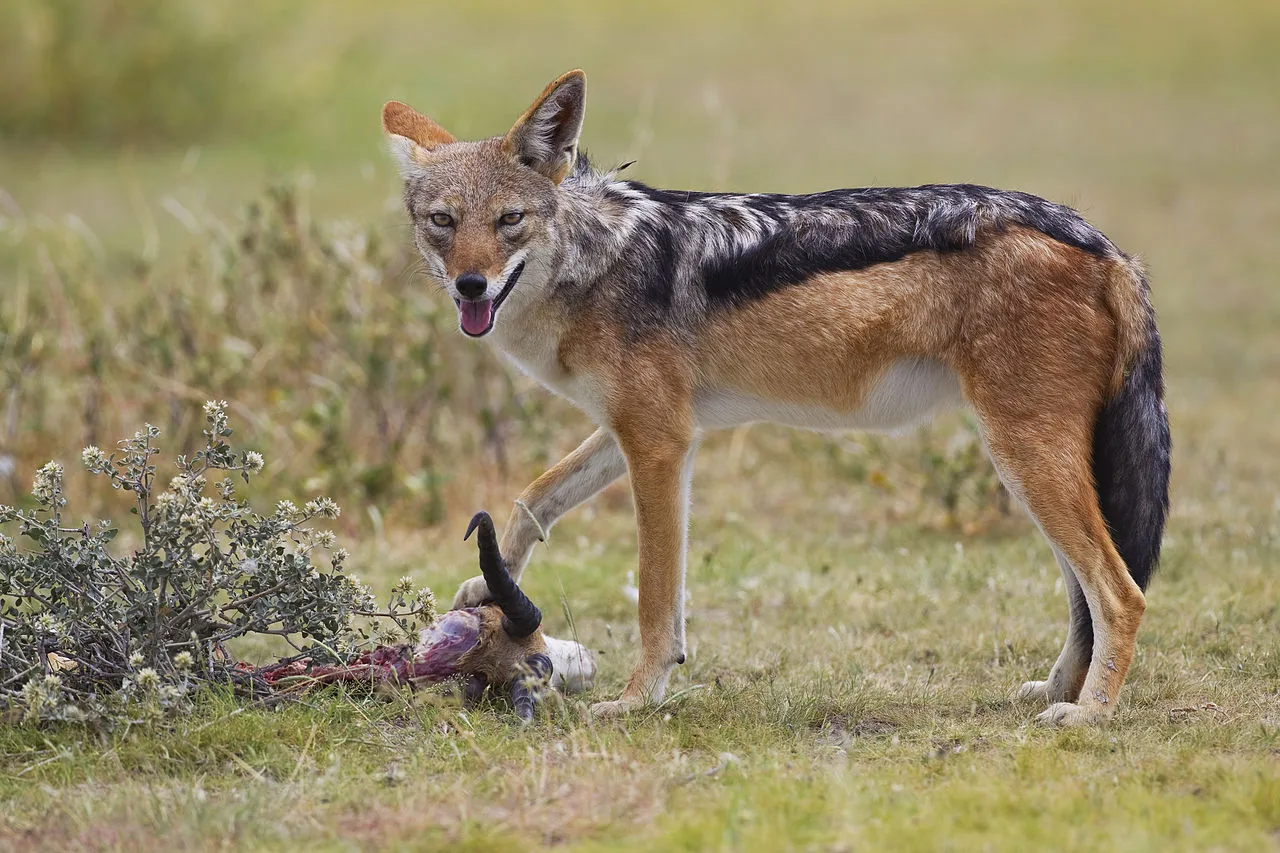
Jackal: The jackal found in Israel is the Golden or Oriental Jackal Canis aureus. It is also sometimes referred to as the Indian jackal. This animal is larger than the fox. It is yellowish brown with black tips to the long fur on its back.
Jackals eat almost anything and are great opportunists moving very fast with clever tactics when they have to. They have been known to steal bread from people’s houses and baby animals even from dangerous wild pigs. They are scavengers, eating household rubbish as well as carrion, especially the remains of carcasses killed by lions, but they also eat beetles and birds’ eggs and kill small mammals game birds and domestic chickens and ducks.
In some of the literature there is reference to the fact that jackals live in packs. This is not strictly correct. They live in pairs or small family groups but they may associate temporarily in larger groups when many pairs are attracted to the same burrows, carrion, refuse dumps, or potential prey. In these larger temporary groups they may cooperate and act together like a pack.
Special significance or symbolism
Both foxes and jackals are extremely intelligent animals, and their quick-witted, crafty opportunism is legendary in the Middle East, Africa, and Europe. The fables of Aesop, a North African philosopher and storyteller, which feature the crafty fox, date from about the time of Daniel. The fox also figures in Greek and Roman fables. Similar fables about opportunistic jackals have been widespread in Africa and the Middle East for centuries.
In ancient Arabic literature and in the Talmud and Midrash the word “lion” stands for a truly great and powerful person. In contrast “jackal” is used to designate an insignificant but self-important person. Since this figurative usage of “lion” (or “lioness") is also common in the Bible there is a strong probability that the term “jackal” or “fox” used as a metaphor in the Bible for a person carries the connotation of self-important insignificance.
However the main symbolism associated with the jackal in the Bible is related to its habit of living among ruins and feeding on carcasses. To say that a certain place would become the dwelling place of jackals meant that the place would become deserted and lie in ruins, as the result of war. The jackal was thus a symbol of death and desolation as well as insignificance and opportunistic craftiness.
Translation
In areas where jackals are known, but not foxes, the word for jackal can be used for both. Similarly, if foxes are known but not jackals, the one word will suffice. In areas where neither foxes nor jackals are found, there may be related animals such as the Coyote Canis latrans or various types of wild dog or small wolf. In those few areas where even these are not found, one may use an expression such as “wild dog” or a transliteration.
ISA 13:21; ISA 13:22: In this verse there are four words for howling wild animals that inhabit deserted buildings: tsiyim, ’ochim, ’iyim, tanim. All except tsiyim probably mean “jackal"; however, to maintain the parallelism of the Hebrew poem, it is better to translate both tsiyim and ’iyim as “hyenas". These verses will then be translated as:
Wailing hyenas will settle there,
Howling jackals will fill their houses.
. … . … . … . …
Hyenas will wail in their fortresses,
And jackals howl in their luxurious palaces.
The word ’ochim occurs only here in the Bible. It is derived from a Hebrew word meaning “to howl". The NEB and REB rendering “porcupines” is very questionable. “Owls” is a possibility, but “jackals” fits the context better, as it then preserves the parallelism of “jackals” and “hyenas".
Shu‘al:
JDG 15:4: Since jackals are easier to trap because they are more easily attracted to baits of meat, most modern translations interpret shu‘al as jackal in this passage.
NEH 4:3: Since the fox is smaller and lighter than the jackal, fox is the preferred interpretation here. The meaning is thus something like “Even if a little fox were to climb on these walls they would collapse.” Where foxes or jackals are not known, an expression for a small dog could be used in this context.
PSA 63:10: Since the reference is to the enemy soldiers dying in battle and becoming carrion (that is, lying unburied), the interpretation of shu‘al should be “jackals". TEV ’s “wolves” does not fit the context, since wolves are not noted as carrion eaters.
Special significance or symbolism
SNG 2:15: This verse is very difficult to interpret. While foxes may occasionally eat fallen grapes, or grapes low down on a vine, they cannot accurately be described as “ruiners of vineyards". It seems more likely that what is in focus is the fact that for Israelites jackals symbolize ruin (see note above on ). The verse would then mean something like: “Catch the jackals for us -(those little jackals that symbolize ruin for our vineyards. For our vineyards are thriving."
LAM 5:18; EZK 13:4: In these verses, where the context is one of ruin and desolation, “jackals” is the better interpretation.
Tan:
JOB 30:29: The interpretation should be “jackals are my brothers,” that is, both the jackals and I live in ruins.
PSA 44:19: There are three possible interpretations for the first line of this text:
a) Interpret tanim as “sea monster” and translate as do NEB and REB: “You crushed us as you did the sea serpent [or, sea monster]."
b) Interpret “wailings” or “laments", as NAB does, and translate as “You crushed us in a place of misery” [literally, “in laments"].
c) Interpret tanim as “jackals", as TEV and NIV do, and translate as “You crushed us [disappointed us], and we became a place of jackals,” “you left us helpless among the jackals,” or “you crushed us and left us as ruins inhabited by jackals."
Interpretation c) reflects the later usage of the word.
In all other occurrences of tan, “jackal” fits the context best.
JER 51:34: Although many English versions translate tan in this verse as “dragon” or “serpent", it seems likely that “jackal” is better; jackals often swallow their food in a great hurry without chewing properly, and then vomit it later when they are under cover and eat it a second time more slowly.
LUK 13:32: In this verse, where alōpēx is used figuratively, it is more important to retain the inference associated with the word than to signify the exact animal. The word is slightly insulting, and the main exegetical decision to be made here is whether Jesus is using the term with the Greek connotation of “crafty opportunist” or with the Semitic connotation of “insignificant but self-important person.” Either would fit the context. If the former is in focus, Jesus is inferring that even though Herod Antipas is a crafty opportunist, his plans are known. If the latter sense is intended, as seems more likely, then Jesus is inferring that Herod does not have the power to stop him doing what he has to do. Some commentators have argued that both inferences are intended since both the Greek and Hebrew metaphors would have been known.
If the Greek inference is decided upon, then the word alōpēx could be translated “crafty fox” or “crafty jackal". If the Semitic inference is preferred, the word could be translated “insignificant jackal". In either case the word for a local animal that symbolizes crafty opportunism (for example, baboon) or self-important insignificance (for example, rabbit) can be used in the text, with a footnote to indicate that the original word means fox or jackal.