Discussion
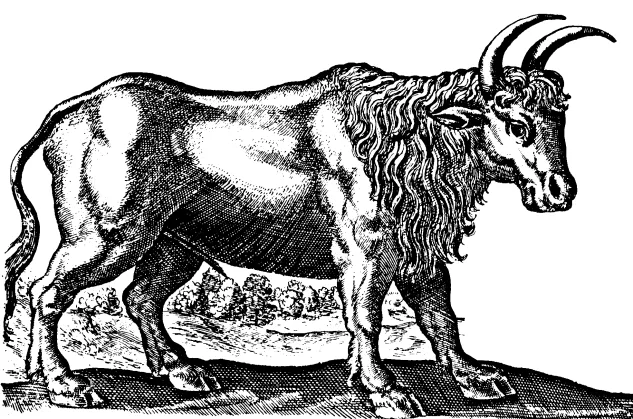
Since the beginning of the twentieth century re’em has been translated as “wild ox” in English versions, following the original suggestion made by Canon Tristram in the previous century. However, there are problems connected with this rendering. The usual justifications for this translation are a) that the Akkadian equivalent word rimu refers to the wild ox or Aurochs Bos primigenius, which was frequently hunted by Akkadian kings and b) that wild ox or aurochs fits the description of the wild untameable animal referred to in the Bible.
Both of these arguments have weaknesses from a zoological point of view and the linguistic argument is also debatable. Firstly, the aurochs hunted by the Akkadian kings was an animal found in high rainfall areas with forests. In historical times it was found only in the wooded areas of central and southeastern Europe Armenia (including the southern coastland of the Black Sea) and Mesopotamia. The only aurochs remains found in the land of Israel and the Arabian Peninsula date from the early Pleistocene Age. It is highly unlikely that this animal lived in Israel in biblical times.
Secondly, while the Akkadian rimu is usually translated as “wild ox", the Ugaritic rum has been translated by some scholars as “buffalo", and the Old Arabic rim is usually translated as “oryx". Both of these words are related to the Hebrew re’em. Some scholars have argued that the re’em is really the oryx.
Furthermore, while the wild aurochs was very large, dangerous, and strong, it was not really “untameable". Its dependence on water made it fairly easy to capture in nets and it was domesticated very early. It is the ancestor of all short-horned European cattle. Ancient pictures carved in limestone found in the excavations at Kujunjik in Iraq show carts being pulled by cattle that look exactly the same as the aurochs pictured in hunting scenes from an earlier period.
An animal similar to the aurochs was hunted by early Egyptian kings but it had disappeared from Egypt as early as the reign of Rameses III (about 1190 B.C.), who hunted instead “wild ox” (probably the Cape buffalo) in forested areas of the Sudan, where there is no evidence that the aurochs ever lived. (A commemorative painting of one of these hunts clearly shows aurochs-like animals being hunted from chariots, but this may be artistic license or a traditional stereotype-the lions in similar paintings are certainly fanciful stereotypes.)
Among the many animal mummies found in Egypt there are a number of bubal or red hartebeest and Cape buffalo. Both of these animals fit the biblical description of “wild ox", and the hartebeest certainly lived in Arabia and the land of Israel.
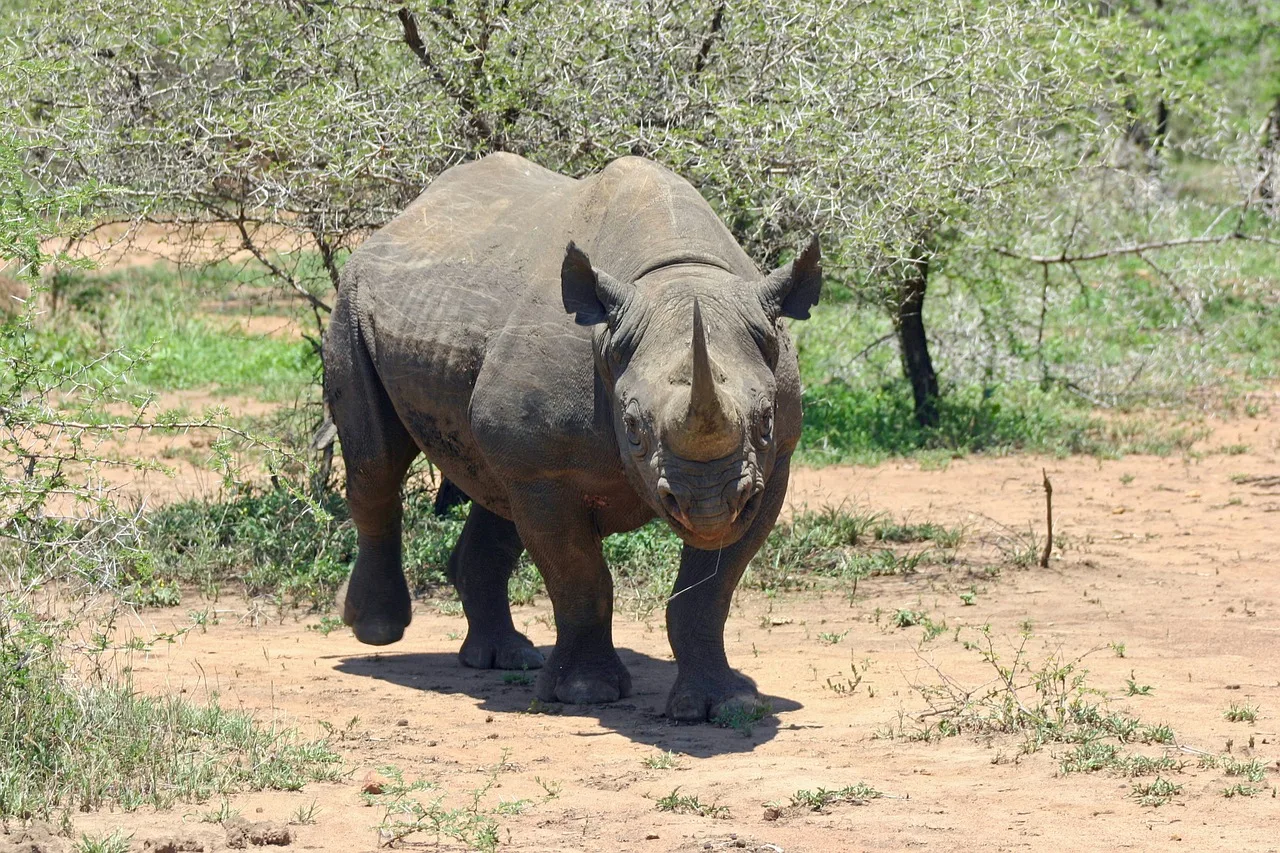
The Septuagint translates re’em as monokerōs which literally means “one-horned” (hence the KJV “unicorn") but is the ancient Greek word for rhinoceros. This translation needs to be taken seriously, because of its early date. The rhinoceros would have been an animal known to the Jews, since it was found in parts of Egypt. The ancient naturalist, Strabo of Amasia, who lived in the early part of the first century A.D., describes a rhinoceros that he saw in Egypt and refers to another naturalist of the time who had also described this animal. A variety of rhinoceros was found in Egypt, Sudan, and Ethiopia at the time of the Exodus, and a second variety was found in Mesopotamia.
At the time of the Exodus then, the aurochs would have been found in the forests of southeast Europe, the far north of Asia Minor, and Mesopotamia, but not in Egypt, Canaan, the Arabian Peninsula, Sinai, or Syria. However, the oryx and the bubal hartebeest would have been plentiful and well known, and the Cape buffalo and rhinoceros would have been known too, at least by hearsay.
There is another aspect of the question that needs to be kept in mind. Throughout human history large, prominent animals have had symbolic importance, even in societies that would never have seen the animal. Thus the lion has been important in Chinese and British culture for centuries, but there is no evidence that lions have ever lived in China or Britain. Thus the aurochs, while it may be a rather improbable interpretation, cannot be ruled out entirely.
Four things can be said for certain about the re’em. It was a wild, untameable animal, it had horns, it was very strong, and it was appropriate to contrast or compare it with domestic cattle and with lions.
Description
Aurochs: The Aurochs Bos primigenius, which is now extinct, was a very large animal, with prominent forward-pointing horns. It looked very similar to the bulls used in Spain for bull-fighting in modern times, but it was probably even larger. The bulls were dark brown or black, with a pale stripe down the spine, while the females were a lighter brown. The German zoos of Berlin, Munich, and Frankfurt have been fairly successful in genetic engineering experiments that have been aimed at reintroducing the aurochs’ original genetic characteristics, by selective breeding from domestic cattle that have the required characteristics. The resulting animals seem to resemble closely the original aurochs.
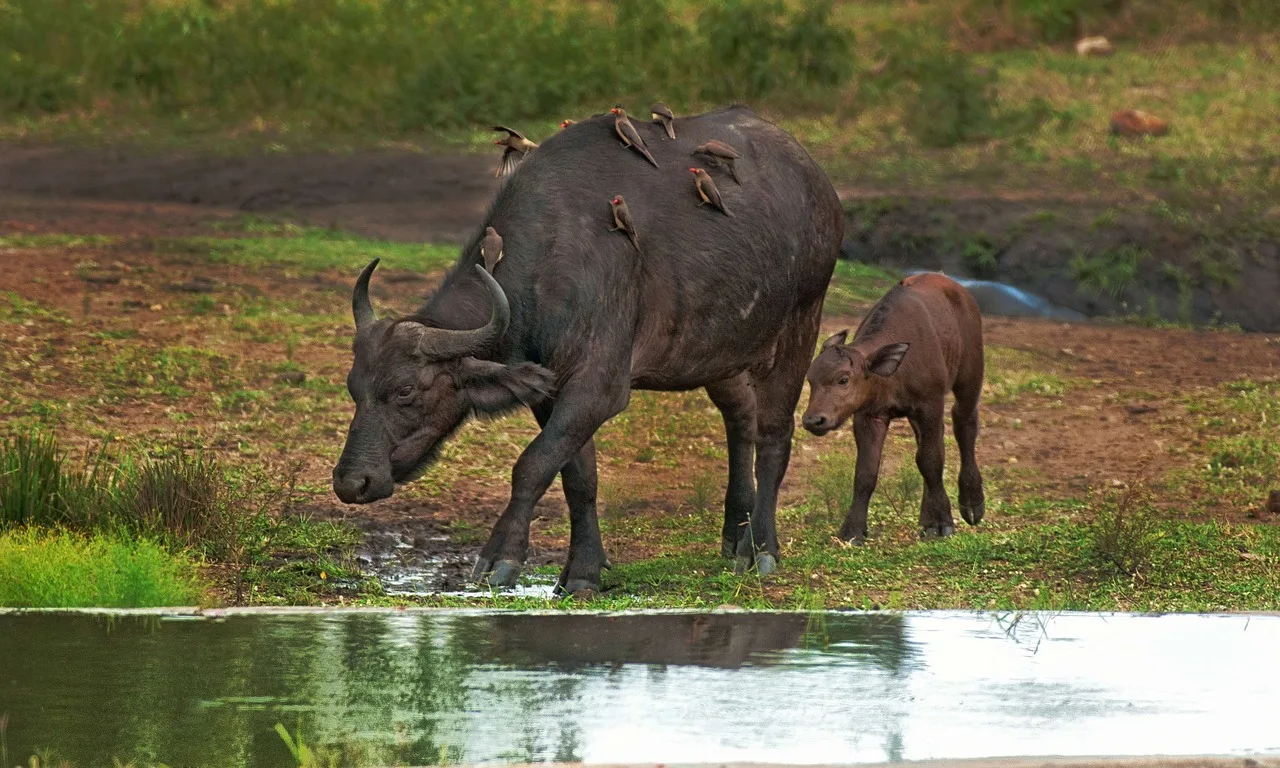
Cape buffaloes live in large herds often numbering over five hundred animals. They are extremely strong cunning and fearless and are probably the most dangerous animals in Africa. Although they have become accustomed to man in some protected areas they are unpredictable and easily provoked. Unlike the Asian water buffalo or carabao the Cape buffalo has never been domesticated.
Bubal hartebeest: See Bubal hartebeest (roe deer).
Special significance or symbolism
The re’em was a symbol of strength, wildness, and power.
Translation
Because of the uncertainty of identifying this animal, it is probably best to have an equivalent of “wild ox” or “wild bull” in the text and indicate in a footnote, each time the word is translated, that the word may mean “buffalo” and that the Septuagint has “rhinoceros".
A problem in many countries is that using a phrase like “wild ox” suggests that this is a domestic ox that has gone wild. For this reason, it may be better to use a local name for a large strong, horned animal.
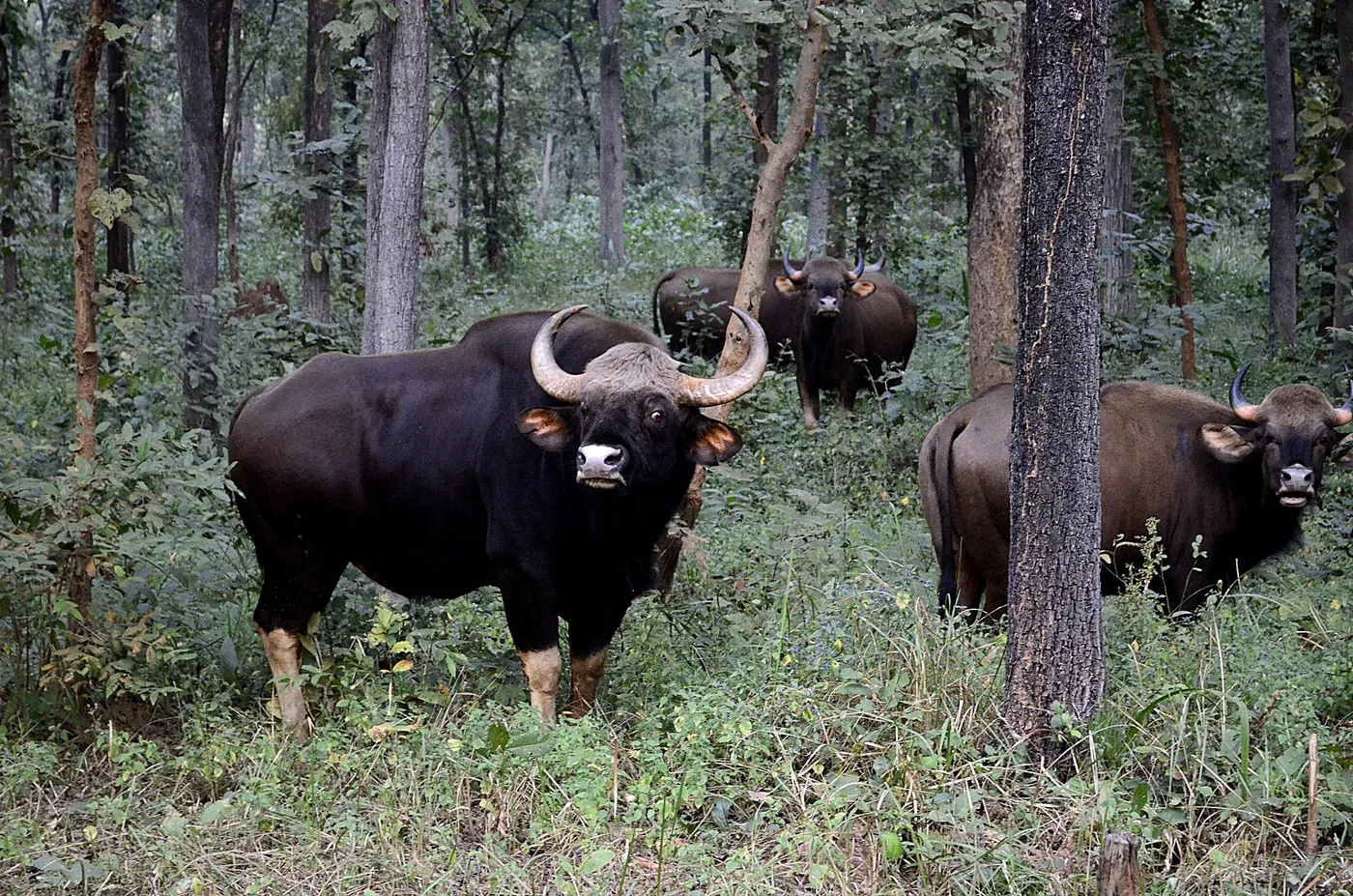
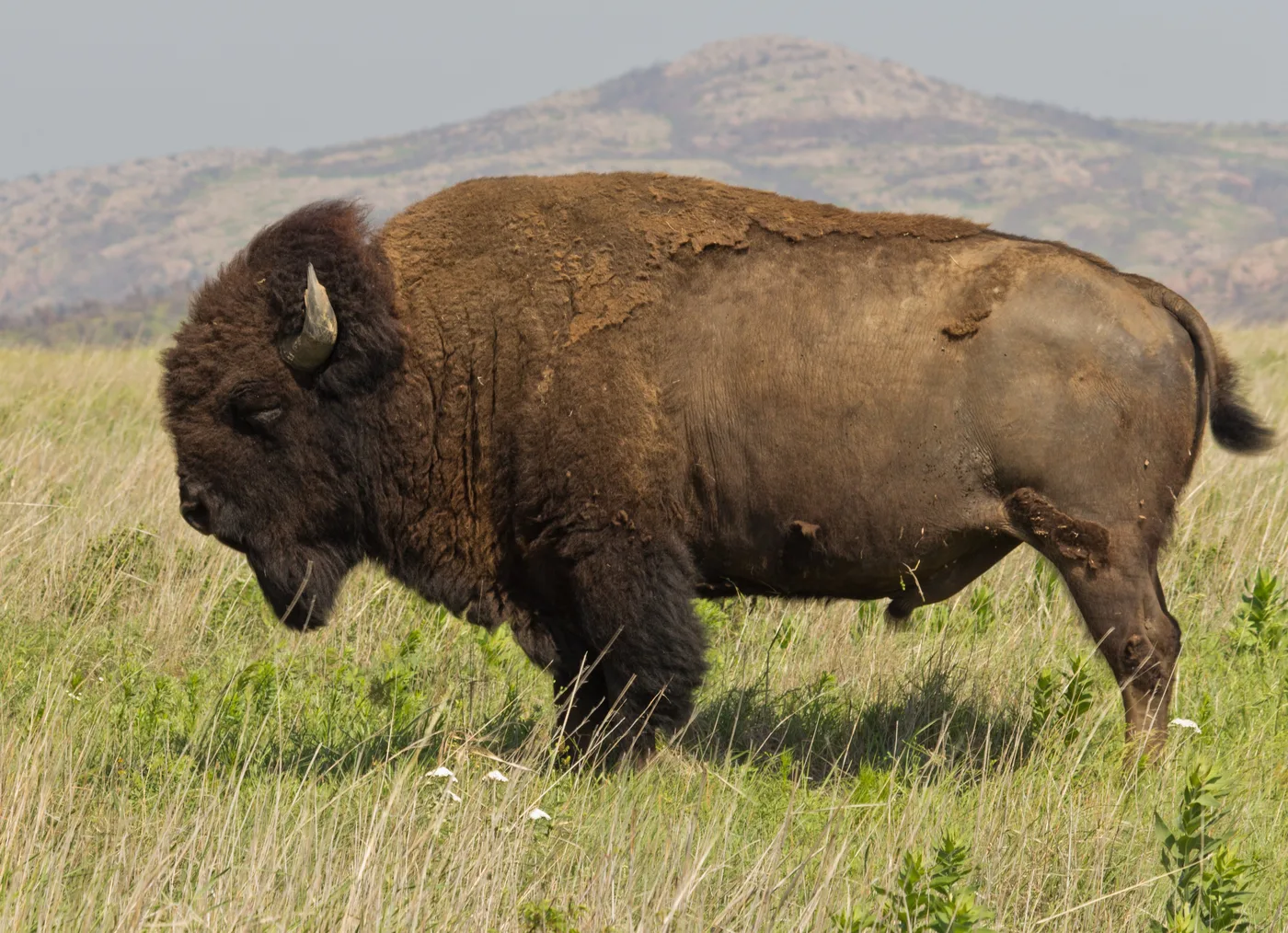
In North America the Bison or American Buffalo Bison bison is the closest equivalent. Another possible equivalent in some Arctic regions is the Musk Ox Ovibos moschatus.
Elsewhere a transliteration or a word borrowed from a locally dominant language is a possible solution.