Reference:”
Discussion
Garlic Allium sativum is immensely popular in Egypt, West Asia and Europe, and probably was so in Bible times. Large numbers of these plants have been found in ancient tombs in Egypt and the Dead Sea area dating around 3500–3000 B.C., attesting to their popularity long before the days of the Exodus. The Greek writer Pliny knew of three types of garlic. They were used as offerings for the gods, as medicine, as food flavoring, and in preserving meat.
Description
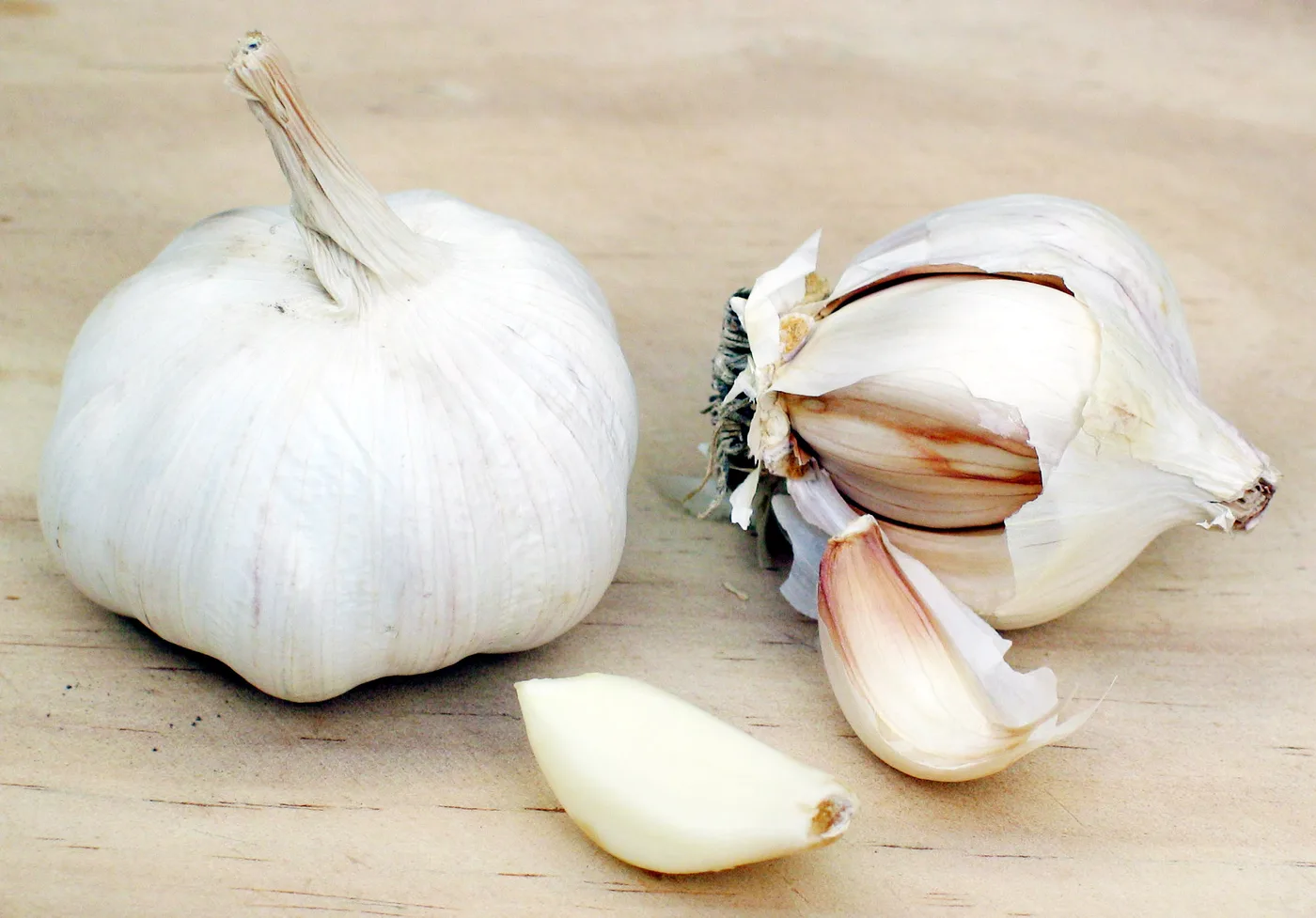
Garlic has a bulb something like that of an onion, but smaller, and it is divided into four or five parts, each of which can be planted to start a new plant, since garlic is not propagated by seeds. These sections are called “cloves” in English. Because of its distinctive taste and smell, garlic is used for seasoning food throughout the world and also as medicine.
Special significance
In NUM 11:5 garlic is cited with onions, leeks and other tasty things that the Israelites longed for as they wandered in the Sinai Desert.
Translation
Garlic originated in the Near East, although its wild ancestor is uncertain. Garlic is now grown throughout the world, so local words are often available. If not, since the context of NUM 11:5 is non-rhetorical, a transliteration from a major language is advisable (for example, Arabic tawm /toum, French ail, Spanish ajo /aho, Portuguese alho /alyo, Swahili kitunguusaumu, Wolof laaj, Hausa tafarnuwa).