At least four types of grain are mentioned in the Bible: barley, millet, sorghum, and wheat. In addition to these types of grain, Hebrew words for things such as “threshing floor,” “sickle,” and “winnow” attest to the prominence of grain in the life of the ancient Israelites.
KJV, REB, and some other versions, following British usage, use “corn” as a generic term to cover crops such as wheat and barley, while RSV, the New King James Version (NKJV), and many other versions, following American usage, use “grain” as the generic term. Versions such as GNB have British editions and American editions that accommodate to the different usages. Although maize as we know it now did not exist in Bible times, we may need to refer to it as a species, and we will call it “maize,” following the British tradition, and use “grain” as the generic term, following American usage.
Generic words can cause problems for a translator. In GEN 1:11; GEN 1:12 we find the Hebrew phrase ‘esev mazri‘a zera‘ (“plants yielding seed”) standing in contrast to the phrase ‘ets peri ‘oseh peri (“fruit trees bearing fruit”). Some English versions take “plants yielding seed” as referring to “grain” (GNB, CEV, NCV), whereas others use broader expressions such as “seed-bearing plants” (NIV, NJB, NJPSV) or “plants that bear seed” (REB). The writer of Genesis may be using a traditional Hebrew plant taxonomy that divides useful flora into two categories, namely seed-bearing plants and fruit-bearing plants. If so, translators should try to render “plants yielding seed” with an expression that includes more species than just the grains. After all, onions, beans, peas, melons, and other plants bear seeds, as well as grain.
The Hebrew word dagan occurs forty times in the Old Testament (for example, GEN 27:28, GEN 27:37; NUM 18:12, NUM 18:27; DEU 7:13; DEU 11:14), and it is often translated “grain.” However, in Bible times the word dagan included peas, beans, lentils, and cumin as well as what we normally call “grain” from grasses or cereals. In these forty references dagan is paired with the Hebrew word tirosh (“grape harvest”) in all but ten. The Hebrew word yitshar (“newly pressed oil”) is mentioned in twenty of them. All three words include the concept of “newly harvested.” They express the idea of “produce of the land,” as when Isaac blesses Jacob (GEN 27:28):
May God give you of the dew of heaven,
and of the fatness of the earth,
and plenty of dagan [farm produce] and tirosh [vineyard produce].
The Old Testament has many other Hebrew words and phrases that refer to grain. Since these generic terms can cause problems for translators, we will consider them one by one:
Bar: This word can refer to grain on a threshing floor (JOL 2:24) or to grain that is stored (GEN 41:35). It is used to refer to kernels of grain in contrast to chaff in JER 23:28.
Shever: In GEN 42:1; GEN 42:2 Jacob hears about shever in Egypt. In this passage the word is quite general, almost equivalent to “food.” In NEH 10:32 (31) Nehemiah forbids the sale of shever on the Sabbath. In AMO 8:5 the prophet warns about cheating on the sale of shever (parallel to bar).
Qamah: In JDG 15:5 Samson burns the qamah (“ripe, uncut grain plants”) as well as the gadish (“sheaves”) in the fields of the Philistines. English versions usually render qamah as “standing grain.” The Arabic word for wheat is al-kama, so it may have been wheat that the Philistines grew in the Sorek Valley.
Gadish refers to sheaves.
’Aviv refers to newly formed ears of grain.
Shiboleth refers to ears of grain. In RUT 2:2 Ruth gleans the stalks of ripe barley that the harvesters leave behind. In the Egyptian king’s dream (GEN 41:5; GEN 41:6; GEN 41:7; GEN 41:7) the ears of grain are presumably wheat.
Karmel refers to fresh ears of grain. In LEV 2:14 the ears of grain are probably wheat, which were roasted and brought for the firstfruits offering. The prophet Elisha received a gift of fresh ears of grain (2KI 4:42).
Geres refers to crushed grain.
Rifoth: In 2SA 17:19 a woman scatters rifoth (“grain”) on a mat over a well hiding two men. PRO 27:22 says “Crush a fool in a mortar with a pestle, along with crushed grain [rifoth ], yet his folly will not depart from him.”
The New Testament and Deuterocanon also have their share of generic Greek words for grain
Sporimos is based on the Greek verb meaning “sow.” It clearly refers to fields of wheat or barley.
Stachus refers to the grain heads of wheat or barley.
Alfiton refers to roasted, dried, or baked kernels of grain. RSV render it “parched grain.” This is what Ruth had for lunch (Hebrew qali) when she gleaned in Boaz’s field. Alfiton is found in the Septuagint of RUT 2:14; 1SA 25:18; 2SA 17:28; JDT 10:5.
Sperma refers to a single kernal of grain, or more generically, a seed.
Spora refers to “grain harvest” (GNB).
Sporos in SIR 40:22 refers specifically to the sprouting of seeds, and in Sirach the reference may be to the sprouting of grain in the spring (so REB, NJB), but some translators take it more generally to mean the sprouting of flowers (so NAB).
There are also several generic Latin words for grain in 2 Esdras
Frumentum (2ES 15:42) refers to grain harvest like the Greek word spora. RSV renders it “grain,” and REB is more generic with “crops.”
Granum in 2ES 4:30; 2ES 4:31 refers to grain in general.
Semen: In 2ES 8:43; 2ES 4:31; 2ES 4:32 semen refers to a single kernel of grain, equivalent to zera‘ in Hebrew and sperma in Greek (as in MAT 13:24).
In DEU 28:22 we read of grain being affected by “blight/blasting” (shidafon in Hebrew) and “mildew” (yeraqon). This pair of words also occurs in 1KI 8:37; 2CH 6:28; AMO 4:9; HAG 2:17, where we find a litany of disasters that come upon the people. The Hebrew verb shadaf (“to blast”) occurs by itself in GEN 41:6; GEN 41:23; GEN 41:27, where it is explicitly associated with crops being blasted by the fierce, seasonal, hot wind from the desert. The cognate in Chaldean is shadaf, which means “scorched.” The Hebrew noun shedefah (“scorching”) occurs in 2KI 19:26 (also in the emended text of ISA 37:27), which says grass on a rooftop with very little soil is scorched before it can mature. (The cognate word in Arabic means “black.”) The Hebrew word yeraqon means “paleness” in JER 30:6, where it describes people’s faces, but elsewhere it refers to a fungus that keeps grain heads from developing properly.
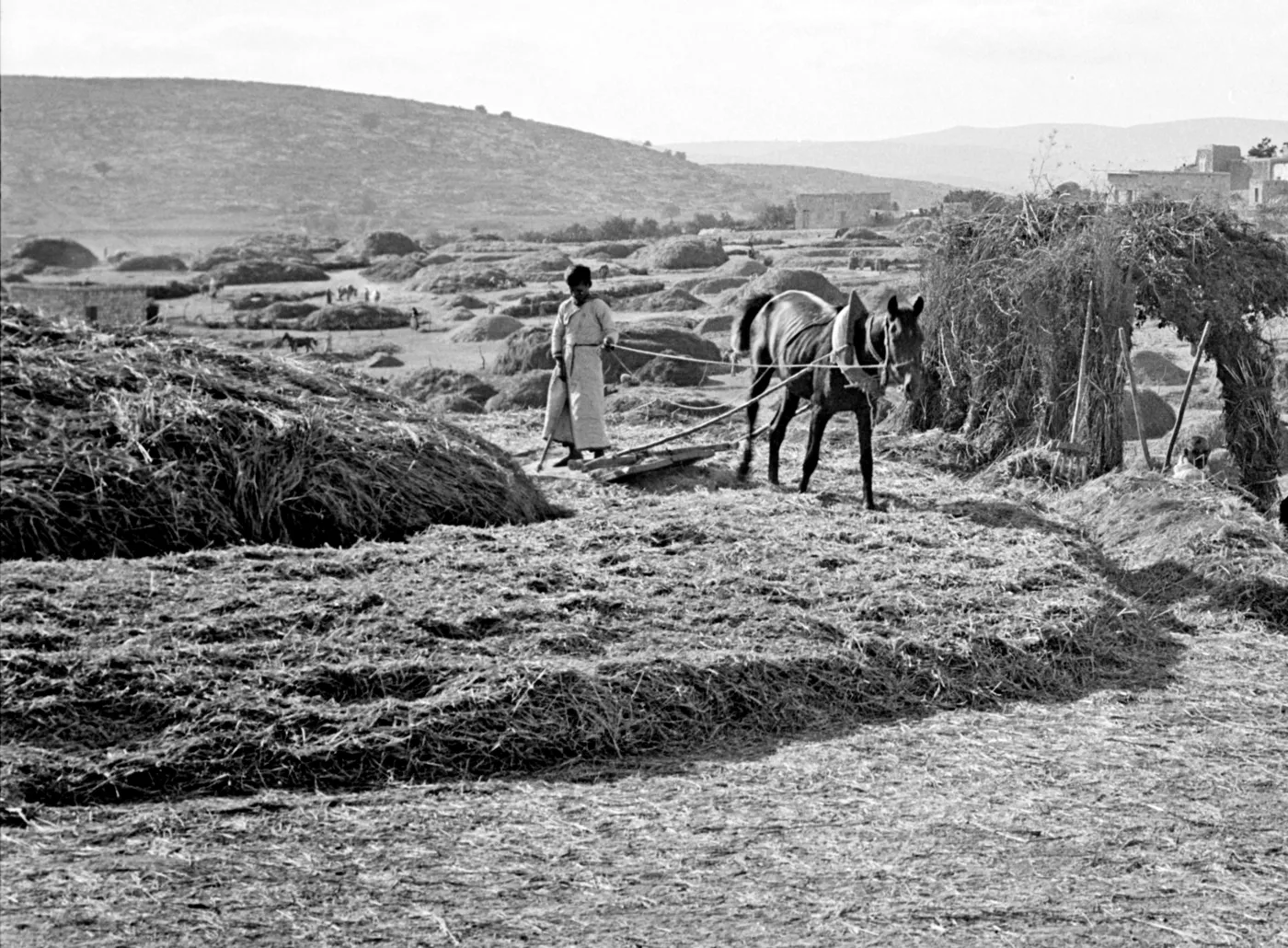
In addition to these technical words for grain, the Bible refers to grain in a number of places by the expression “out of/from … threshing floor” (for example, DEU 15:14).
References to flour, or fine flour, for cereal offerings (also called meal or grain offerings; Hebrew minchah) would presumably refer to flour made from wheat, although barley flour was also used when wheat was scarce.