Discussion
To illustrate the siege of Jerusalem, Ezekiel is instructed to make a loaf of bread out of wheat, barley, beans, lentils, millet (dochan in Hebrew), and spelt in EZK 4:9. In Arabic millet is called dukhn or dochna, suggesting that the Hebrew word dochan could indeed be millet. Some scholars believe that Millet Panicum miliaceum or Panicum callosum was first domesticated in Ethiopia, but others say in India or the East Indies. From one of those places it was carried into Mesopotamia around 3000 B.C. If that is so, it may have been known to the people of Israel during their stay in Egypt as well as after the conquest of Canaan. Zohary implies that dochan was either millet or sorghum (see Sorghum (durra)). In EZK 27:17 a reference is made to pannag, which Moldenke takes as possibly referring to millet, on the basis of the fact that in Syriac pannag refers to millet. However, Hepper says that neither millet nor sorghum reached the Mediterranean area before the Christian era, making it unlikely that dochan or pannag refer to either millet or sorghum.
Today millet is used throughout the world for porridge, alcoholic beverages, and as animal food. It is not good for bread, which may be significant in the incident mentioned in EZK 4:9.
Description
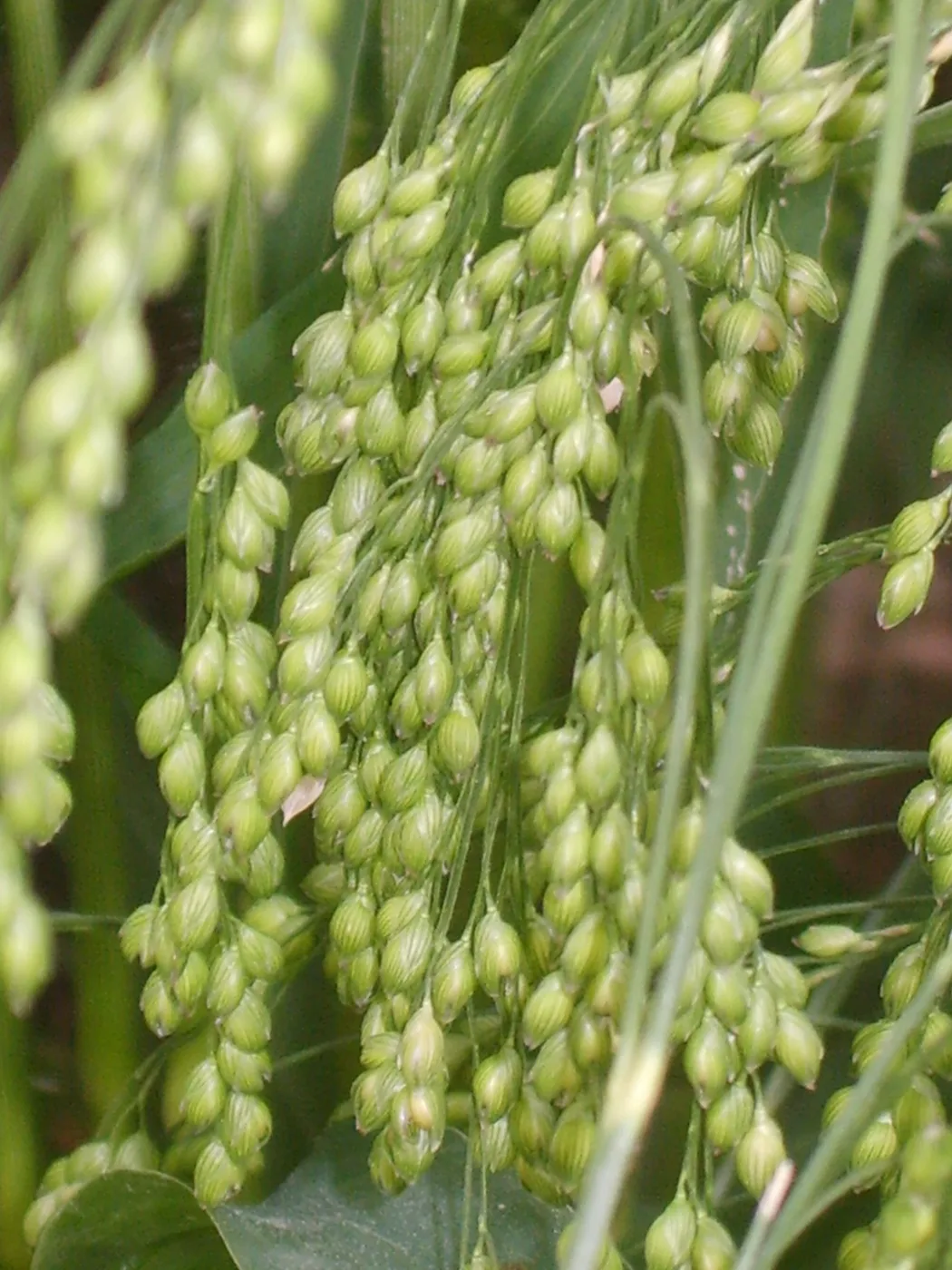
If indeed millet was grown at all in Old Testament times, it would have been a short variety less than 1 meter (3 feet) in height. It has a single head on a stalk, with many tiny seeds, so the Latin name is miliaceum (“million seeds”).
Translation
There are six hundred kinds of Panicum species growing in the warm and tropical zones of the world, many of them domesticated, and two in Europe. Translators who do not have a local word for millet will need to use a transliteration from a major language, for example, French millet, Portuguese miliyo, and Spanish mijo. Since the references to millet are part of lists in non-rhetorical contexts, there is no need to look for a cultural equivalent.