Discussion
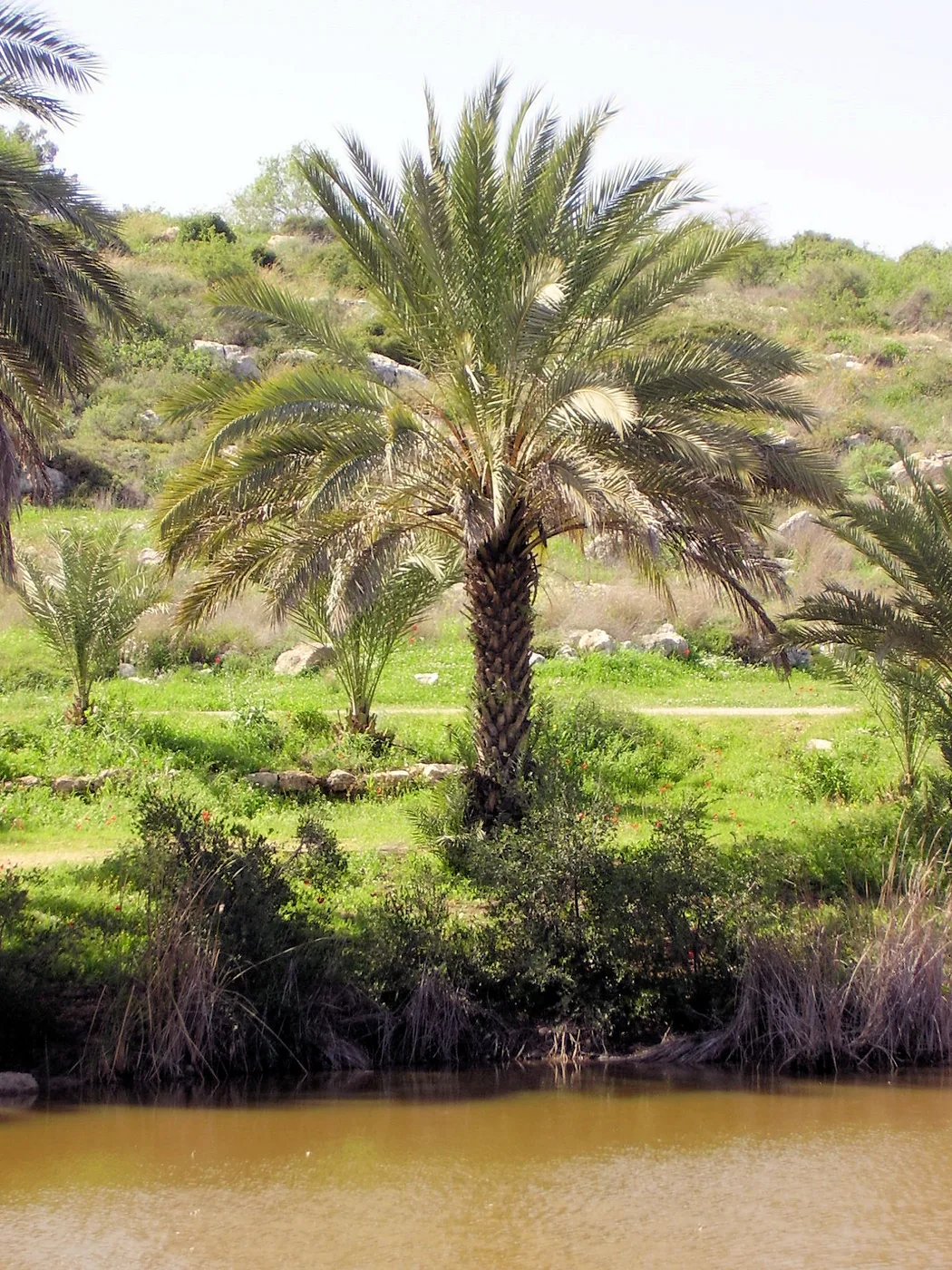
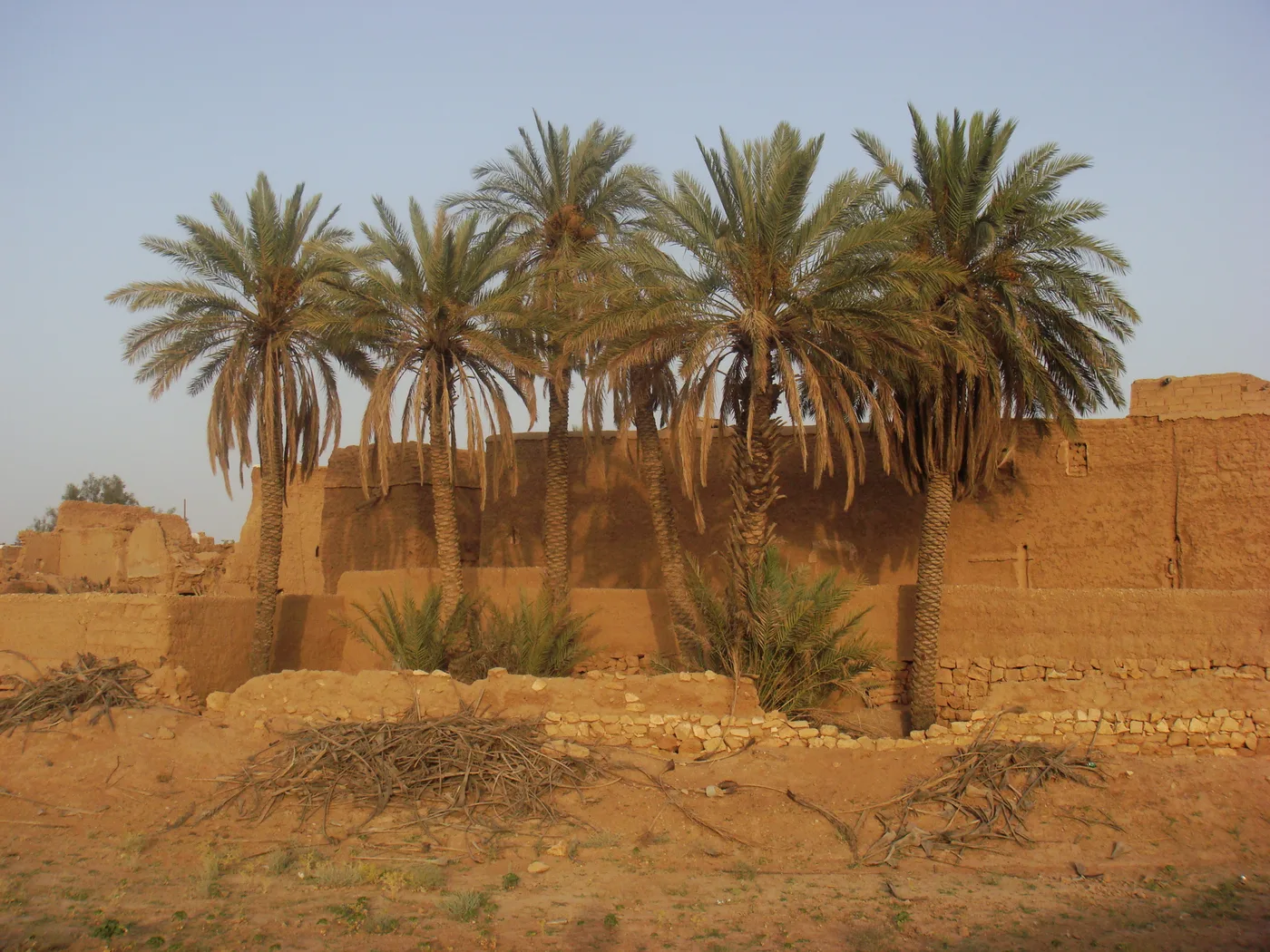
More than forty types of date palm (Phoenix dactylifera) are found in dry tropical countries all the way from the Canary Islands, across Africa to India. They probably originated in the Middle East (Zohary and Hopf), where they are still found in abundance. In LEV 23:40 we read that the branches of date palms were to be used for the Festival of Shelters, and in JHN 12:13 people welcomed Jesus with date palm leaves. In the latter case there is a legitimate question of where they got the leaves, since Jerusalem is rather too high and cold for date palms. But the same could be asked about the prophetess Deborah’s palm (JDG 4:5), which was located between Ramah and Bethel, scarcely lower than Jerusalem. Jericho was known as the “city of palm trees” (temarim in Hebrew - DEU 34:3; JDG 1:16; JDG 3:13; 2CH 28:15). Date fruits were eaten fresh or dried and pressed into “cakes,” and they were sometimes made into a drink. It is possible that in DEU 8:8 the Hebrew word devash that we normally take as “honey” refers to a syrup made from dates. The leaves were and are used for mats, baskets, fences, and roofs. Date palms are now cultivated intensively in the Jordan and Aravah valleys, around the Dead Sea, and on the coastal plain of Israel. The word “date” entered English from Latin dactylus via Old French datil. Latin got it from Greek daktylos, meaning “finger.”
Description
The date palm typically grows to a height of 10–20 meters (33–66 feet) and has a cluster of immense leaves at the top. Each year, old leaves wither and droop, and people who own palms cut the old branches off. The tightly packed bunch of immature leaves is called lulav in Hebrew. Date palms start bearing fruit at around five to eight years of age. The sweet fruits, a little smaller than a human thumb, grow in large bunches. Inside the soft fruit is a very hard seed about 2.5 centimeters (1 inch) long. Date palm trees are either male or female, and there are places where the trees of one sex grow but no fruit is seen, because they lack pollination. Farmers prefer to propagate them by cultivating the suckers that grow at the base of the tree, rather than from seeds, which would produce too many male trees. The fruit appears on the female tree in the summer (June-August).
Special significance
Translation
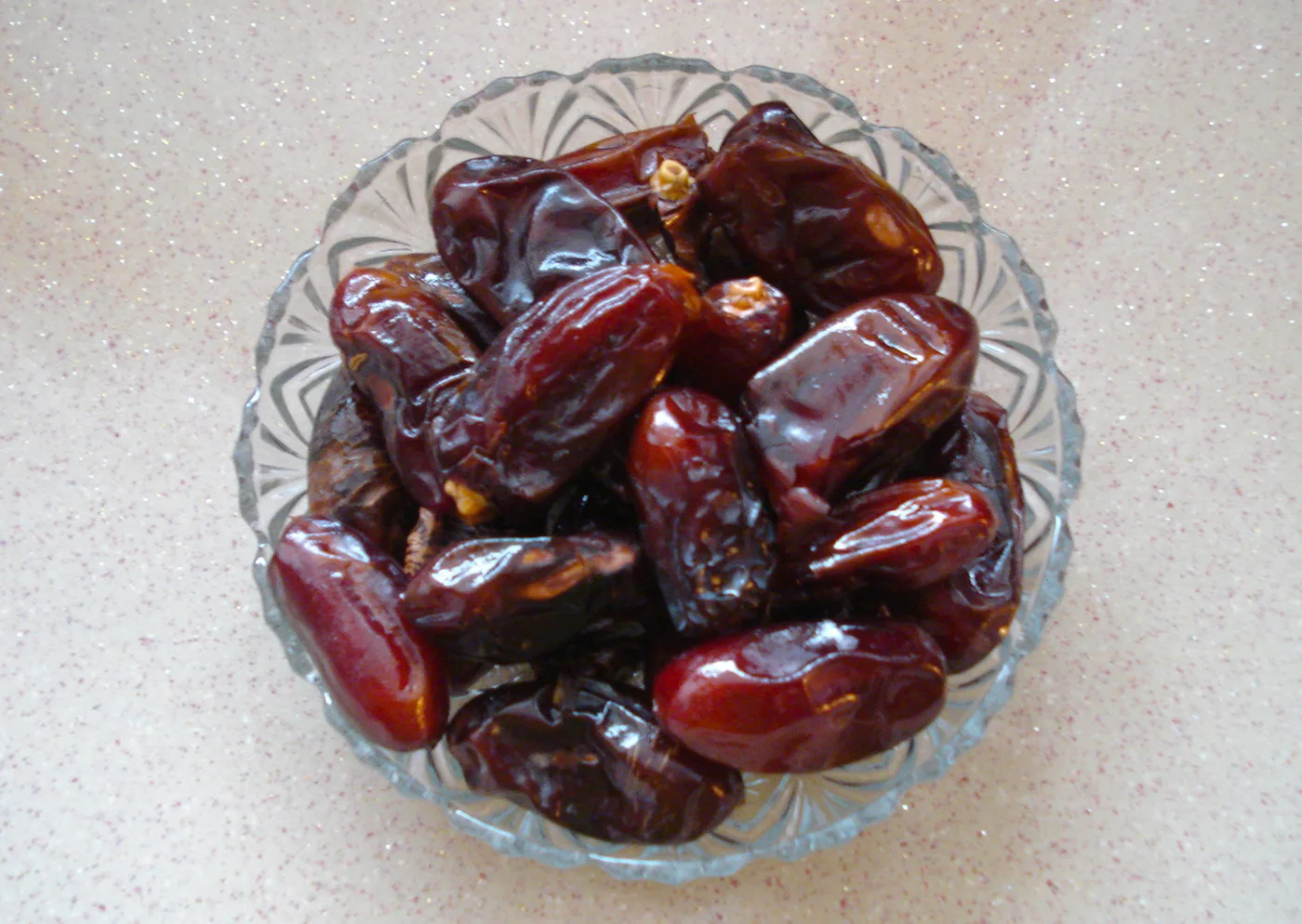
In locations where oil and coconut palm trees are found, but no date palms, the oil palm is to be preferred. In places where no palms are found, it is still possible that the date fruit is found in markets, particularly in Muslim-dominated areas, where it may be a popular item for breaking the fast during Ramadan. In northern Nigeria, a dwarf species of date palm (Phoenix reclinata) grows in ravines and bears small edible fruits much like the big palm. At least one translation there (Berom) makes use of the local name.
It would seem then that if the date palm is not known at all, the options here are:
1. use the word for oil or coconut palm (and consider writing a footnote that indicates that the Hebrew words tamar and tomer and the Greek word phoinix refer to a similar tree that has a quite different fruit);
2. transliterate from Hebrew (tomera, tamara) and Greek (fonis, fowinik);
3. transliterate from a major language, for example, nakhal /temer (Arabic), dattier (French), datil /palmera (Spanish), mtende (Swahili), khaji (Hindi), karchuram (Tamil), and haizao (Chinese);
4. use a generic phrase appropriate to the context, for example, “beautiful tree.”
NUM 24:6: The first line of this verse reads “Like valleys [nechalim, plural of nachal ] that stretch afar.” The Hebrew word nachal refers literally to a “torrent” of water. Since that makes an odd parallel with gardens, aloes, and cedars, the majority of scholars believe it refers to date palms here based on a similar word in Arabic with that meaning. Many English versions have “palm groves” (NRSV, NLT, REB, NJPSV; similarly CEV) or “rows of palms” (GNB).
JOB 15:32: The Hebrew words temurato (“his recompense”) in verse 31 and timmale' (“It will be paid in full”) in verse 32 have been debated for centuries. Houbigant and others have said that temurato should be read as timorato (“his palm tree”), and timmale' should be read as timmal (“it will wither”; so Septuagint, Vulgate, Syriac). This interpretation anticipates the Hebrew word kipah (“branch”) in verse 32, where the second line reads “and his branch will not be green.” Dhorme suggests that temurato should be read as zemorato (“his vine shoots”), which anticipates the line about grapevines in verse 33. A Handbook on The Book of Job supports using “palm tree” and “palm branch” in this passage. We do too.
JOB 29:18: Instead of “sand,” the Septuagint reads “palm tree” (phoinix). Many scholars follow the Septuagint here, but some take phoinix as referring not to the date palm but to the legendary “Phoenix,” a bird that was believed to live a long life.