(Image generated by ChatGPT using OpenAI technology)
Description and usage
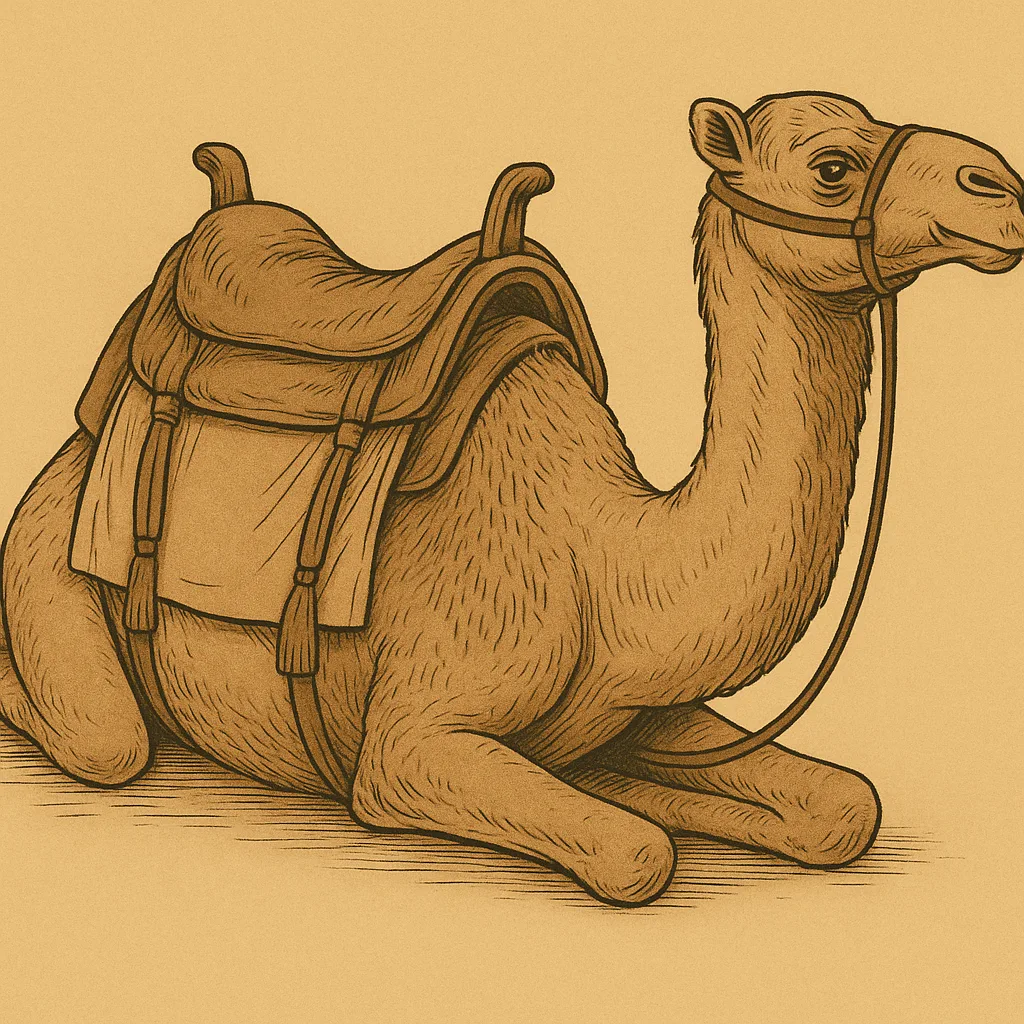
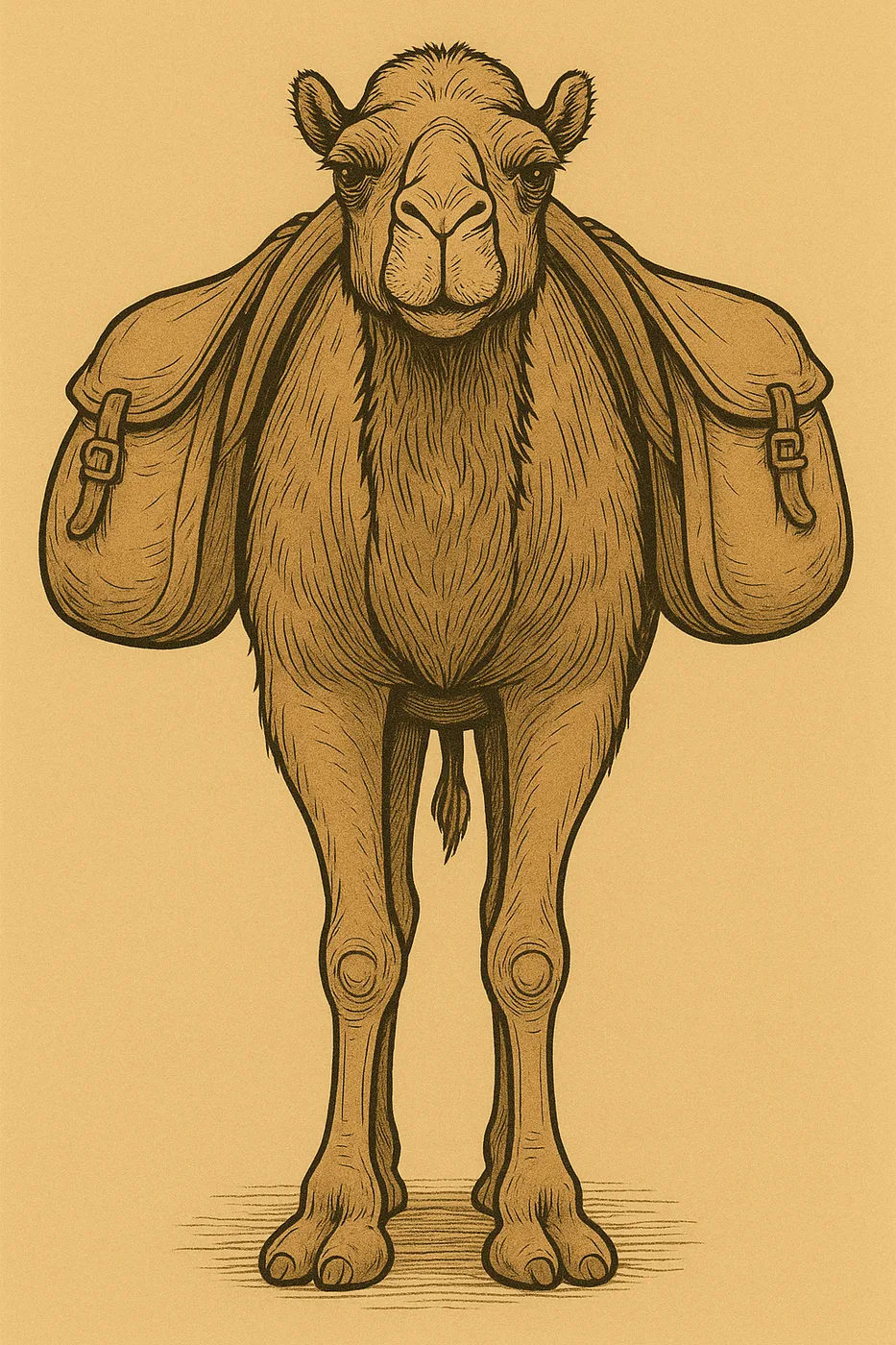
The saddle was a seat placed on the back of an animal to enable a person to ride. It could also serve as a rack on which baggage was carried. Saddles could take many forms, from specially shaped wood to a simple piece of cloth.
Translation
The Hebrew verb chavash always occurs in the context of an animal prepared or being prepared for riding. Where a specific term for “saddle” is lacking, the second clause in GEN 22:3 may be rendered “he prepared his donkey for riding.”
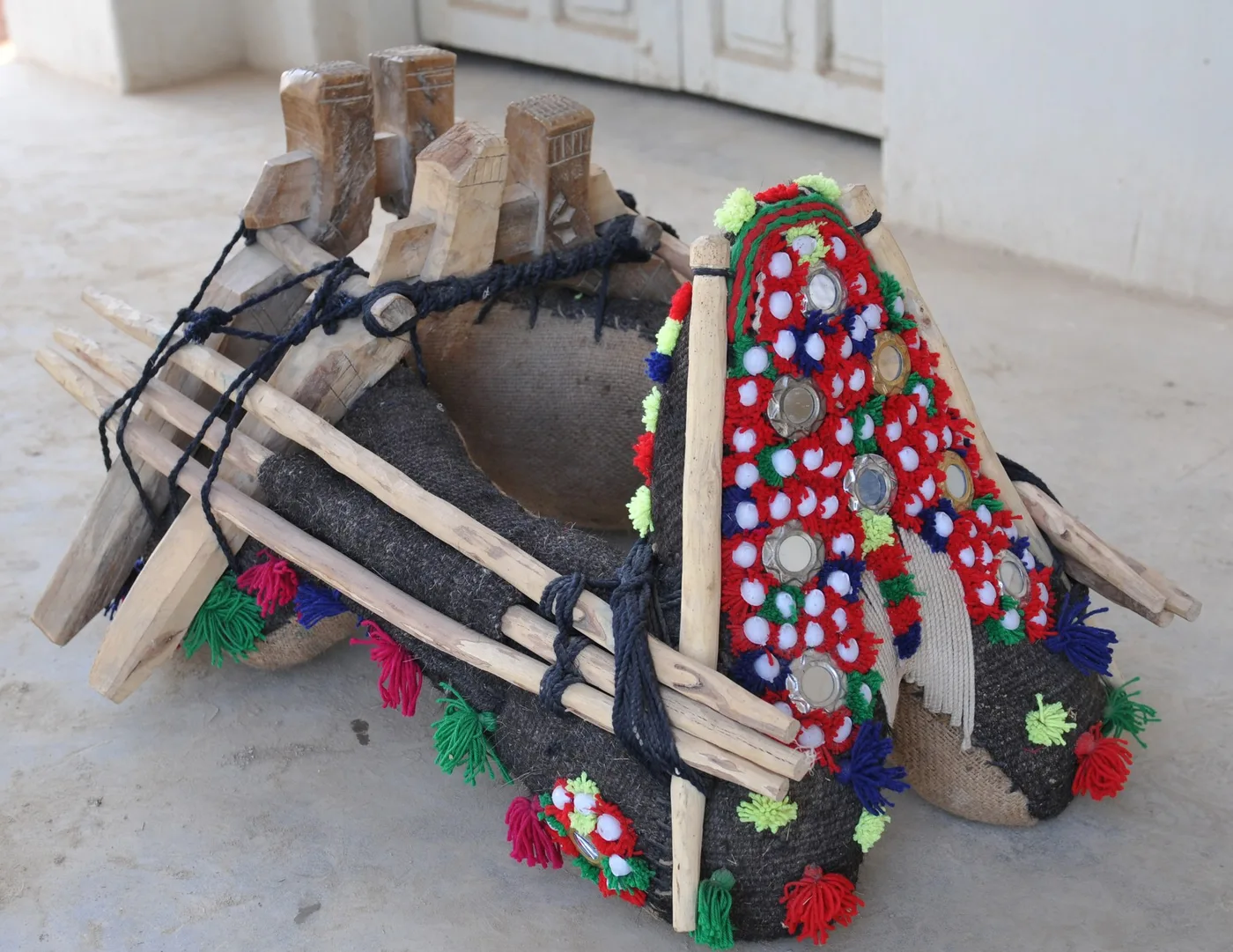
(Image generated by ChatGPT using OpenAI technology)GEN 31:34: The Hebrew word kar appears only here, and its exact meaning is uncertain. It is variously rendered “saddle” (RSV, NIV), “saddlebag” (GNT), “the cushion she used as a saddle” (CEV), “[camel]bag” (REB), “cushion” (NJB), and “saddle basket” (GECL). From the context it is evident that it was something that Rachel could sit on and that her father would not have thought it strange that she did so. On the other hand, she had hidden some household idols (see Teraphim, household idol) in (or under) this thing, so we may assume that it was more than just a cloth laid over the camel. Camel saddles could be rather elaborate. Sometimes the saddle was an entire large basket or litter in which a person sat. At other times a wooden frame was placed over the camel’s humped back. Over this frame were draped cloths and blankets to cushion the ride and to separate the rider’s legs from the animal’s back. In either of these arrangements, it would not have been difficult for Rachel to find recesses in which to hide a number of small idols. The text does not say that Rachel is sitting on the camel but rather on the camel’s saddle, and it is clear from the context that she is in her tent. When travelers arrived at their camp for the night, it was the custom to remove the saddle and store it in the tent. If it was a wooden frame, then it also served as a place to sit. The wooden frame, shaped to fit over the camel’s back, created a fairly large hollow area as it sat on the floor of the tent. Rachel had evidently hidden the idols under her chair.