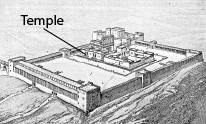
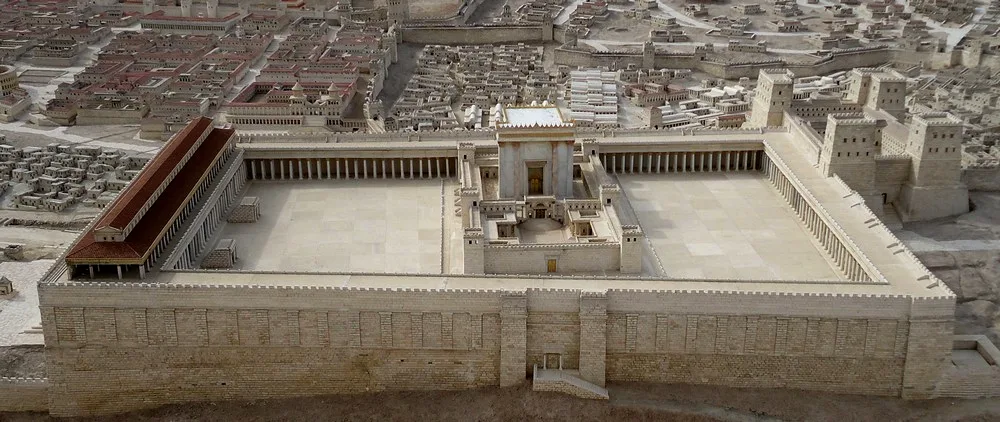
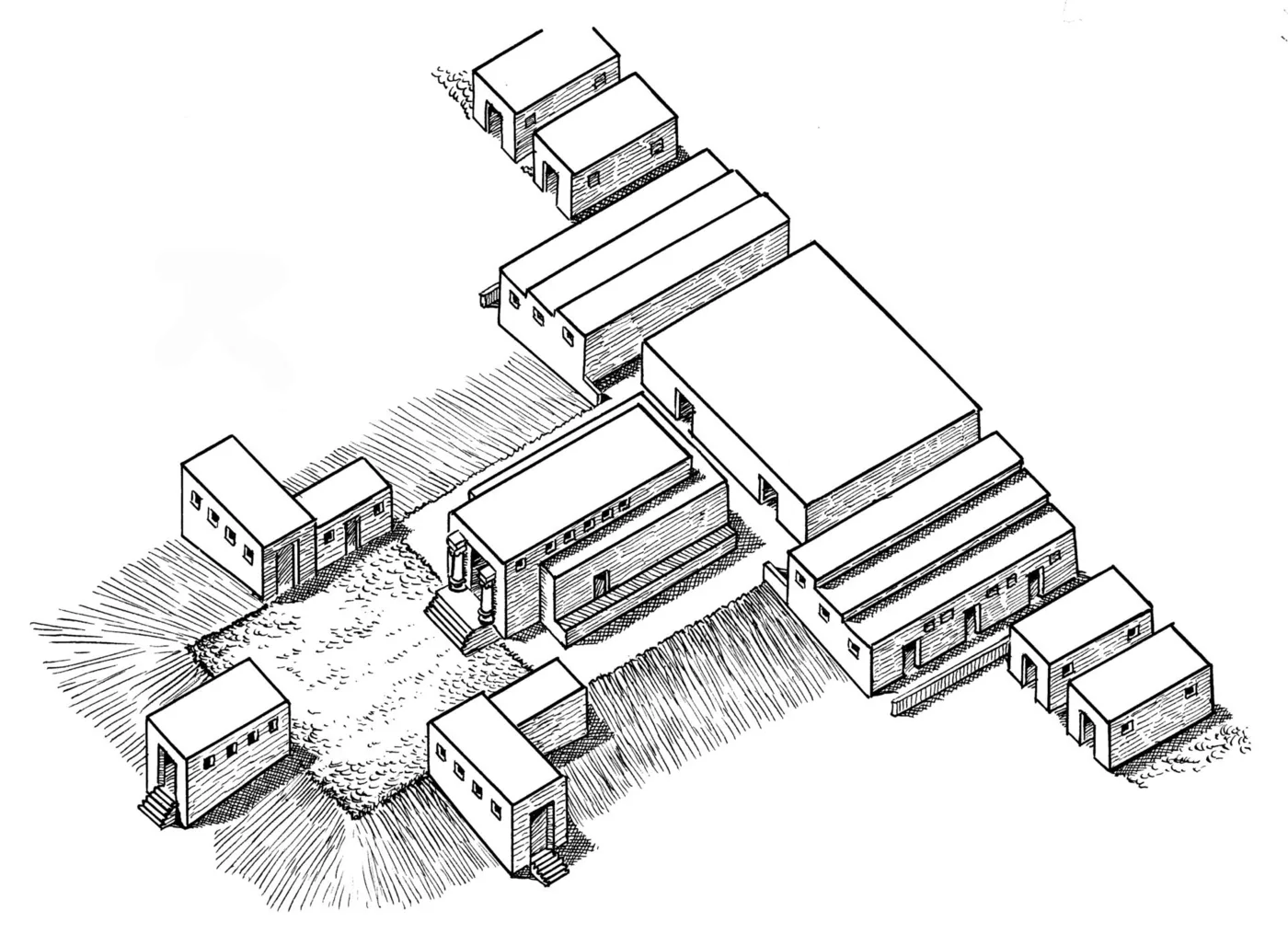
The Temple was the building in Jerusalem in which God was regarded as dwelling and where he was worshiped. From the time it was first built by Solomon, it was the center of worship for the Jewish people. In Jewish history three temples were constructed, all of them quite different from the others. The first Temple, built by Solomon, was destroyed in 587/586 B.C. A new, more modest Temple was built about seventy years later by Zerubbabel and lasted until almost the time of the New Testament, when it was rebuilt by Herod the Great. This third structure was only completed about 63 A.D. and was destroyed by the Roman army seven years later.
“Temple” may be rendered “house of God,” “place where God dwells,” or “God’s building.” Some languages often say “holy house” or “holy place.” Other renderings are “God’s great singing house” and “God’s big prayer house.”
(Image generated by ChatGPT using OpenAI technology)In some languages there is a technical term for “temple,” and this is often carefully distinguished from an expression designating a central sanctuary in which the deity is thought to dwell. In the New Testament the Greek word naos refers to a single building, while the word hieron points to the entire Temple precinct with its buildings, courts, and storerooms. Even though in a number of contexts it is not necessary to distinguish between hieron and naos, in MAT 21:12 (and the parallel passages MRK 11:15; LUK 19:45; JHN 2:14), it is important to indicate this distinction in order not to leave the impression that sacrificial animals were actually being sold inside the central sanctuary. When translating “temple,” translators should avoid using the same term used to translate “synagogue” in the New Testament.