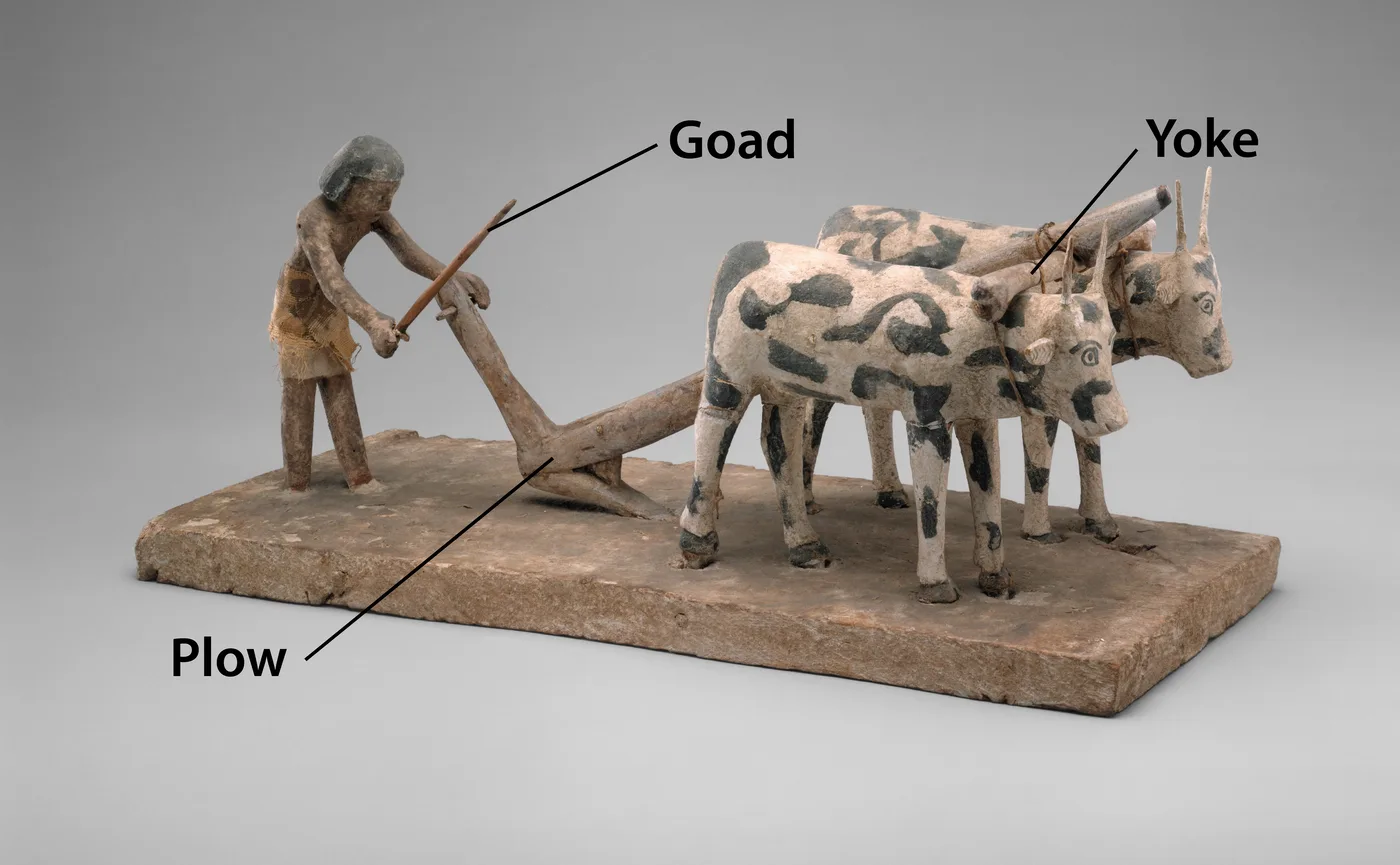
Description
The plow consisted of a flat triangular blade (the “plowshare”) made of hard wood or metal, connected to a handle. In another design the plowshare was a wooden bar covered with a cylindrical, pointed metal sleeve. Ropes or a wooden pole attached to the handle were connected to the yoke and pulled by one or more animals.
Usage
The plow was used to cut the soil in preparation for the sowing of seed or the planting of seedlings. (The soil might also be plowed again after the seed was scattered, in order to cover the seed and protect it from the birds and from the sun.) The point of the plowshare cut a shallow furrow in the earth. Plows did not turn over the soil but were used simply to break the surface, seldom to a depth of more than 25 centimeters (10 inches). A man could pull the plow, but more often it was pulled by either oxen or donkeys, while a man walked behind and directed the animals and held the plow in its proper line and depth in the soil.
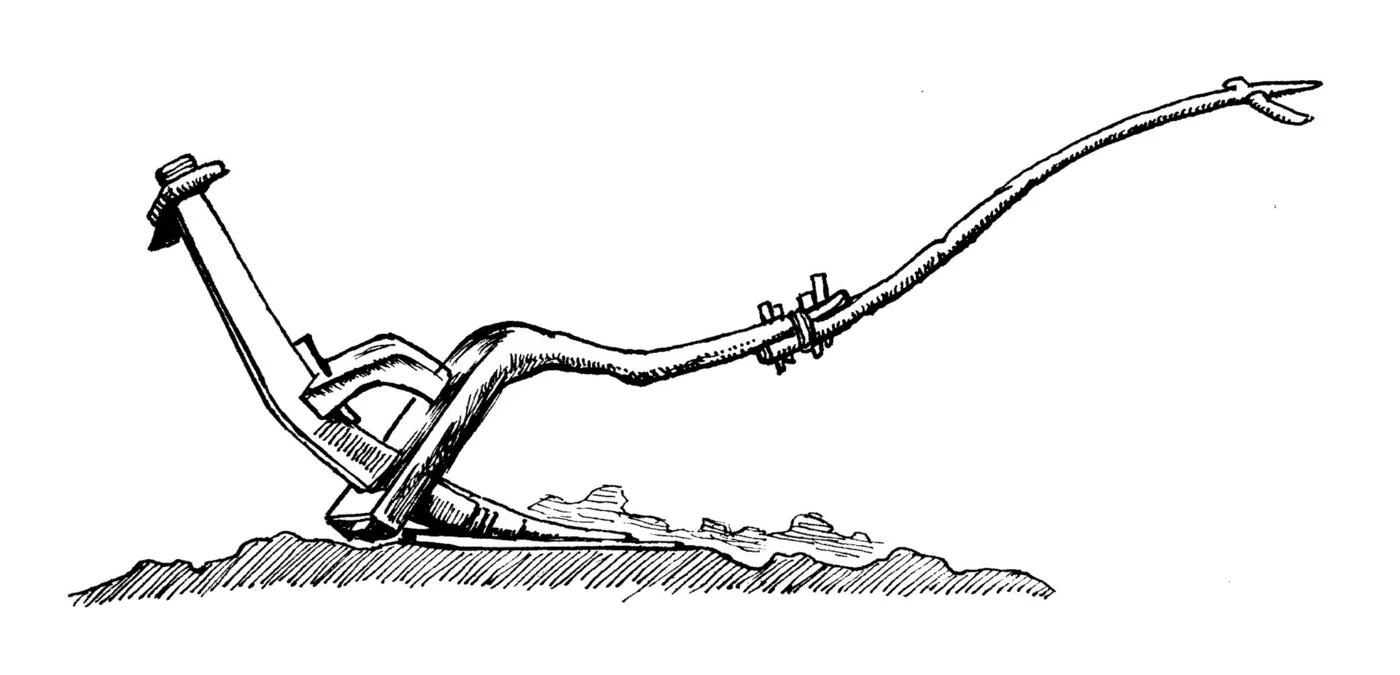
Translation
In most parts of the world at least some type of plow is known. Where a plow is unknown, translators may use the name of a tool used for the same kind of agricultural work, such as “hoe.” This will not be possible where the text refers to plowing with animals (for example, DEU 22:10; 1KI 19:19). ’Eth refers to the physical similarity of the plowshare and the sword in ISA 2:4; JOL 4:10; and MIC 4:3. Where plows are unknown, in these passages translators may substitute some other farming tool, which could reasonably be formed from a sword or machete or cutlass.
The Hebrew verb charash is used figuratively in several passages. In JER 26:18 and MIC 3:12 it speaks of the total destruction of Jerusalem, and in JOB 4:8 and HOS 10:13 it expresses the idea that doing an evil deed will bring an evil result. For the figurative use of plowing in PSA 129:3, see A Handbook on Psalms, page 1080.