Description
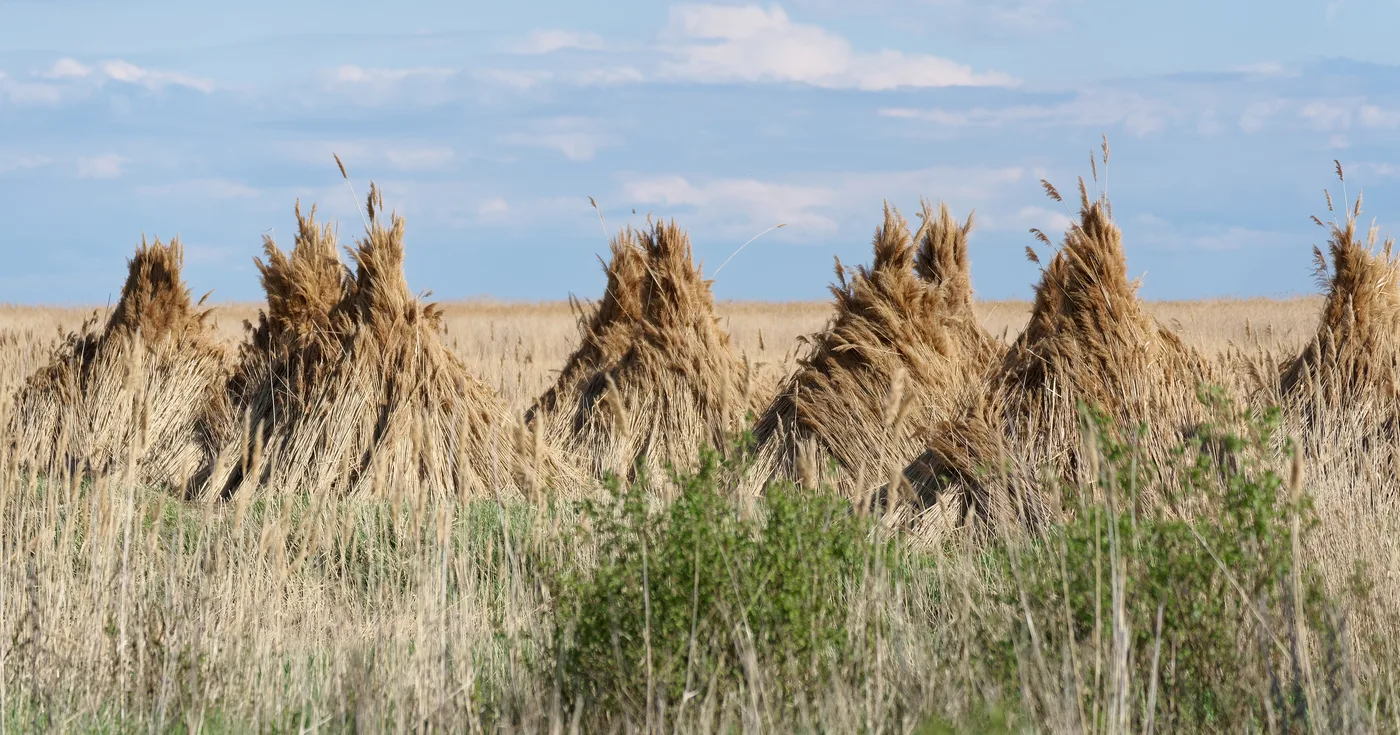
The sheaf was a bundle made by binding together the stalks and ears of a crop that had been harvested. The binding was most often done with stalks of the grain itself.
Usage
Grain was harvested by cutting the stalks low to the ground with a sickle (see Sickle) or even by pulling them up by hand. The stalks were then gathered into bundles and tied together around the middle, making a sheaf. If the sheaves were not collected immediately, they could be left in the field in a standing position to keep the heads of grain off the damp ground. After the sheaves were collected, they were taken to the threshing floor (see Threshing floor).
Translation
For the word “sheaf,” translators may use a descriptive phrase, such as “bundle of harvested grain.” In some cultures the practice of tying grain into bundles is unknown. Some languages may have to say something like “bunch of grain you tie together.” In some cases it will be necessary to specify what kind of grain is involved. It may be possible to render “sheaf” in a more general sense as “harvest” (so GNT in PSA 126:6; compare GNT in JOB 24:10, where it has “wheat”) or even “grain” (so GNT in AMO 2:13 and MIC 4:12). Another passage where GNT renders “sheaf” in a broader sense is JDT 8:3. The literal RSV text has “as he stood overseeing the men who were binding sheaves in the field,” but GNT says “while in the fields supervising the farm workers.”
The Hebrew words ‘amir and ‘omer actually indicate a heap of many sheaves gathered at the edge of the field before being transported to the threshing floor, so the focus of AMO 2:13 is on the collective weight of the grain.