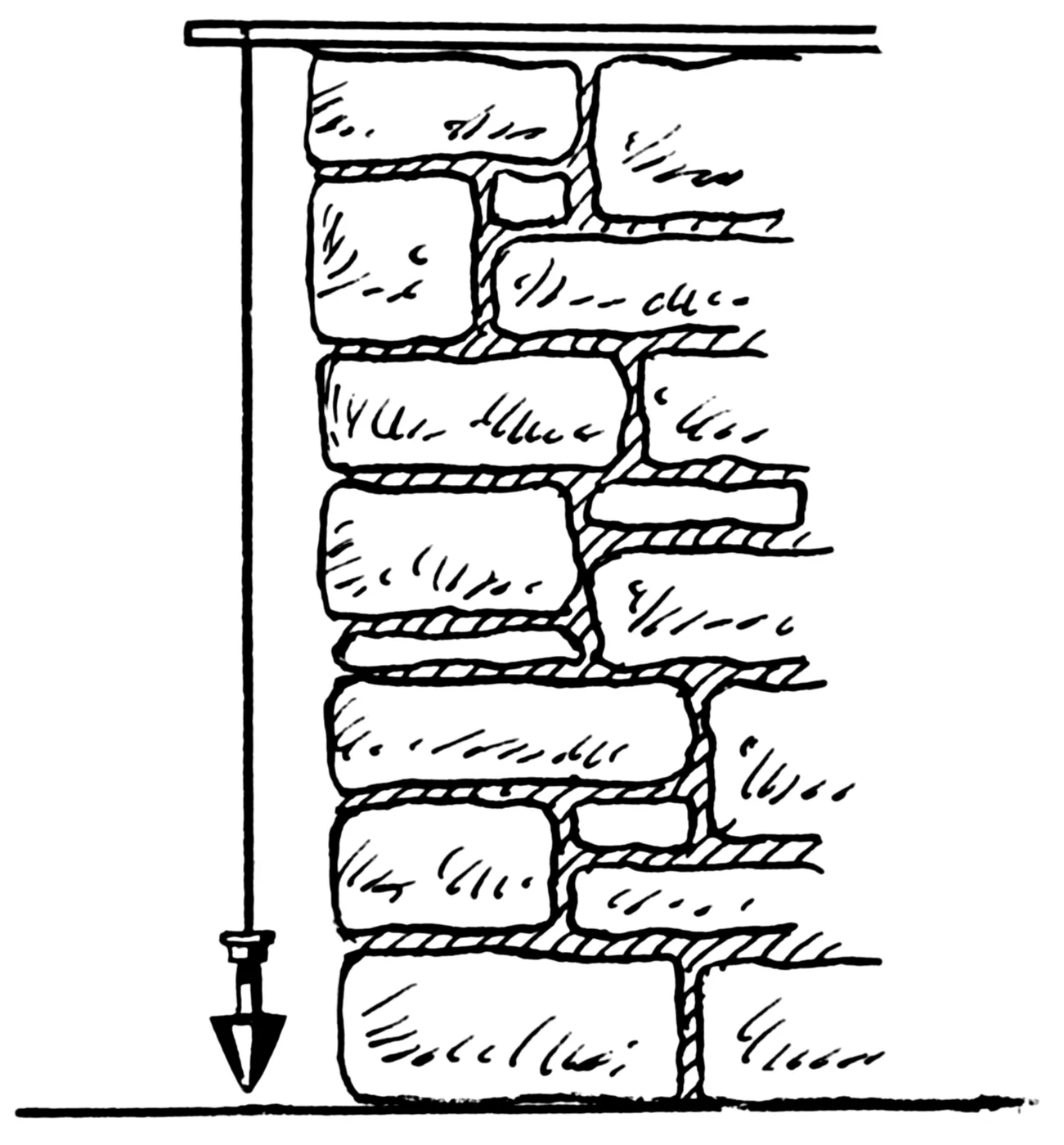
Description and usage
The plumb line was a weight suspended on the end of a string, used by builders to determine, for example, if all the stones in a wall were vertically straight.
Translation
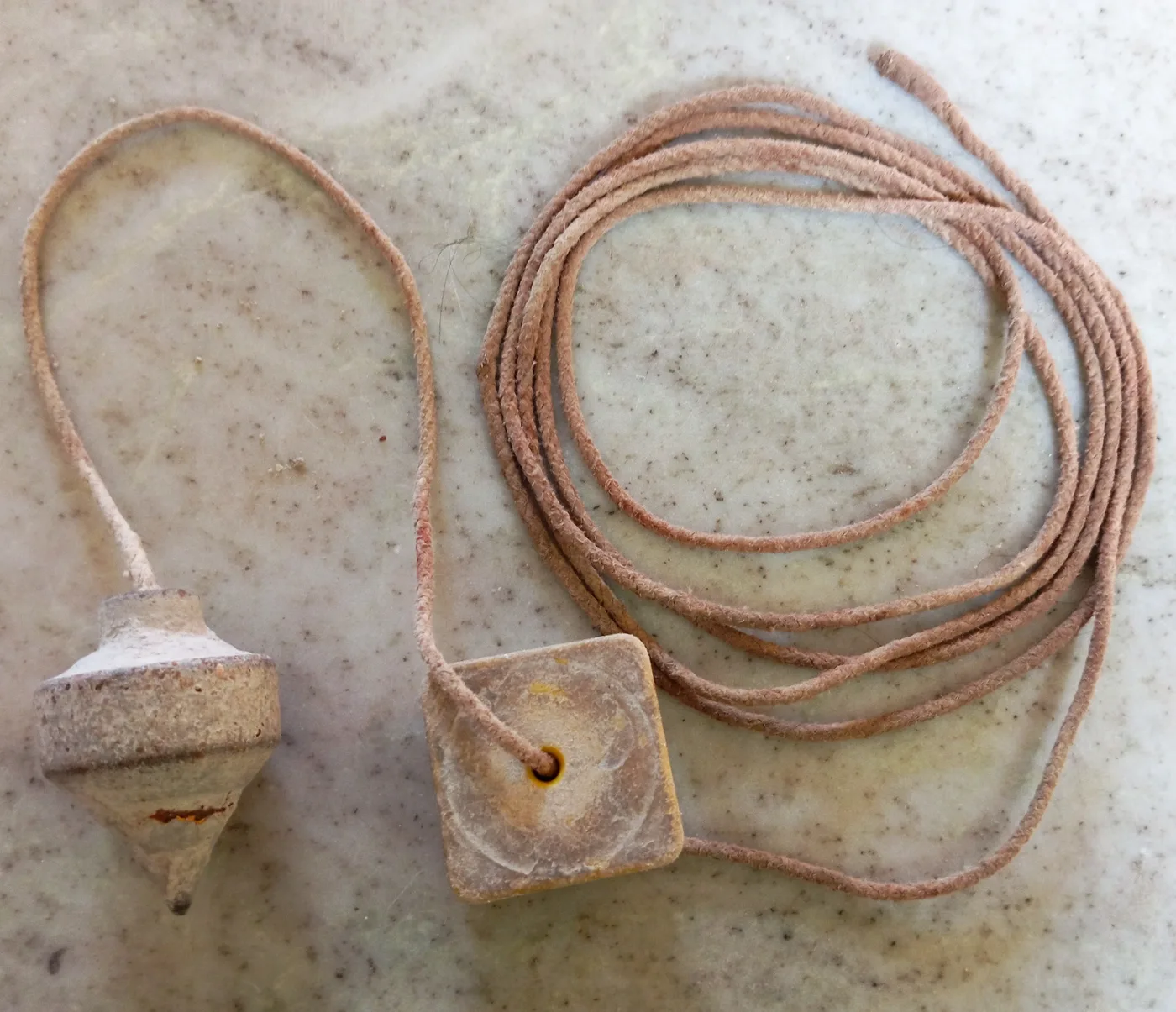
In 2KI 21:13 the Hebrew text is literally “And I will stretch out over Jerusalem the measuring line of Samaria and the plumb line of the house of Ahab.” Here both “the measuring line” and “the plumb line” are used symbolically, so translators may convey the meaning without actually referring to them. GNT may serve as a model: “I will punish Jerusalem as I did Samaria, as I did King Ahab of Israel and his descendants.” Compare CEV: “Jerusalem is as sinful as Ahab and the people of Samaria were.”
AMO 7:7: The LORD is seen as standing on or by a wall, which in Hebrew is called “a wall of a plumb line.” The translation “plumb line” is not fully certain but no other suggestion is as good. GNT tries to make sense out of the phrase “a wall of a plumb line” by saying “a wall that had been built with the use of a plumb line” (similarly RSV, The Translator’s Old Testament [TOT]). On the other hand, it may be better to follow most modern English translations (AT, Mft, NAB, NEB) as well as many commentators who have something like “standing by a wall with a plumb line in his hand” for the last half of this verse. They consider “of a plumb line” to be the result of a copying mistake. A possible model for the whole verse is “The LORD caused me to see again in a vision. I saw him on the top of a wall stretching out a cord to see whether the wall was straight.”