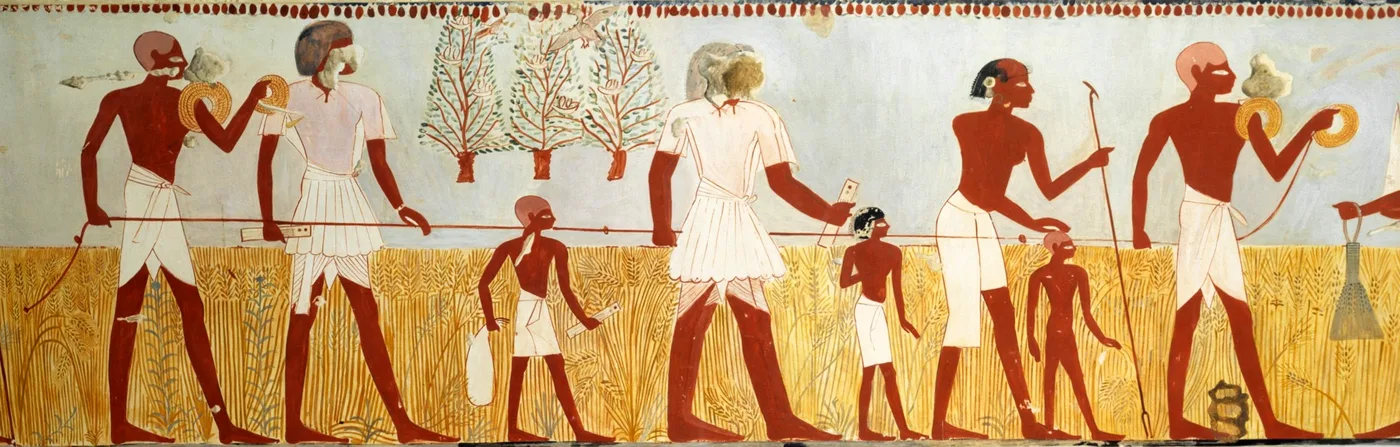
Description and usage
The measuring rod/line was an instrument used for measuring length. It could be a reed, stick, or rope.
Translation
The equivalent for “measuring rod” may be simply “measuring stick” or “stick with which to count the distance.”
2KI 21:13: The declaration of judgment in this verse was given before the capture and exile of Judah but after the defeat of the northern kingdom with its capital in Samaria. The “measuring line” is used as a device to indicate that the sins of the southern kingdom with its capital in Jerusalem are just as bad as those of the northern kingdom with its capital Samaria. Some common-language translations choose to drop the image of the “measuring line” in favor of a direct statement of the essence of the judgment; for example, the first half of this verse in CEV reads “Jerusalem is as sinful as Ahab and the people of Samaria were” (see Plumb line).
MIC 2:5: The Hebrew word chevel in this verse refers to a line used to measure out property for ownership. The prophet is saying that when the exiles of Judah return, the families of the rich people will have no share or plot of land. The Hebrew refers specifically to the process by which the family shares were chosen. The “lot” (RSV) was probably a set of stones with special markings on them (see Lots). The stone chosen would show what God’s will was in that particular case. The “line” is the measuring line used to mark out the family plots. The lots may have been used to show where the measuring line should be placed. Most translators prefer to express the general procedure of parceling out the land and its significance rather than trying to render the specific instruments involved in the procedure; for example, CEV has “And so you will never again own property among the LORD’s people,” and GNT says “So then, when the time comes for the land to be given back to the LORD’s people, there will be no share for any of you.”
REV 11:1: RSV renders the Greek phrase of three words near the beginning of this verse as “a measuring rod like a staff.” However, the meaning of the Greek is better expressed by NJB “a long cane like a measuring rod”; compare GNT “a stick that looked like a measuring-rod,” REB “a long cane to use as a measuring rod,” NIV “a reed like a measuring rod,” and the Chewa common language translation, which has “a reed for measuring with that looked like a walking stick.” The first Greek word in this phrase is kalamos. It designates a reed or a cane (see its use in REV 21:15; REV 21:16, where GNT has “measuring stick”). The third Greek word, rhabdos, refers to a staff or a rod here. Elsewhere in Revelation it refers to the “iron rod” (or, “scepter”) used by Jesus Christ (REV 12:5; REV 19:15) and his followers (REV 2:27). It is better to follow GNT or NJB in translating the passage here. See also the remarks at Rod, club, shepherd’s staff.