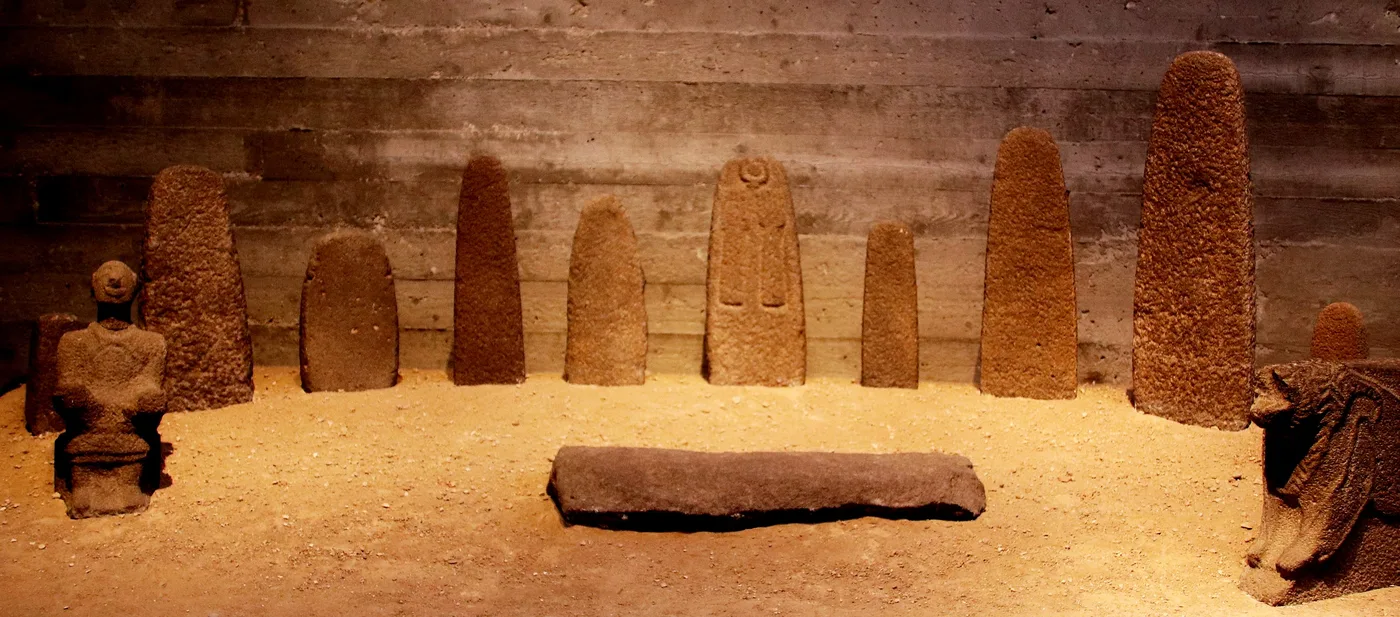
Description
The sacred pillar was a column that was usually made of a single stone. It could sometimes be inscribed with some memorial of an event that had happened at the place where the stone stood. Such monuments could be made of a single stone or a pile of stones.
Translation
The erection of pillars for special sacred purposes was a common practice in biblical culture. They were set up to commemorate important events, such as a divine manifestation or a military victory, as well as to solemnize a vow or an agreement, or to keep alive the memory of some ancestor or other notable person.
The Hebrew words matsevah and matseveth are used for two distinct things. On the one hand, they can describe legitimate memorial stones set up, as in the case of ISA 19:19, even to the LORD himself. On the other hand, the same kind of memorial stone could be set up by idol worshipers to honor their gods. In the latter case, they are strongly condemned by the Scriptures, and the Israelites were even told to destroy them (for example, EXO 23:24; DEU 7:5). Some languages will make a distinction between the two, either with different words or with qualifiers. For example, GNT translates the Hebrew word matsevah in GEN 35:14 as “memorial stone,” while in EXO 23:24 the same word is rendered “sacred stone pillars.” Some translators will want to expand the translation of “memorial stone” with a descriptive phrase, such as “large rock, so that he would remember what had happened there” (CEV).
Memorial stones (often referred to as witnesses) are found in GEN 28:18, GEN 28:22; GEN 31:13, GEN 31:45, GEN 31:51; GEN 31:52; GEN 35:14, GEN 35:20; EXO 24:4; 2SA 18:18; ISA 19:19.
Sacred stones are found in EXO 23:24; EXO 34:13; LEV 26:1; DEU 7:5; DEU 12:3; DEU 16:22; 1KI 14:23; 2KI 3:2; 2KI 10:26; 2KI 10:27; 2KI 17:10; 2KI 18:4; 2KI 23:14; 2CH 14:3; 2CH 31:1; JER 43:13; EZK 26:11; HOS 3:4; HOS 10:1; HOS 10:2; MIC 5:13.