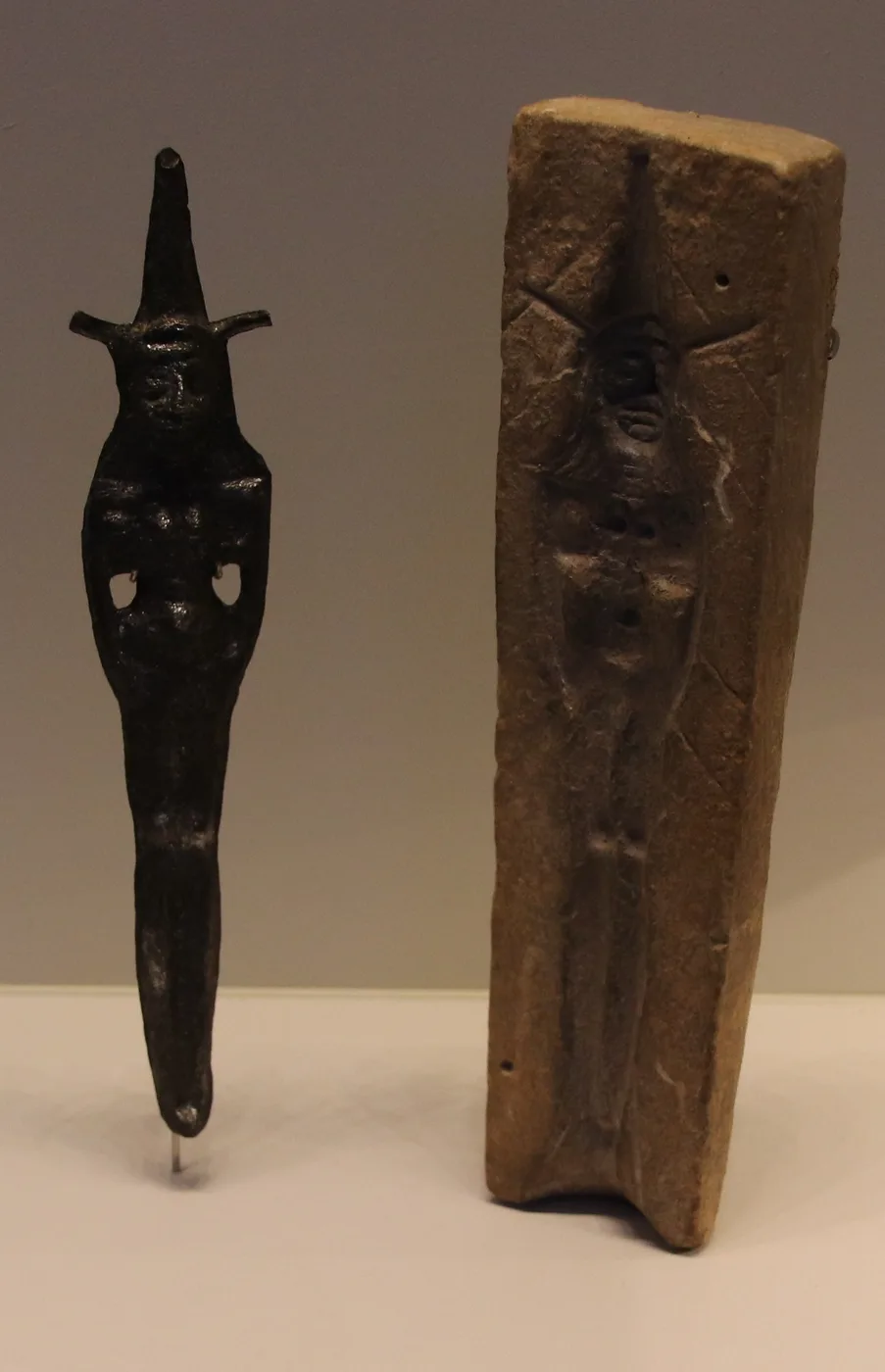
Description
A teraphim was a sculpted or molten figure representing a god. Its size could vary considerably, from quite small to almost the size of a man.
Translation
Teraphim played a role in acts of divination. The one who possessed them was usually recognized as the head of the household, with all of the rights that went with that position. By showing proper reverence to the household idols, the family expected to be rewarded with prosperity, health, plenty of food, and other necessities of home life.
Some cultures will know a similar kind of idol or representation of a local god, and the word for such an idol or representation may be used.
The Hebrew word trafim is evidently a kind of royal plural, used to speak of multiple idols but also of a single idol.
GEN 31:19: Translations use a variety of terms for the word trafim in this verse; for example, “household gods” (RSV, GNT, NIV), “family idols” (SPCL), and “small idols” (first edition of GECL). Some translations choose to use simply the generic term “idols” (NCV, ITCL, Septuagint), and this is the practice of many translations in most of the references listed above. CEV adds the following footnote: “household idols: These were thought to protect the household from danger. It is also possible that the person who had them would inherit the family property.”
1SA 15:23: A few translations simply transliterate the word trafim here; for example, for the second line of this verse NJPSV has “Defiance, like the iniquity of teraphim.” However, most translations understand trafim to refer to idol worship in general. NIV has “and arrogance like the evil of idolatry,” and NCV says “Pride is as bad as the sin of worshiping idols.”
1SA 19:13: Even though there seems to be only one idol involved in the story here, the Hebrew word trafim in this verse is still in the plural, as it always is in the Bible. The idol in this instance was big enough that Michal thought it would fool Saul’s men into thinking that it was a grown man. For this reason CEV says “statue,” although most translations consulted prefer a word that indicates that it was an object involved in pagan worship. ITCL includes both elements with “statue of an idol,” while GECL has “carved figure of the household god.”