Threshing board, sledge

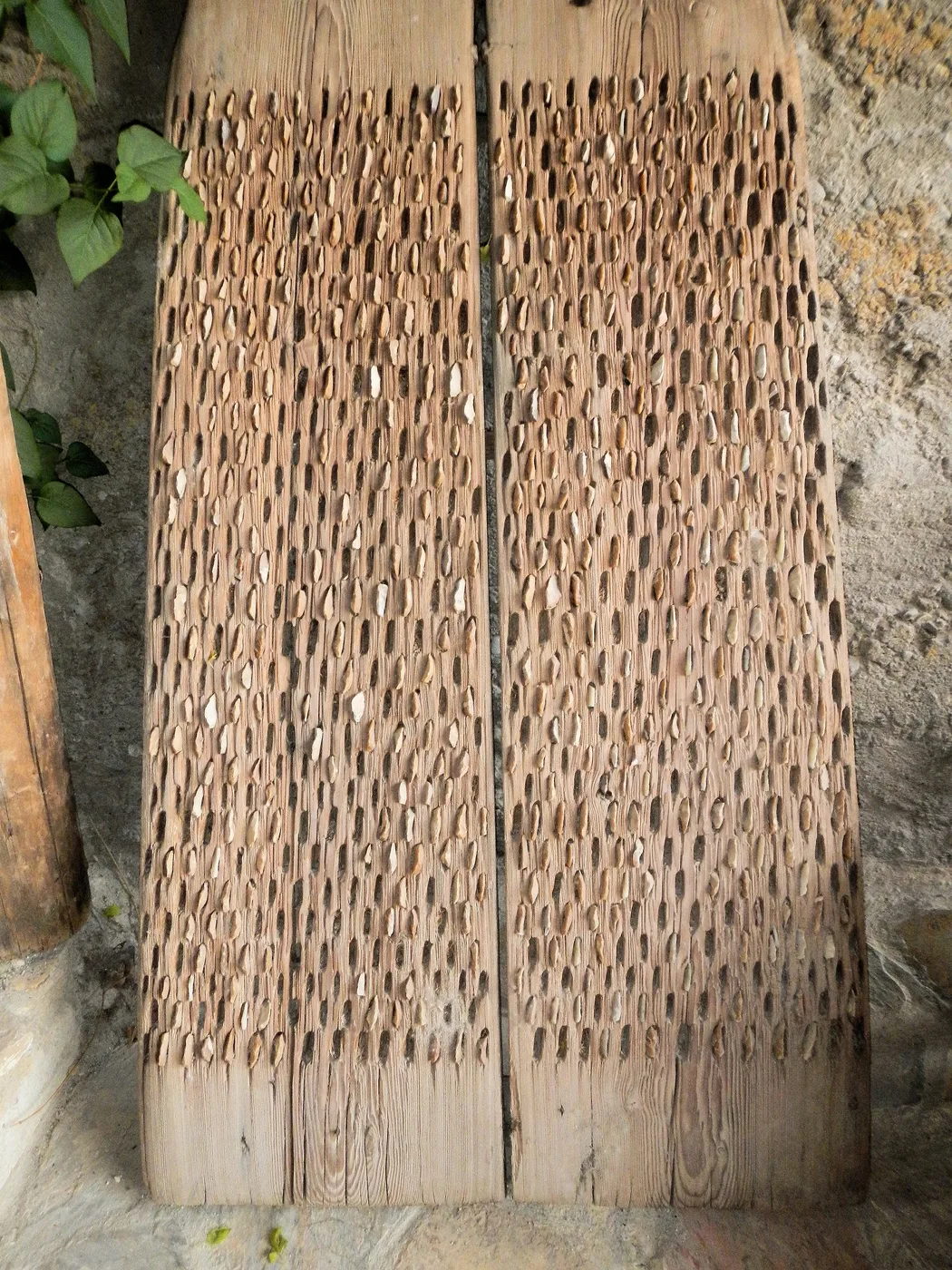
Bottom of a threshing board
Bottom of a threshing board (© Renyrt, CC BY-SA 3.0, via Wikimedia Commons)

Description

The threshing board was a flat wooden surface made of a single piece of wood or several boards attached side-by-side. It measured roughly 1.5 by 1 meter (5 by 3 feet). On one surface a number of small holes were carved, and into these holes hard, sharp stones (flint or basalt) or metal pieces were tightly wedged.


Usage
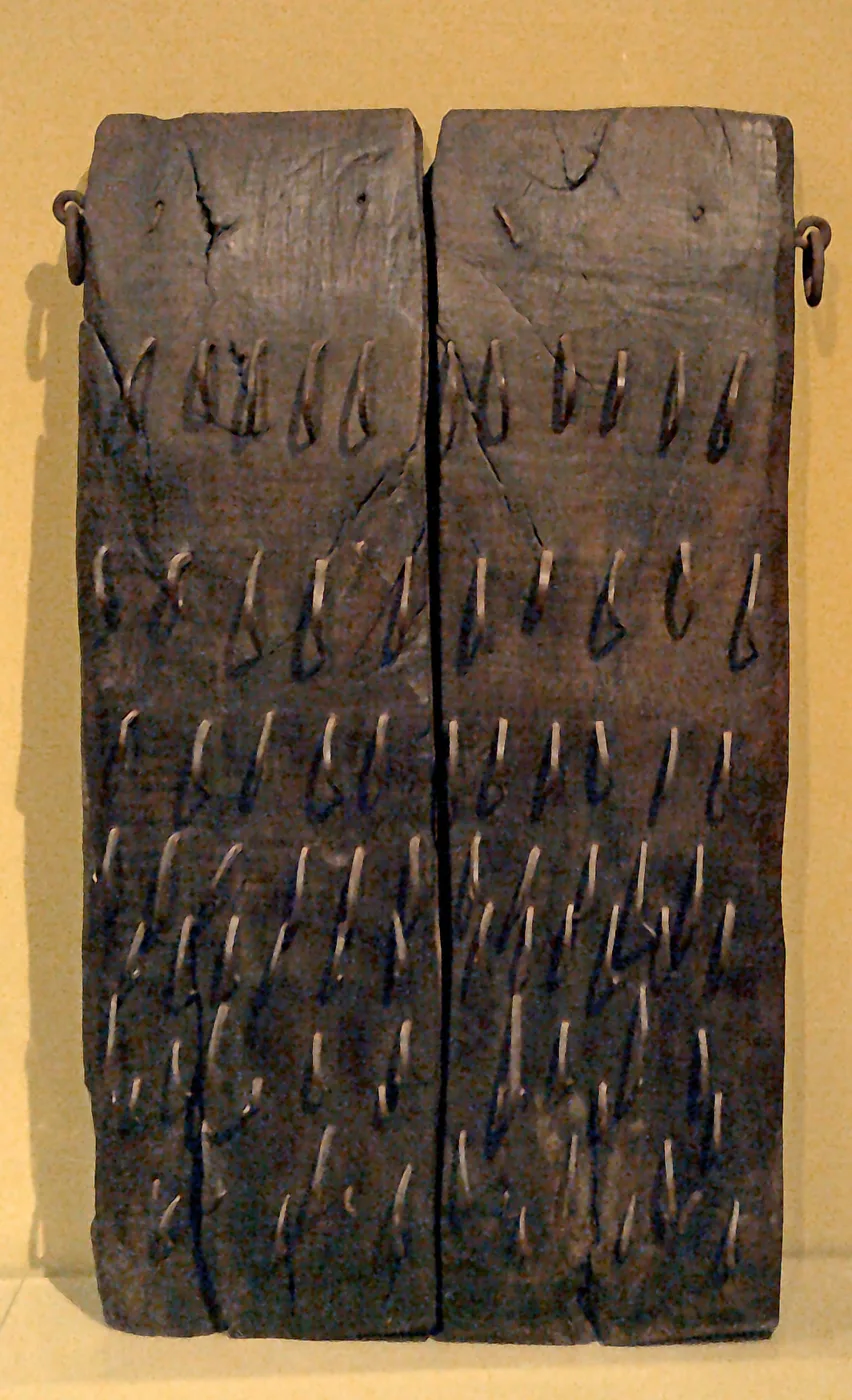
Iron threshing board
Iron threshing board (© CarlosVdeHabsburgo, CC BY-SA 4.0, via Wikimedia Commons)
The threshing board, with the stone side downward, was dragged over the stalks of grain by a draft animal, to which it was attached by ropes. To increase the weight (and the effectiveness) of the implement, the farmer might stand or sit on the board as it was pulled. As the board with its embedded stones passed over the grain, the kernels were separated from the stalks and the seed coverings, while the straw was cut into chaff. See Threshing and winnowing above.


Translation

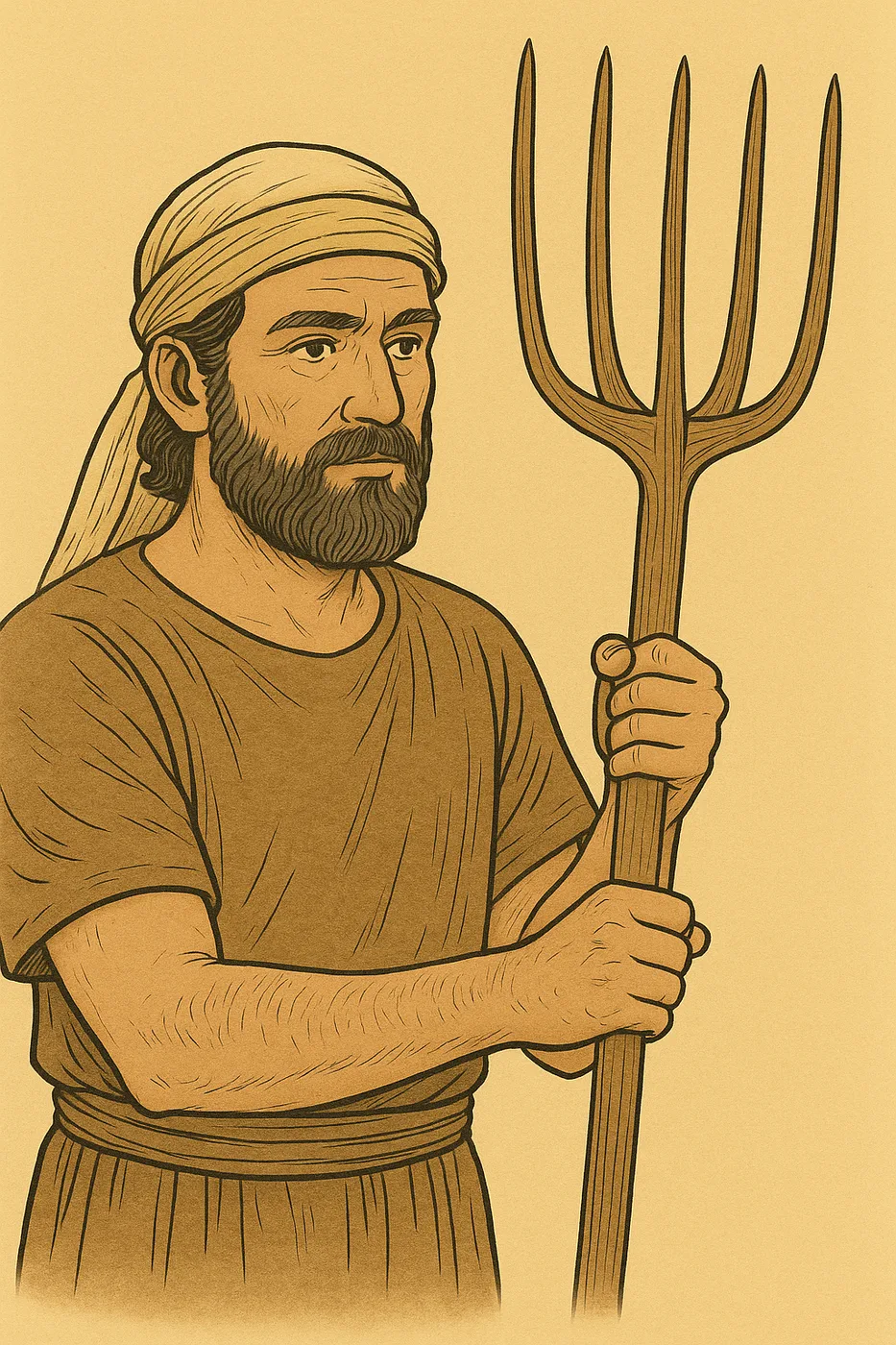
 (Image generated by ChatGPT using OpenAI technology)
ISA 28:27; ISA 28:28 uses several terms for instruments that performed basically the same function. The ‘agalah /‘eglah was probably a sledge with sharp discs and a seat on top. The point of the agricultural reference in verse 27 is that the seeds mentioned, dill and cumin, are too small to be threshed in the same way as larger grains such as wheat and barley. The Hebrew word charuts probably indicates a threshing board with iron spikes instead of stones. The Hebrew word ’ofan in verse 27 refers to the wheel of a cart (see Wheel).

AMO 1:3 speaks of “threshing sledges of iron” (RSV). This does not mean that the platform was made of iron but rather that iron spikes were protruding from the wooden platform instead of the usual stones. This language in AMO 1:3 is probably figurative, and where that sense would be lost, the last half of this verse may be expanded to say “because they destroyed the people of Gilead like someone threshes grain with iron-studded sledges.” Or it may be rendered nonfiguratively as in GNT, which reads “They treated the people of Gilead with savage cruelty.”

Scripture References (7)

2 Samuel

1 Chronicles

Amos