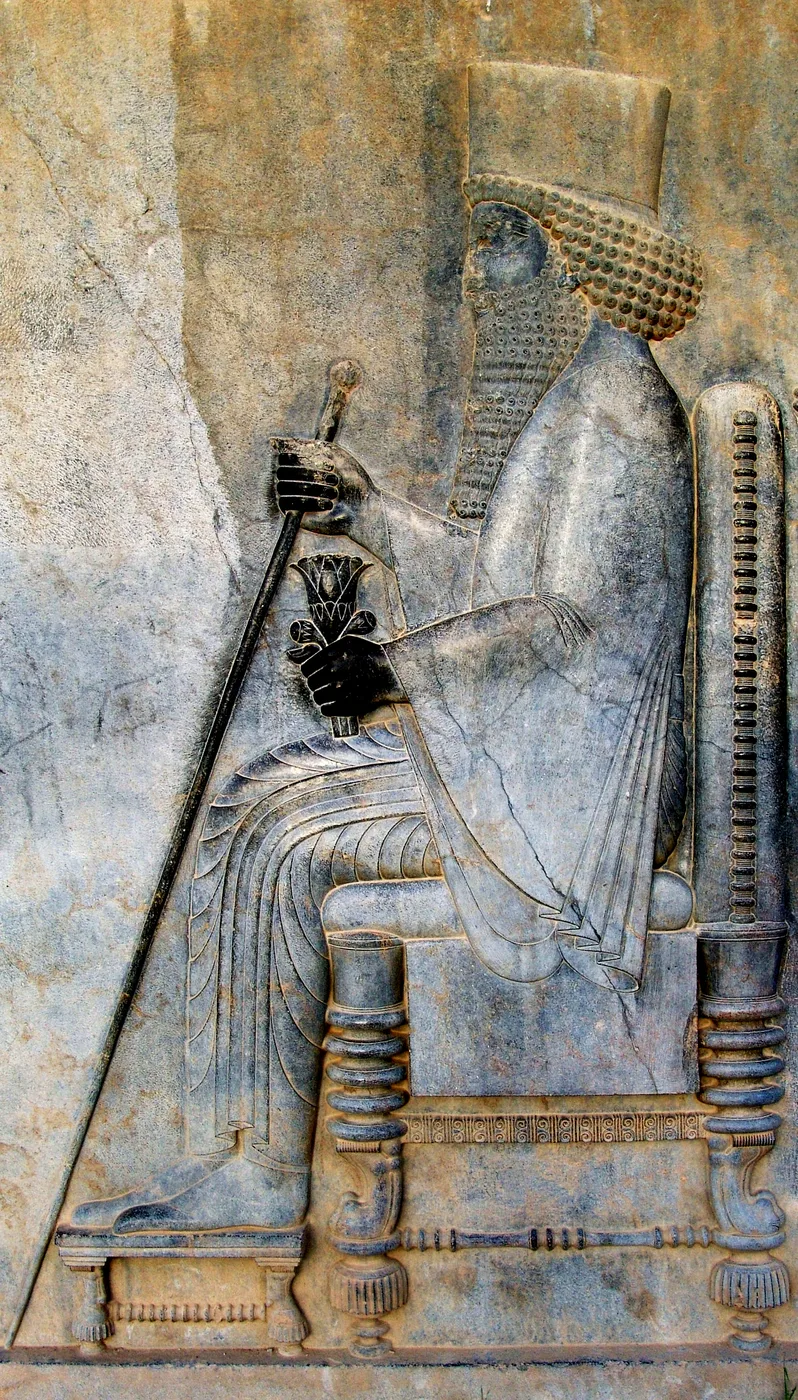
Description
The throne was a relatively large and elaborate seat upon which a ruler sat. It could be made of stone or wood or even other substances such as precious metals and ivory. It usually had a back and often armrests on the sides. The throne of Solomon is described in 1KI 10:19; 1KI 10:20 and 2CH 9:18; 2CH 9:19 as being elevated and approached by stairs. See Stairs, steps.
Usage
On official occasions the ruler sat on the throne. This could be for the reception of foreign dignitaries, the passing of judgment, or the making and declaration of major decisions regarding the nation.
Translation
“Throne” may be rendered “great chair,” “important seat,” or “king’s chair.” On the other hand, a description of the “throne” as a place of judging or of decision making may be the rendering, for example, “chair from which the ruler gives orders,” “seat of decision making for a ruler,” or “seat of judging.”
The Greek word thronos refers only to a throne, but the Hebrew words kise’ and kiseh are the normal words for a seat (see Chair, seat). When the seat of a king is in view, then the proper translation of these Hebrew words is “throne.”