Discussion
These Hebrew and Greek words (with the exception of pōlos and hupozugion see discussion below) all definitely refer to the Domestic Donkey equus asinus. However the different words do have slight semantic differences among them.
Chamor and onos are the generic words for donkey while ’athon (feminine gender) refers specifically to a saddle donkey or a donkey used for riding. A saddle donkey is usually a large strong female donkey the males are too difficult to control when they are near a female in heat. The Hebrew word is derived from a root that means “strong".
‘Ayir refers to the young male or jack donkey (probably with an emphasis on its liveliness and the difficulty in controlling it since the Hebrew root means something like “frisky").
Onarion means a young donkey of either sex. Some languages will have a special word for a young donkey. This will be appropriate for translating onarion
The word hupozugion often translated “donkey", actually indicates any beast of burden. Walter Bauer, the famous German New Testament scholar, has argued very convincingly that the animal referred to in MAT 21:5 in the expression epi pōlon huion hupozugiou is the foal of a horse not a donkey (1953:220–229). In some languages it will be possible to express this in a way that does not designate a specific species of animal`, as in “beast of burden” (NEBJB Revised English Bible [REB ]). pōlos usually refers to a foal, that is a young horse, unless a word for donkey follows (see also Wild ass).
Description
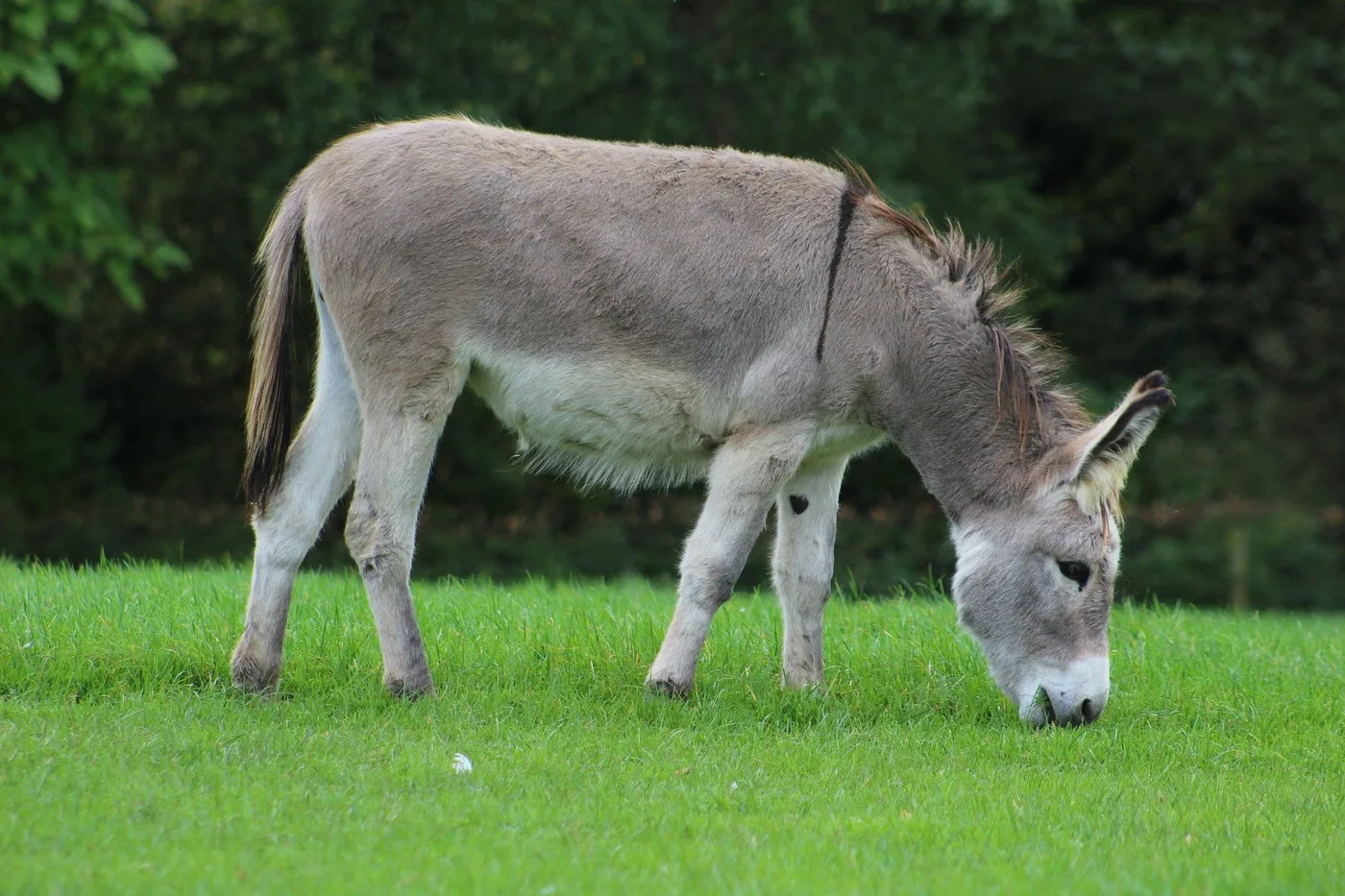
Donkeys are domestic animals belonging to the same family as the horse, but they are smaller and have longer ears. The donkey bred and used in the Middle East is the domesticated Nubian or Somali Wild Ass Equus Asinus africanus. In its original wild state this was a gray ass with pale, whitish belly and dark rings on the lower part of the legs. It was domesticated in Egypt as early as 2500 B.C. In its domesticated version, as a result of interbreeding with donkeys from Europe and Persia, the donkey came to be a variety of colors from dark brown, through light brown to the original gray and occasionally white. The Hebrew chamor comes from a root meaning “reddish brown."
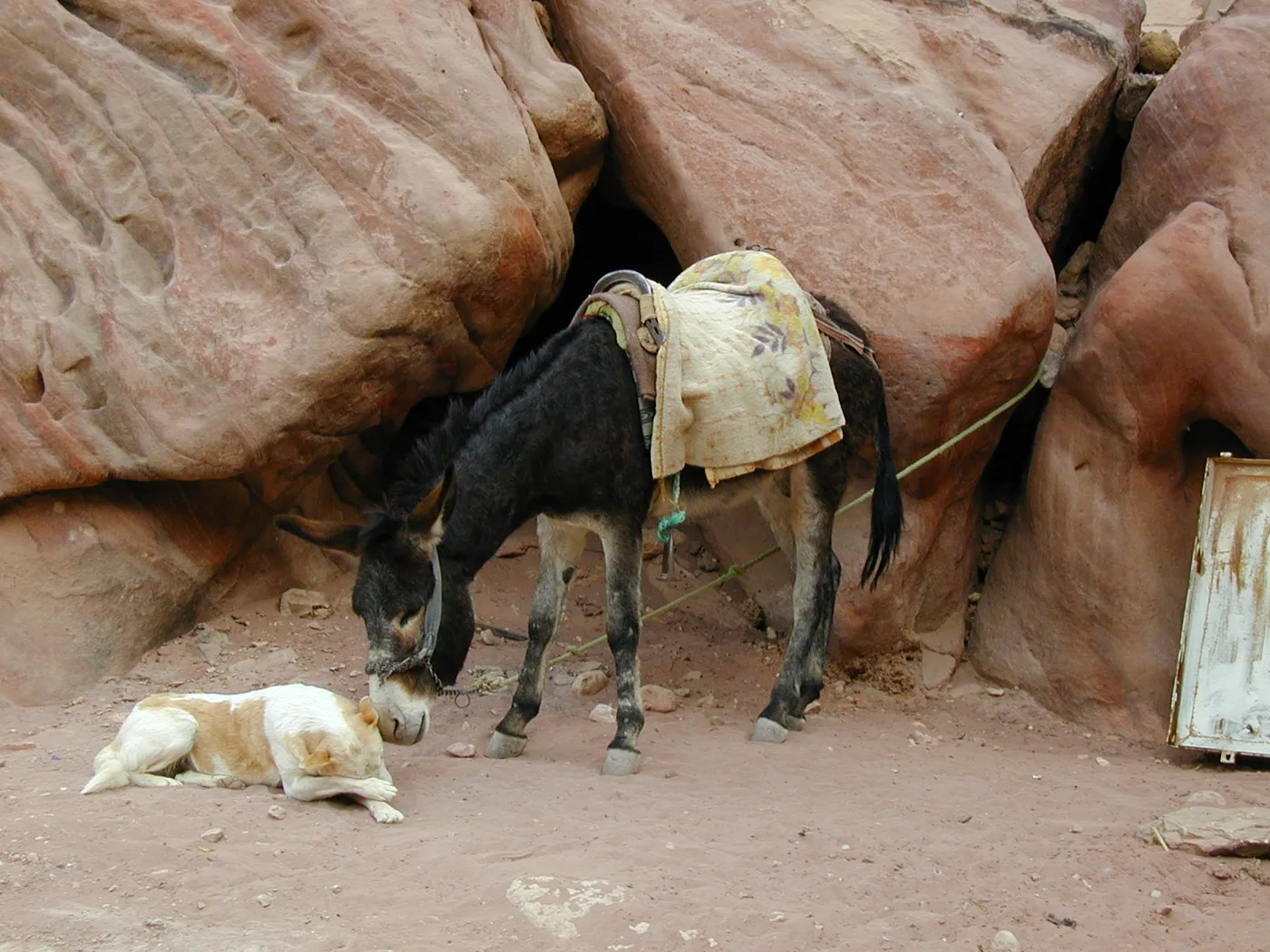
Donkeys were highly prized in biblical times especially females since they were suitable for packing and riding and had the potential for producing offspring. Donkeys were seen as man’s best friend in the animal kingdom. They were the common man’s means of transport and many ordinary families owned a donkey. They were used for plowing and for turning large millstones as well as a means of transport.
Today domestic donkeys are found all over savannah Africa the Middle East South and Central Asia Europe Latin America and Australia. They do not seem to be reared in rain forest or monsoon areas but they are nevertheless often known in these areas.
Special significance or symbolism
A donkey was considered to be a basic domestic requirement and thus the number of donkeys available was a means of measuring the relative prosperity of a society at any given time. While only powerful political or military people rode horses (which were usually owned by the state) the common people rode donkeys. This is the significance of the passage in ZEC 9:9: the victorious king would return to the city riding a donkey thus identifying himself as a common Israelite rather than a victorious warlord.
Translation
In the majority of languages there is a local or a borrowed word for donkey. This is the obvious choice. In areas of Southeast Asia, Papua New Guinea, West Africa, and other places, where donkeys are rare or unknown, the word from the dominant major language or trade language (for example, English, Spanish, French, Chinese, or Arabic) is often transliterated.
In most contexts ’athon should be translated by the equivalent of “female” donkey, but in some contexts riding donkey is better.
‘ayir should be translated according to the specific context. In GEN 32:15 the translation should definitely be the equivalent of “male donkey", and probably also in JDG 10:4 and JDG 12:14. The significance of these latter passages is that female donkeys were the more normal choice of mount.
In JOB 11:12 the emphasis is probably on the friskiness of the donkey, and the translation should be the equivalent of “He ties his young donkey to a grapevine, his frisky young ass to the best of the vines” (indicating a certain amount of irresponsibility, and perhaps extravagance).
In JOB 11:12 and ZEC 9:9 the obvious emphasis is on the youth of the donkey, so the equivalent of “colt", “foal", “young donkey", and so on should be used.
The emphasis in ISA 30:6; ISA 30:24 is neutral, so the ordinary word for “donkey” is appropriate.