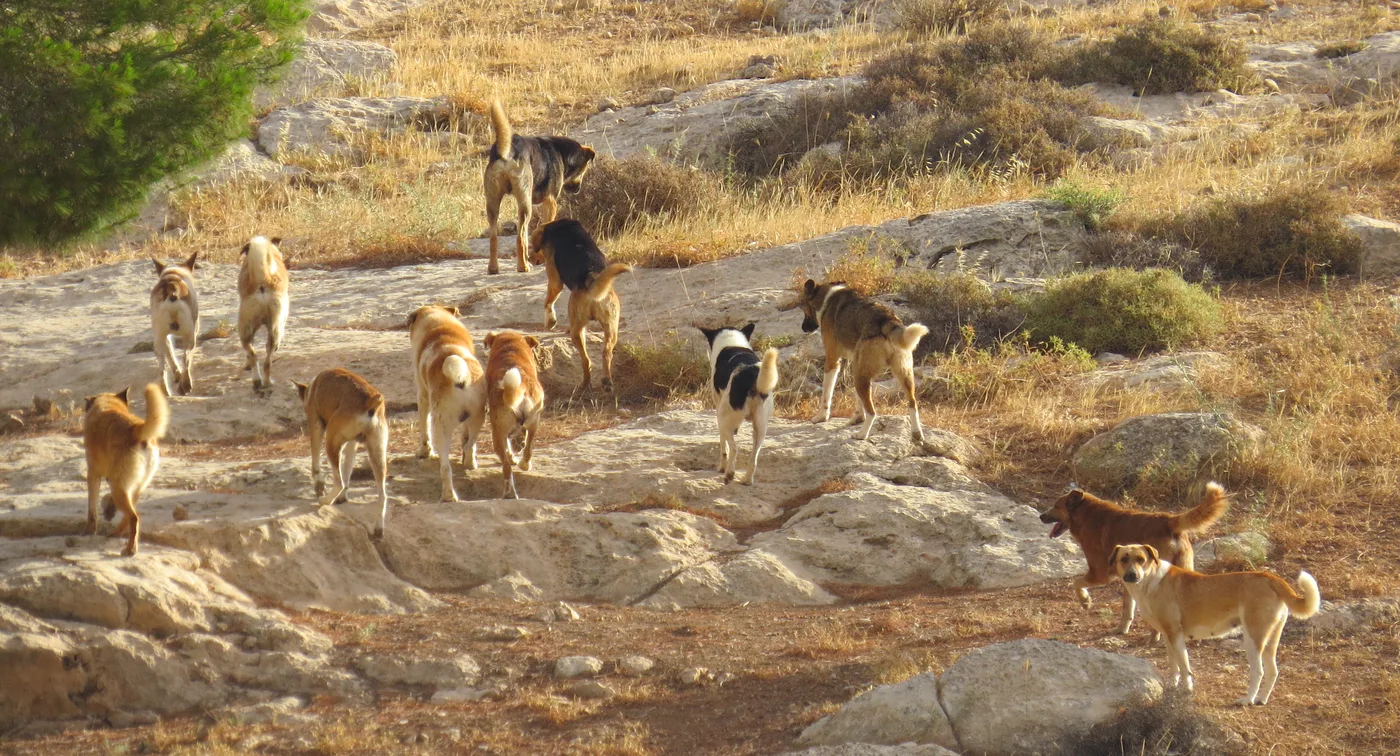
Discussion and description
Dogs were domesticated very early and were used for hunting and as watchdogs in the ancient world. In Egypt as early as 4000 B.C. people made pottery images that indicate that sleek fast hunting dogs were bred which looked like the modern greyhound. From Babylonian sculpture we know that around 2500 B.C. large hunting dogs that looked like the modern bull-mastiff were kept by people in the Mesopotamian civilizations.
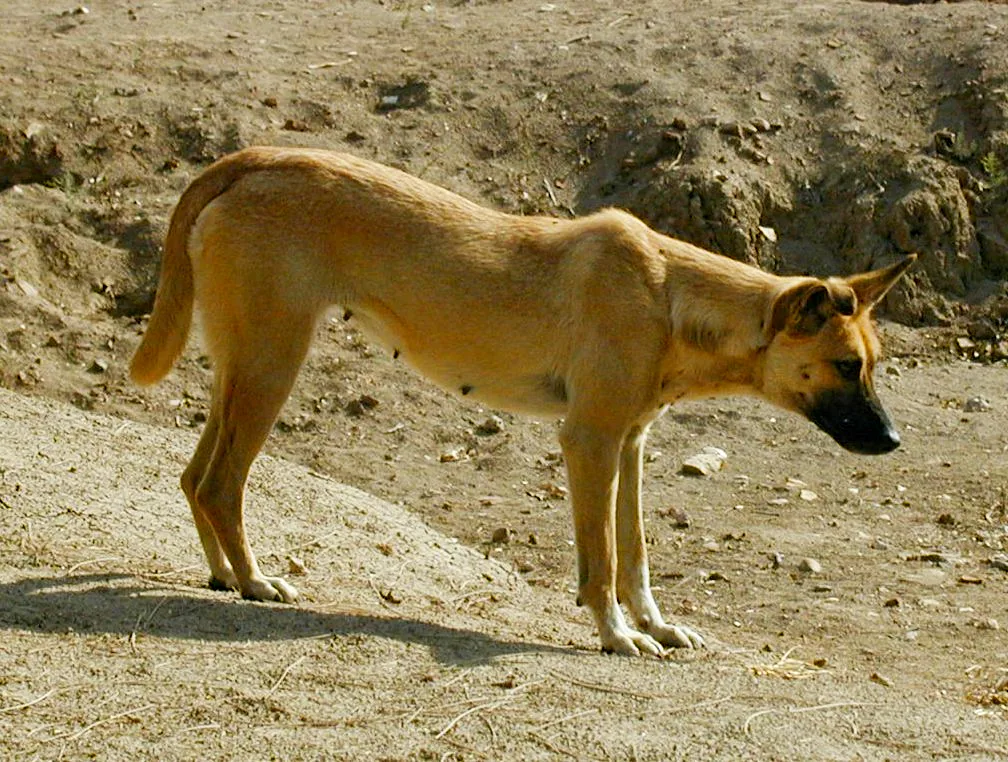
Small pet dogs were kept in homes in the Greek and Roman civilizations by gentiles but not by Jews. This is probably the type of dog referred to by the Greek word kunarion in MAT 15:26 and MRK 7:27.
Special significance or symbolism
As mentioned above dogs were held in contempt as unclean. To call someone a dog was therefore very derogatory and to refer to someone as a “dead dog” was even more so. Israelites viewed dogs as second only to pigs as unclean animals. Dogs as scavengers around the villages ate anything from household refuse to animal carcasses and human excreta. They even ate human corpses that lay unburied after battles. Furthermore the dog was possibly one of the symbols of the Egyptian god Anubis (although many modern scholars believe the symbol to be the jackal).
With all of the above in mind it is understandable that dying and then being eaten by unclean dogs was seen as the worst of all possible fates.
In the first century A.D. gentiles were considered to be unclean and were referred to by Jews in a derogatory way as “dogs.” There is therefore strong irony in the expression in PHP 3:2 where Judaizing Christians are referred to as dogs.
One additional connotation associated with dogs in the Bible is sexual perversion and promiscuity a connotation probably arising from the fact that sexually aroused male dogs do not always differentiate between sexes as they seek to mate and the fact that dogs of both sexes mate repeatedly with different partners.
Translation
In EXO 11:7 the literal expression “Not a dog shall move its tongue” means that not a single dog will bark or growl, and the expression should be so translated.
In DEU 23:18 male prostitutes associated with Canaanite temples are called “dogs", and in REV 22:15 sexual perverts or promiscuous people seem to be meant by the expression. In both these verses a literal translation will miss the point, so it is better to use terms such as “male temple prostitutes” in the first case and “people with uncontrolled sexual behavior” in the second.
In 2SA 3:8 the expression “a dog’s head of Judah” is taken by some commentators as a reference to the sacred dog-mask worn by an Egyptian priest of the god Anubis, and thus to mean something like “a man of Judah in disguise", that is, “a spy from Judah". Other commentators take it to refer to the promiscuity associated with dogs, and thus to mean something like “a lusting man from Judah". In the context either is possible, and it is probable that both connotations are present and that the phrase means “a lusting spy from Judah".
JOB 30:1: “Dogs of my flock” refers to watchdogs that helped guard sheep.
ISA 66:3: The clause “He who sacrifices a lamb is like him who breaks a dog’s neck” should be understood as meaning that because of the disobedience of the people mentioned in verse 4, even if they offer an acceptable sacrifice such as a lamb, it is the same as offering the most unacceptable and unclean of sacrifices. The “breaking of a dog’s neck” is an unacceptable sacrifice on two counts: the dog is an unclean animal, and breaking its neck is the wrong way to kill any sacrifice, since the blood then remains in the carcass and defiles it according to Jewish law.
In PHP 3:2 it is almost impossible to capture the irony of referring to Christians who are overly concerned with ritual purity and circumcision as dogs. If dogs in the receptor culture are not viewed as especially unclean, then an expression such as “dirty dogs” should be used.