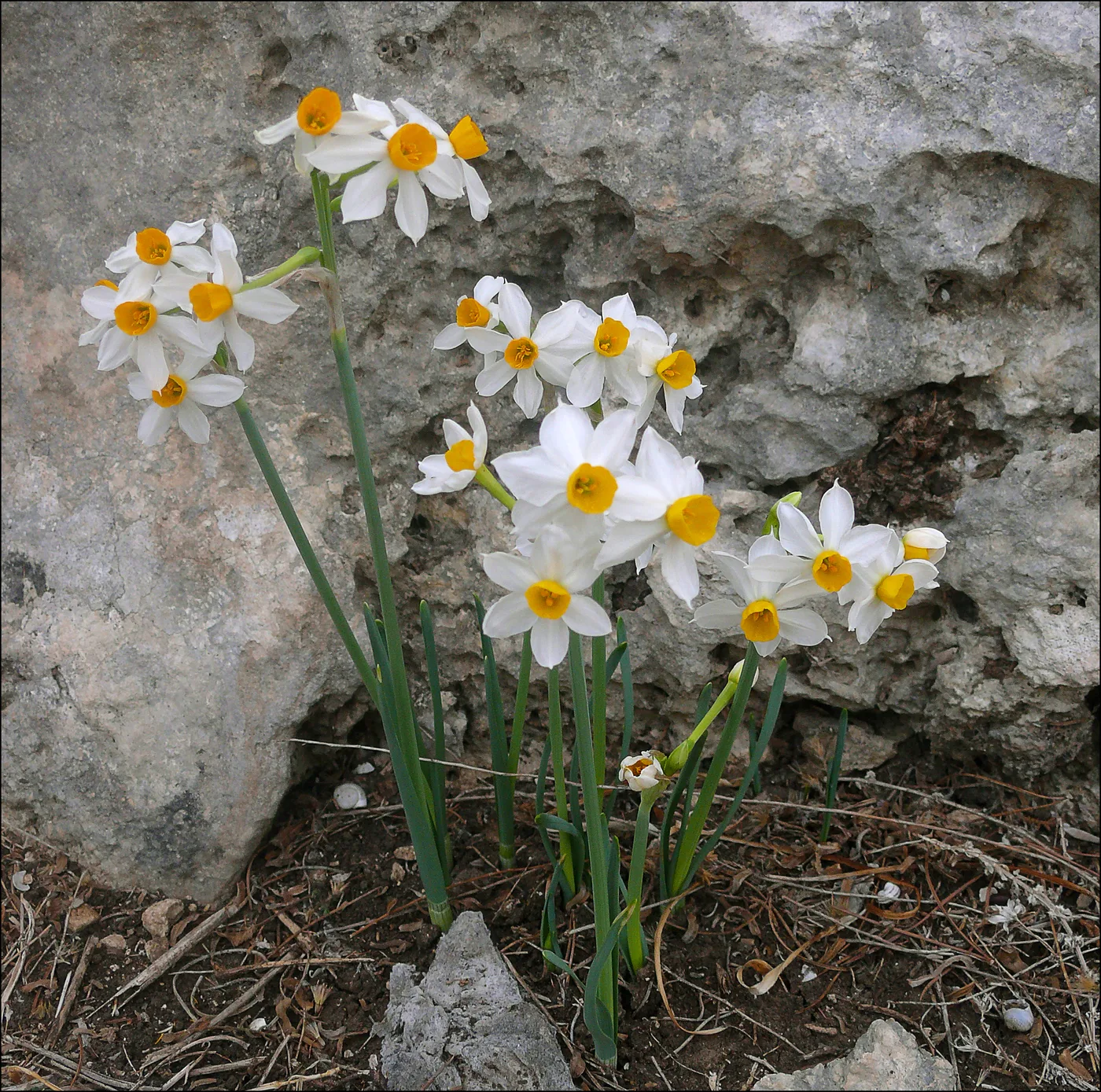
Reference:”
Discussion
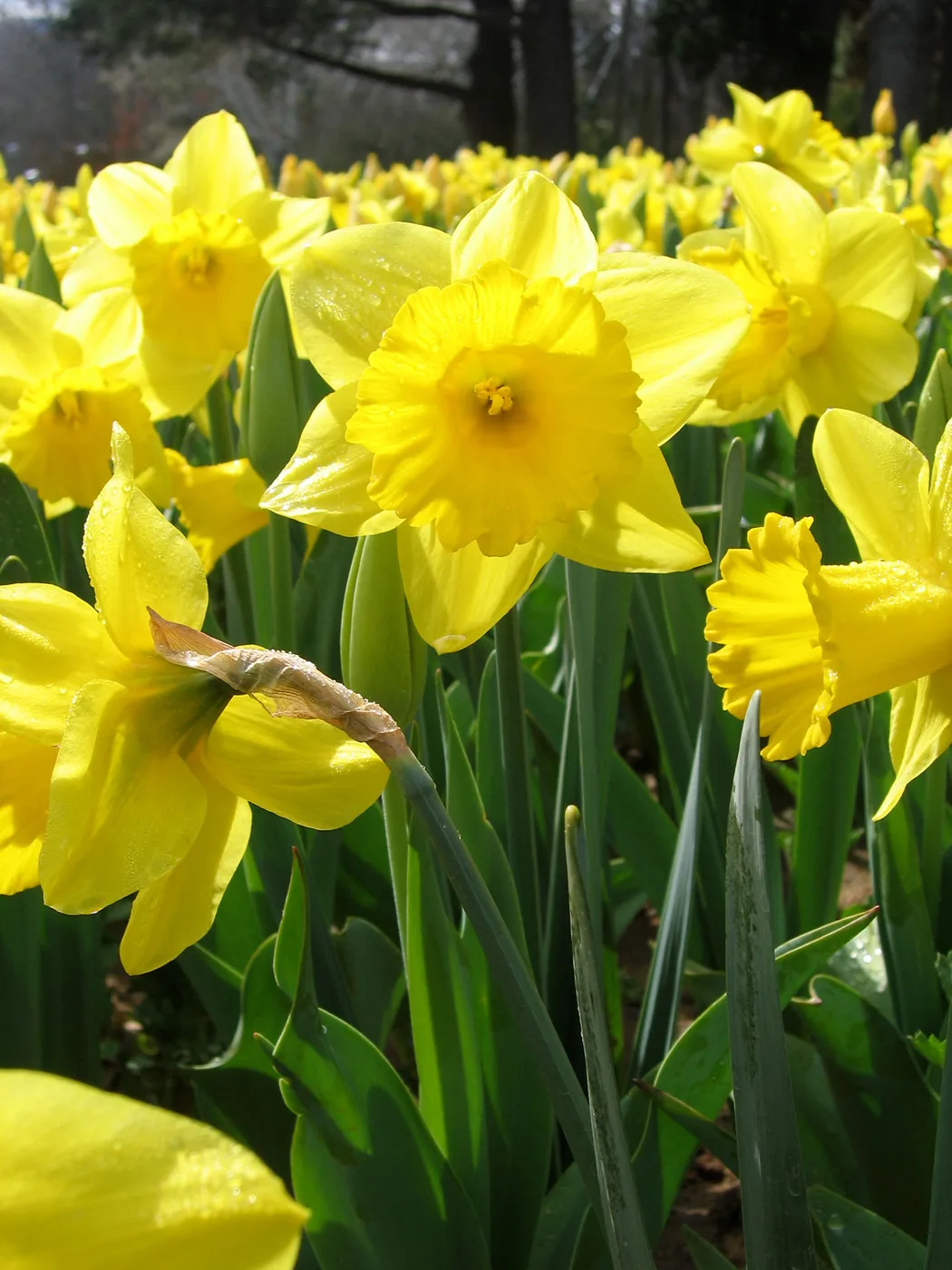
Description
Although Narcissus is a genus with many species within it, including daffodils and what North Americans call “jonquils,” many people also associate “narcissus” with a particular species almost identical to the daffodil. All of them grow to a height of 30–45 centimeters (12–18 inches) and have long, flat, narrow leaves. The root of the narcissus is a bulb like that of an onion, and the flower usually has six lovely creamy-white petals radiating from a bright yellow funnel-like center. The stem bends just before the blossom, so the blossom faces out or down rather than up.
Special significance
Isaiah apparently uses chavatseleth to describe the new community in the renewed land of Israel, where the desert will turn into acres of brightly colored flowers. The narcissus fits this perfectly. The flower is named after Narcissus, a young man in Greek mythology. His name has also given us the Greek word narkē “numb” from which we also get the word narcotic. For the Greeks, Narcissus stood for vanity, since Narcissus did not respond to the love of others and preferred to gaze at his reflection in a pool of water. The yellow daffodil is the national flower of Wales, where people wear it on Saint David’s Day (March 1). In China it is a common decoration flower during the New Year festival.
Translation
English versions vary widely in their rendering of chavatseleth in ISA 35:1. RSV, NRSV, NIV, and The Message have “crocus”; NEB and REB have “asphodel”; KJV, NKJV, and NJPSV have “rose”; GW has “lily”; while GNB, CEV, NLT, and NCV use the generic word “flowers.” Translators in Europe, North America, and Asia will know the narcissus or daffodil. Since many scholars feel chavatseleth may equally have been the crocus, narcissus, tulip, or the Madonna lily, translators who find one of those in a major language near them may wish to transliterate, although we do not generally recommend transliteration in poetic passages. Preferably, the translator will substitute a flower that carries the same emotive effect, or use a descriptive phrase such as “abundant, beautiful flowers.”