Discussion
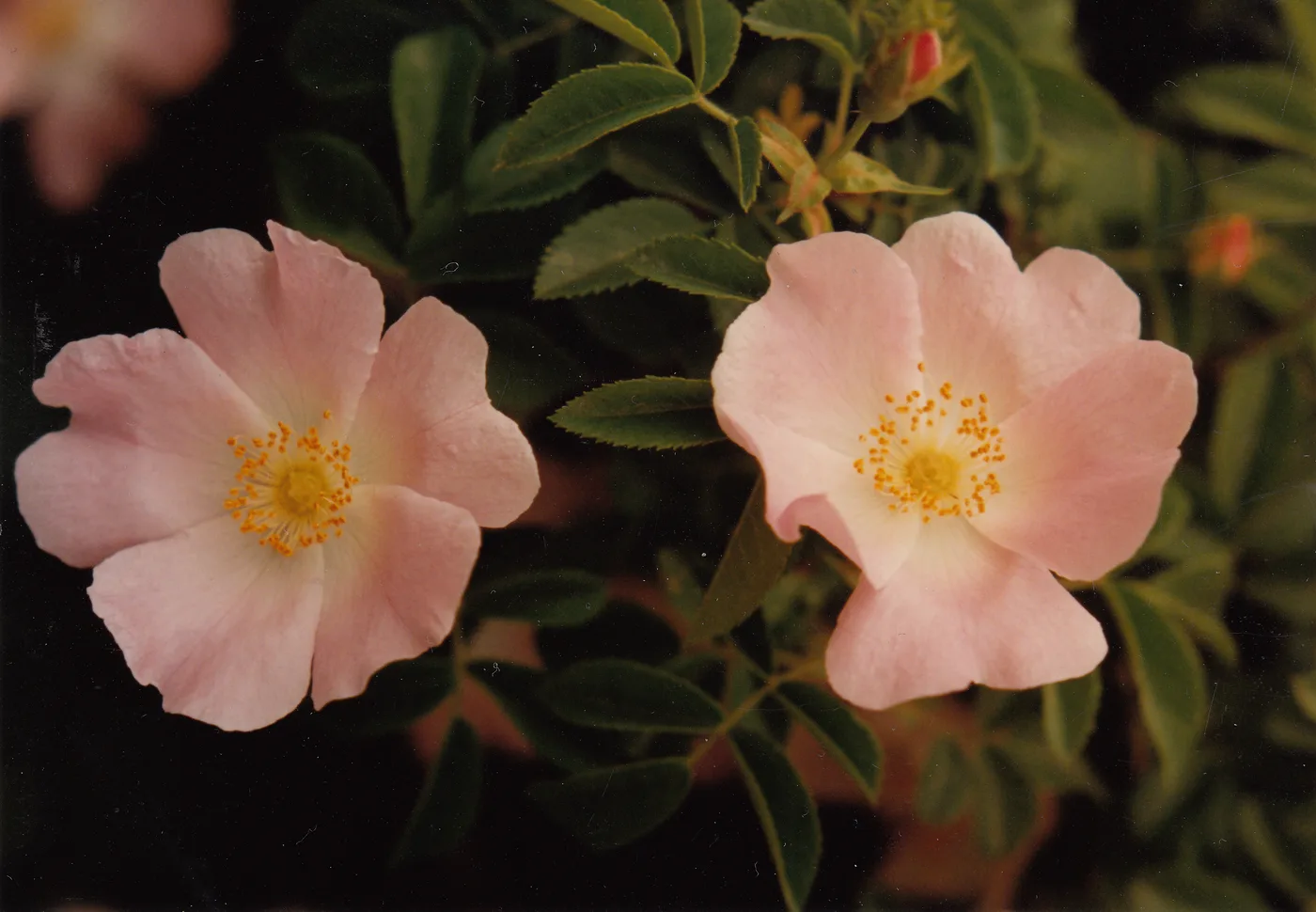
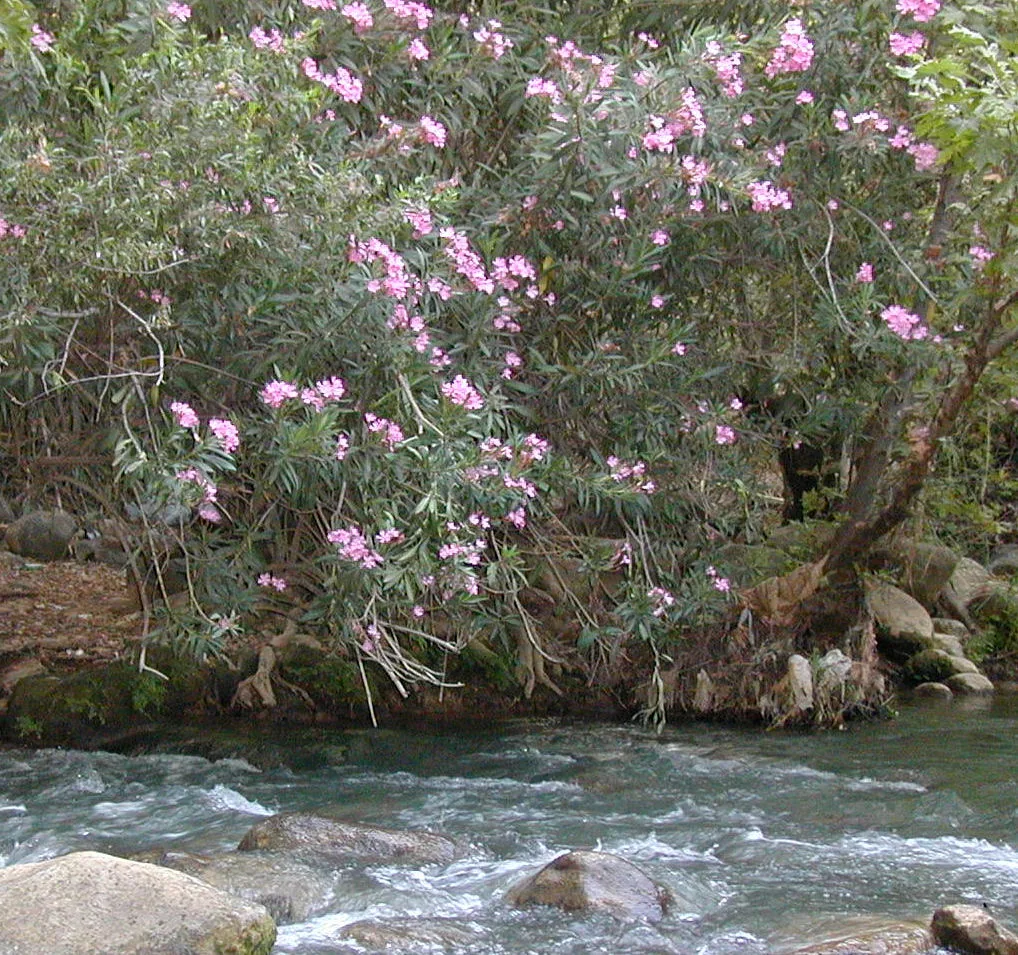
The Greek word rodon in the Deuterocanon is generally agreed to refer to the Phoenician Rose Rosa phoenicia. This rose originated in the area of Turkey and is also found in Lebanon and northern Iraq. The genus to which it belongs stretches from western Europe across to the mountains of Nepal and into China. However, Moldenke considers the word rodon in Sirach to refer to Oleander Nerium oleander. In our view both flowers are equally possible.
Description
The Phoenician rose is a prickly plant with a woody stem that can reach 1–2 meters (3–7 feet). It has vine-like branches with small, hooked thorns. Its leaves are very small and hairy with toothed edges. Its flowers are abundant, small and white, with a fragrant smell. When the petals drop, the seeds are left in a round fruit that is called a “hip.”
Special significance
Roses have been popular for thousands of years. The Egyptians cultivated them as early as 2000 B.C., and the Romans at the time of Christ were so fond of them that the writer Horace worried that farmers were neglecting their olive groves because of roses. They cooked and made wine with the petals; they bathed with rose-scented oils. Europeans have taken the passion for roses even further, as they develop ever stranger genetic combinations of roses, until we now have hundreds of cultivated varieties. People elsewhere have used parts of roses in medicine and in hot drinks, using the globular “hip” left when the petals wither. The references in Sirach clearly suggest that roses were valued for their beauty.
Translation
Since the contexts of the references in Sirach are rhetorical in every case, translators should preferably look for a local equivalent that represents beauty and fragrance. If emotive impact is of less concern, a descriptive expression can be used, such as “beautiful flower,” or a name from a major language can be transliterated, for example, rosa (Spanish), warda (Arabic), or mugunga /jangmi (Korean). In 2ES 2:19 “roses” are paired with “lilies” (see Lily (white lily, Madonna lily)), so these flowers need to be handled in the same way.
Rose of Sharon: See Tulip (mountain tulip, “rose of Sharon”).