Description
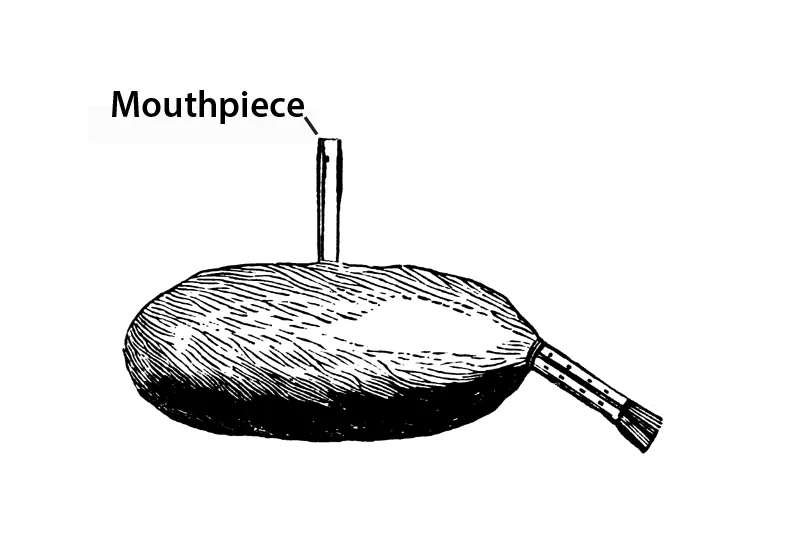
The bagpipe consisted of two pipes connected to an air bag. The bag was inflated by blowing into a third tube or pipe. The air in the bag escaped through the double pipes. These had finger holes that could be opened or closed producing a range of notes.
The kettledrum was a larger drum, in construction similar to the drum discussed under Drum, hand drum, frame drum. However, it was not held but stood on the ground.
Translation
Several instruments have been suggested for the Aramaic word sumponyah in DAN 3:0, including a double pipe, a drum, and a bagpipe (depicted in the illustration above). Translations include “pipes” (NIV, NCV), “bagpipe” (RSV, NJB), “drum” (NRSV), and “dulcimer” (KJV, REB). The identification of sumponyah as a large drum is based on the assumption that this Aramaic word is a transliteration of a dialect form of the Greek word tumpanon.
Many scholars are convinced that the word sumponyah is not actually the name of a particular instrument, but rather that it referred to the playing together of all the individual instruments mentioned before (so GNT “and then all the other instruments will join in”). This interpretation is probably derived from a reading of sumponyah as meaning “accompanying sound.” NEB follows this interpretation, using the general term “music” here.