Description
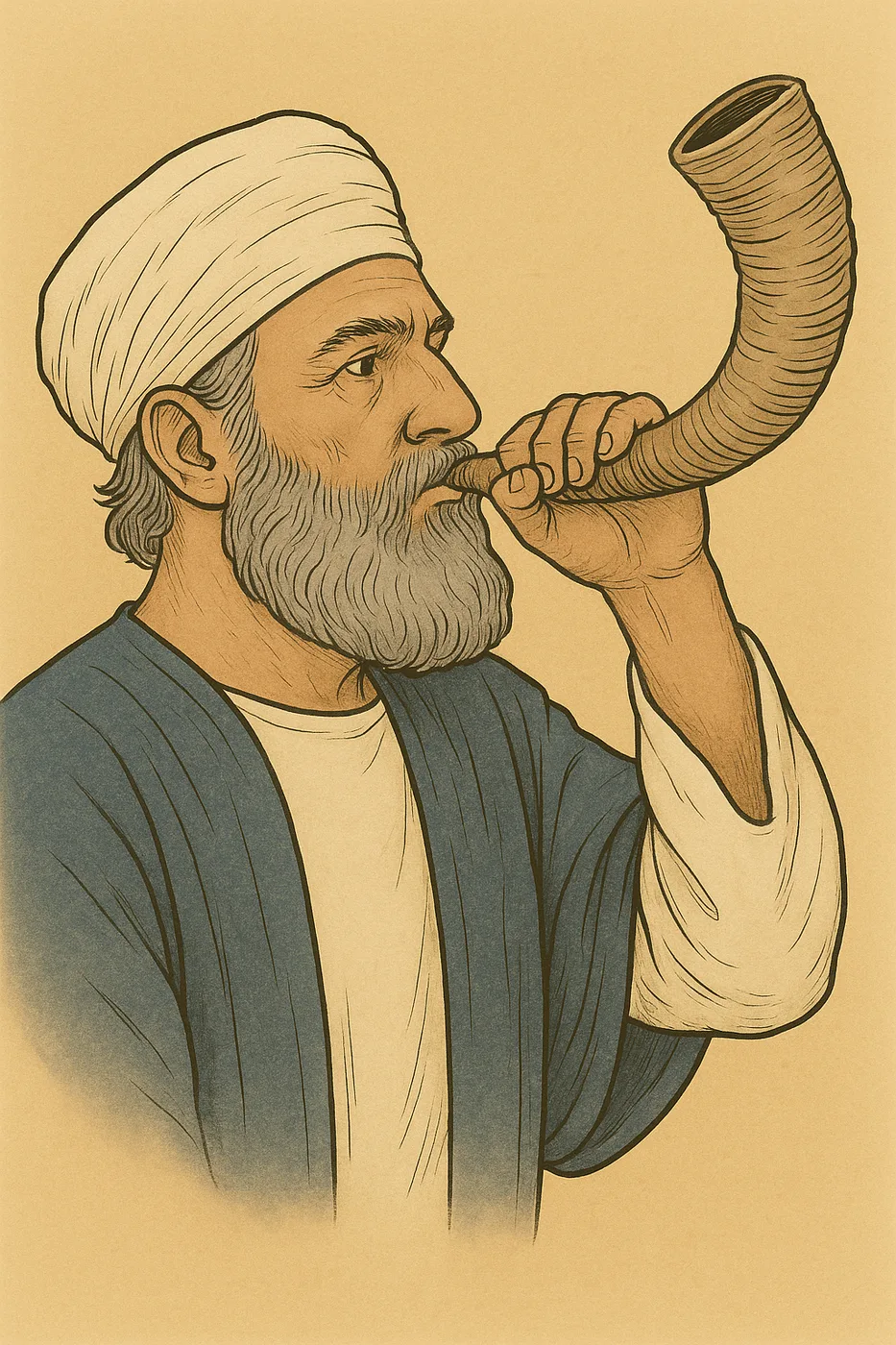
The horn was a wind instrument made from the horn of an animal, usually a male sheep.
Usage
The animal horn was softened so that it could be shaped. The point of the horn was cut off to leave a small opening through which the user blew. The vibration of the lips produced the sound.

1. It was blown in certain religious contexts, not as musical accompaniment to worship but as a signal for important events. Some of these events were the giving of the Law on Mount Sinai, the Day of Atonement, the bringing of the Ark of the Covenant into Jerusalem, and the coronation of kings.
2. It also served as a signal or alarm when war was approaching. Such references are particularly common in the prophetic books, when the prophets are calling the people to repent (HOS 5:8; HOS 8:1; JOL 2:1; JOL 2:15; AMO 3:6).
Translation
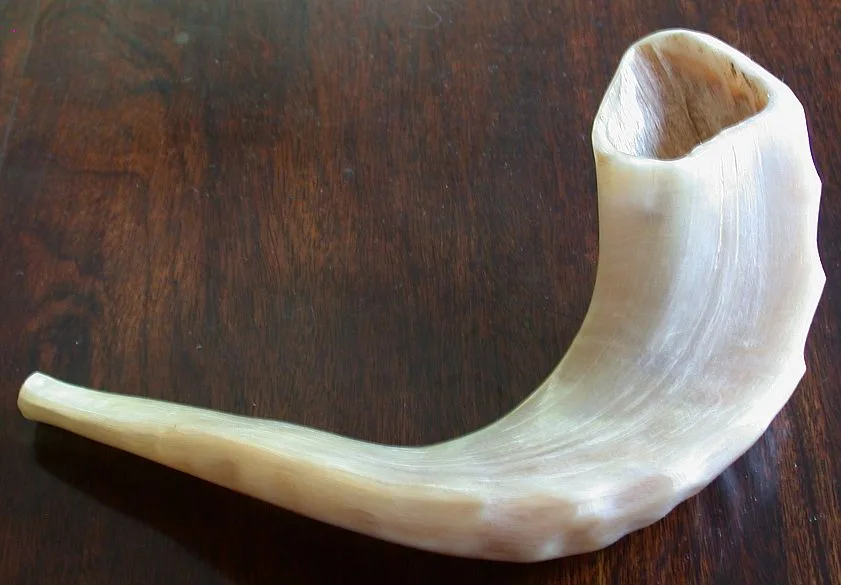
The Hebrew words yovel and qeren (literally “animal horn”) in EXO 19:13 and JOS 6:0 are used as parallel to shofar and can be treated as equivalent to shofar. Some scholars have suggested that the Hebrew word taqo‘a (literally “blowing”) in EZK 7:14 refers not to an instrument but to the town of Tekoa (compare JER 6:1). It is more likely, however, that the word refers to the object on which the alarm was blown, that is, the ram’s horn.
In some passages it will be necessary to expand the translation in order to indicate that the blowing of the ram’s horn was not just for music; for example, in EZK 7:14CEV has “A signal has been blown on the trumpet,” and GECL says “An alarm is sounded.”
It may be possible to follow NCV ’s descriptive phrase for “ram’s horn” in LEV 25:9, where it has “horn of a male sheep.”
In ZEP 1:16GNT has “sound of war trumpets,” which emphasizes the function of the ram’s horn, and in the same place NCV avoids a translation of the instrument with “alarms.”