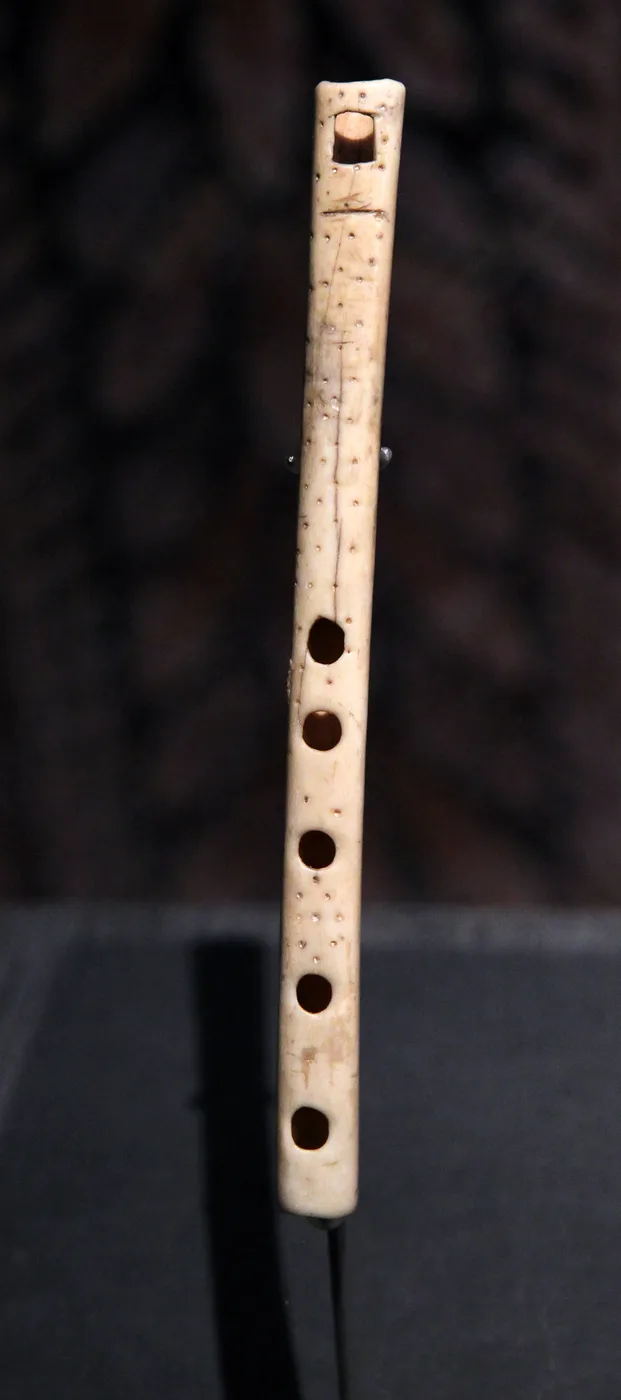
Description
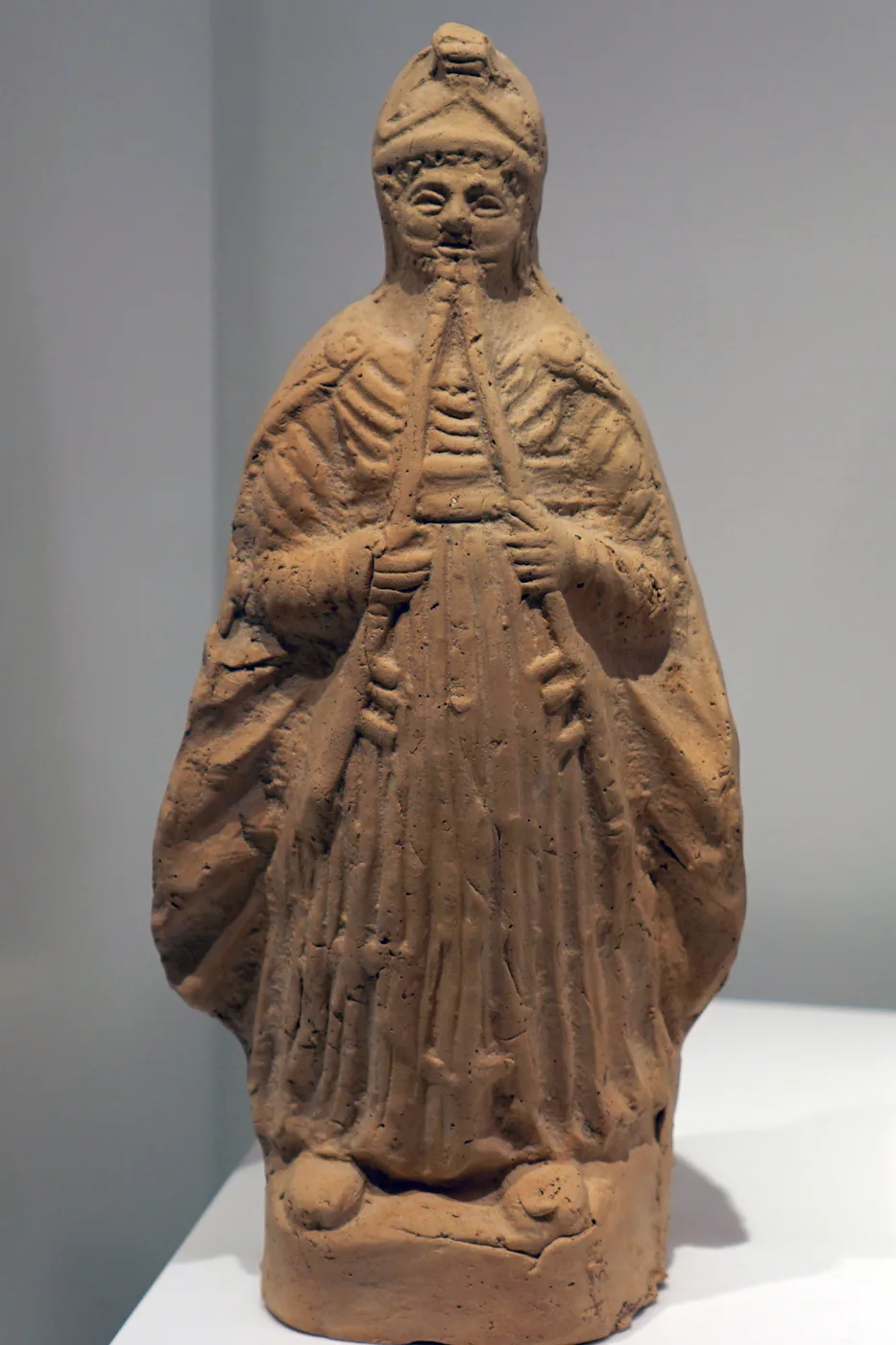
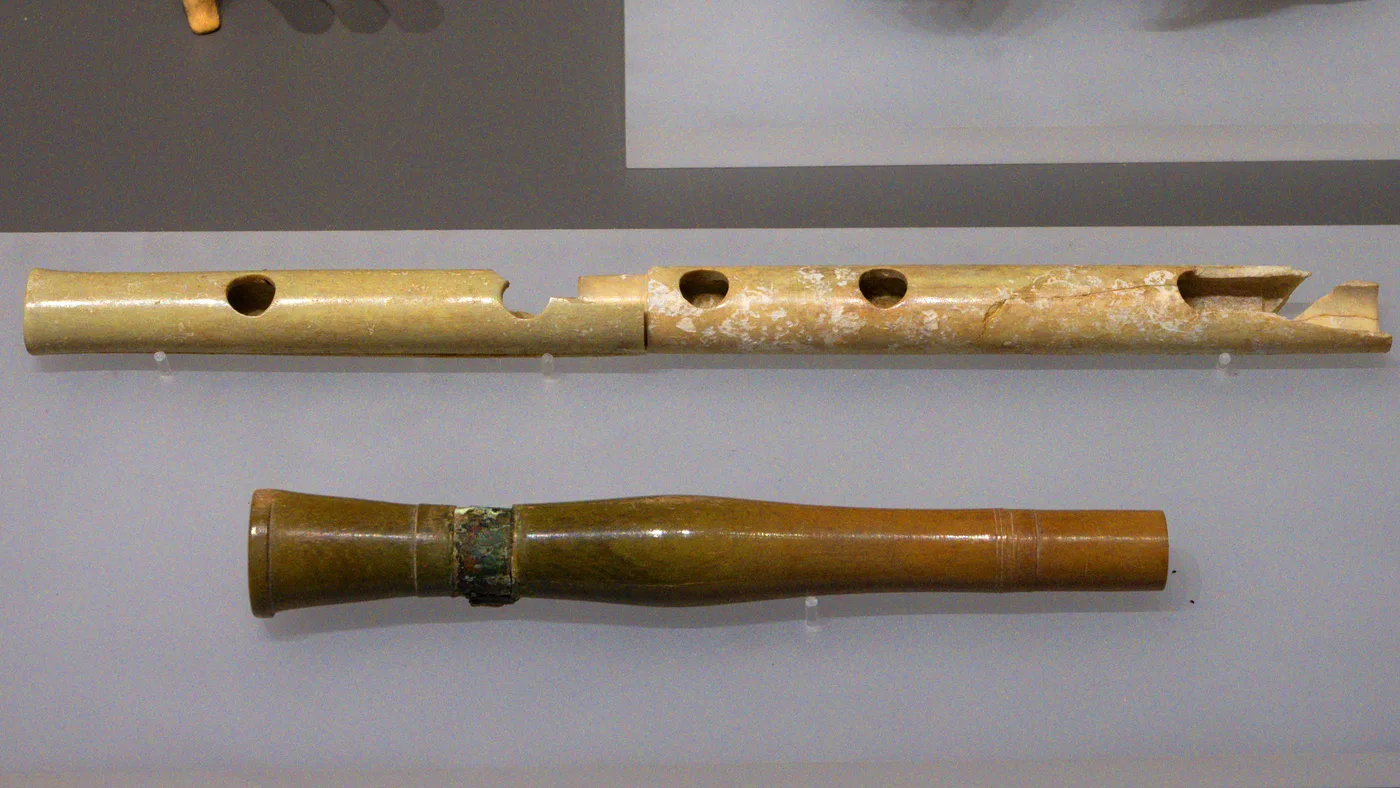
The flute was a wind instrument consisting of a tube with a series of finger holes used to alter the tone. Some flutes were made of reed and could take several forms: the tube could be a cylinder or it could be more in the shape of a cone. There were instruments made of a single tube, while others had two tubes side by side. Often ancient double flutes or double pipes were arranged in a V-shape, with two separate reeds. One of these pipes had several holes while the other had only one hole and acted as a kind of drone, providing an unchanging tone to accompany the varying tones coming from the first pipe. Some pipes or flutes were made of other materials, such as wood, ivory, bone, or metal.
Usage
Translation
The Hebrew word ‘ugav is usually understood to refer to a wind instrument; for example, in GEN 4:21RSV says “pipe” and GNT has “flute.” It is possible, however, that it is a generic term for “instrument” or even refers to a particular stringed instrument. In JOB 21:12 and JOB 30:31 it is identified as an instrument that expressed joy and contentment.
PSA 5:1: The Hebrew word nchiloth appears only here in the Old Testament, and its meaning is uncertain. It may mean “wind instruments” in general or “flutes” in particular. Extra-biblical evidence indicates that it may have been an instrument played for funeral laments.
MAT 9:23: Here RSV has “flute players” (GNT “musicians”): According to Jewish tradition, even the poorest people were expected to have two flute players and a wailing woman for a funeral. In order to clarify the role of the flute players, GNT adds “for the funeral.” This information was immediately evident to a Jewish reader who was familiar with the funeral customs, but it will not be clear to other readers. Many cultures are familiar with the flute or other instruments that are played by blowing through a wooden tube. If no such instrument exists, then translators can say “those who played musical instruments for a funeral” or, as in GNT, “musicians for the funeral”; NCV has “funeral musicians.”
For the translation of the Aramaic word mashroqi, see the discussion on DAN 3:0 at the beginning of this chapter.