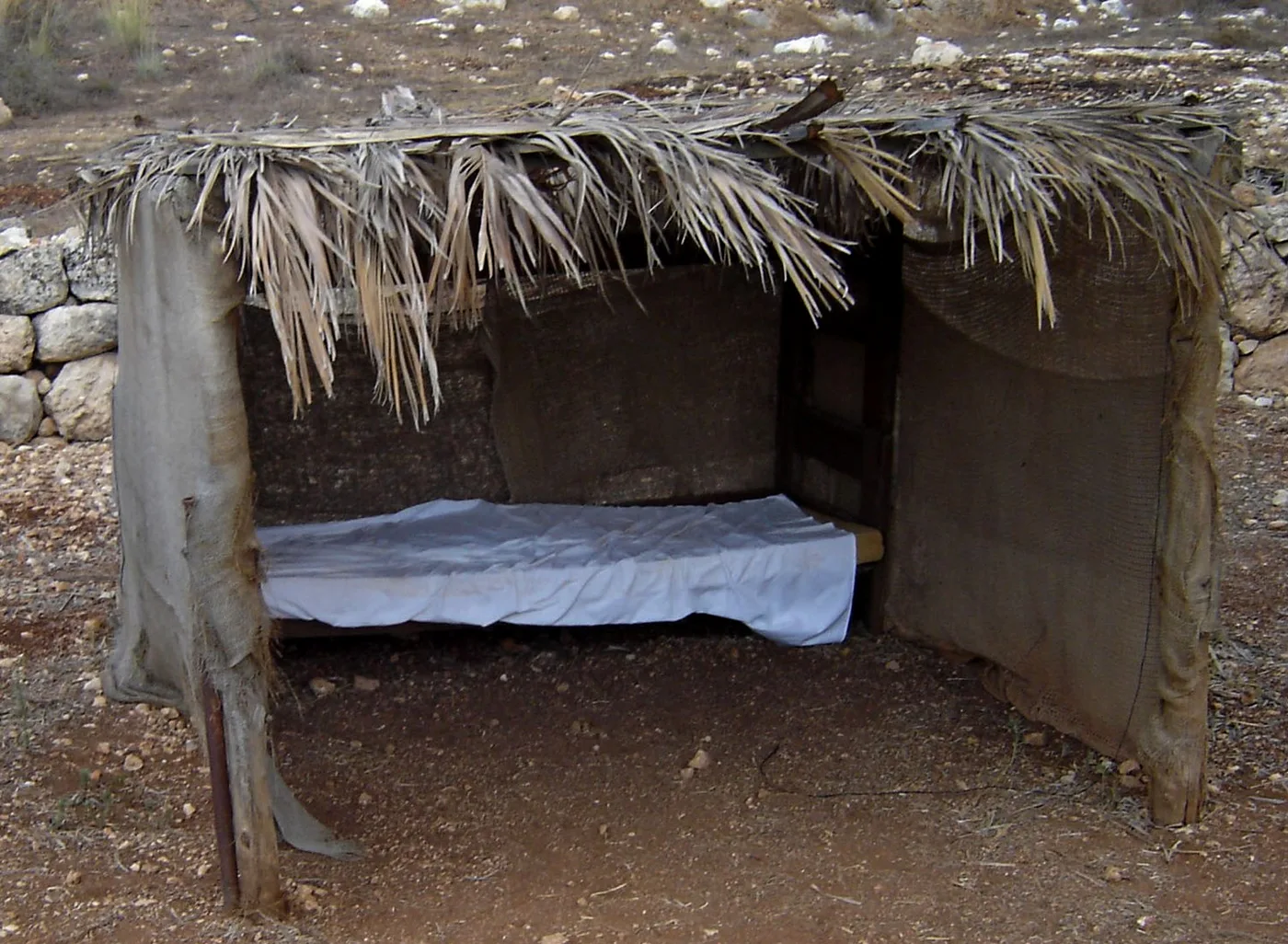
Description and usage
The booth was a small, temporary dwelling usually made of natural materials such as leafy branches, reeds, or grass. While it had no fixed size or shape, it was probably only large enough for a family to sleep in.
Translation
Many languages will have no common word for such a temporary dwelling. In English the words “tabernacle” and “booth,” used by older translations, are likely to be misunderstood today. Common-language translations have “shelter,” which adequately preserves the sense of the word.
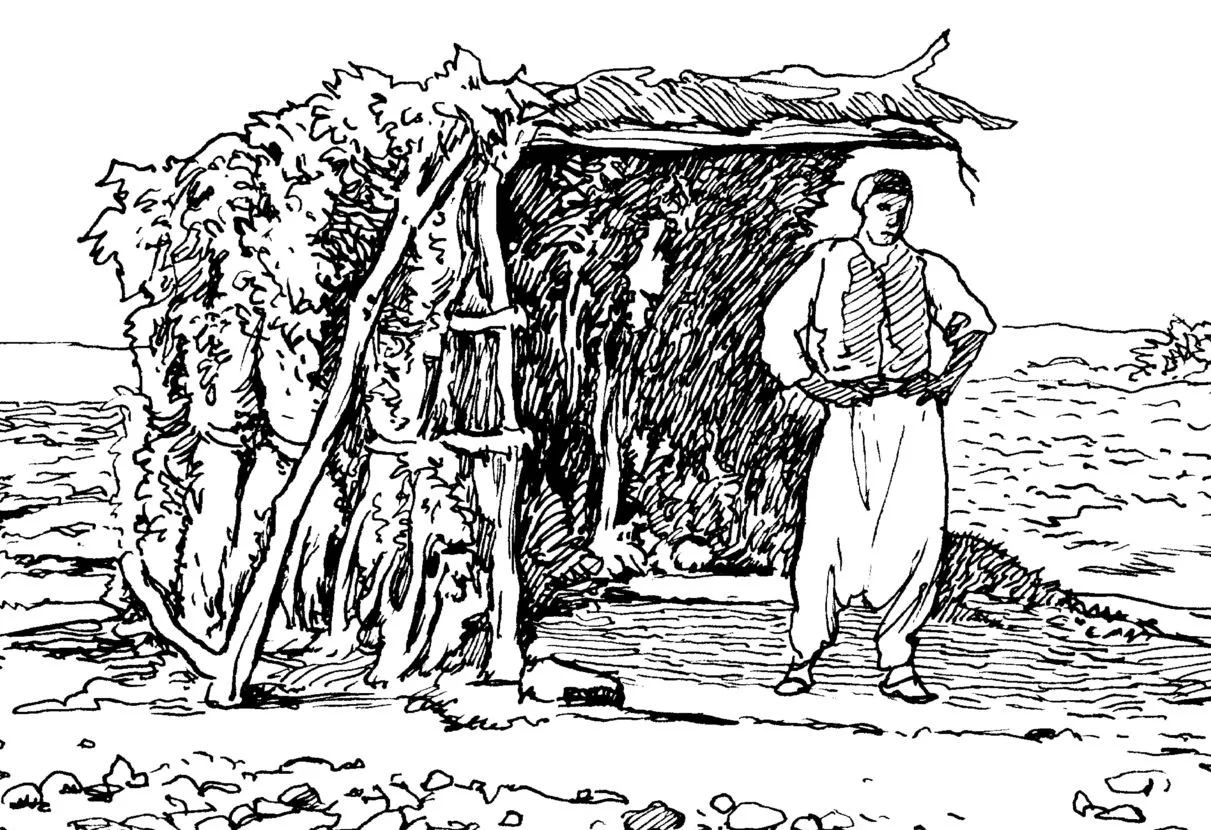
Where no single appropriate word exists, it is possible to use a descriptive expression, such as “temporary hut” or “temporary dwelling.”
In 2SA 22:12; JOB 36:29; PSA 18:12; PSA 27:5; and PSA 31:21 the Hebrew word sukah symbolizes the dwelling place of God.
AMO 9:11: The Hebrew word sukah is used here as a picture to which the kingdom of David is probably being compared. The point of similarity is almost certainly to be found in the word “fallen” (RSV). David’s kingdom is now destroyed, broken down, like an old broken down building. “The kingdom of David” (GNT) refers to the people of Israel at the highest point of their political and military power. In English it is more natural to translate sukah here as “house”; for example, NEB says “On that day I will restore David’s fallen house ….” GNT has made the comparison clear in every way, which is what most translations need to do: “The LORD says, ‘A day is coming when I will restore the kingdom of David, which is like a house fallen into ruins. I will repair its walls and restore it. I will rebuild it and make it as it was long ago.’ ”
The Greek word skēnopēgia, which appears in JHN 7:2, is the name of the festival, often known as the “Feast of Tabernacles” (NIV) or the “Festival of Booths.” During this festival the people of Israel were commanded to live in huts. The name of this festival should be rendered the same as in LEV 23:34.