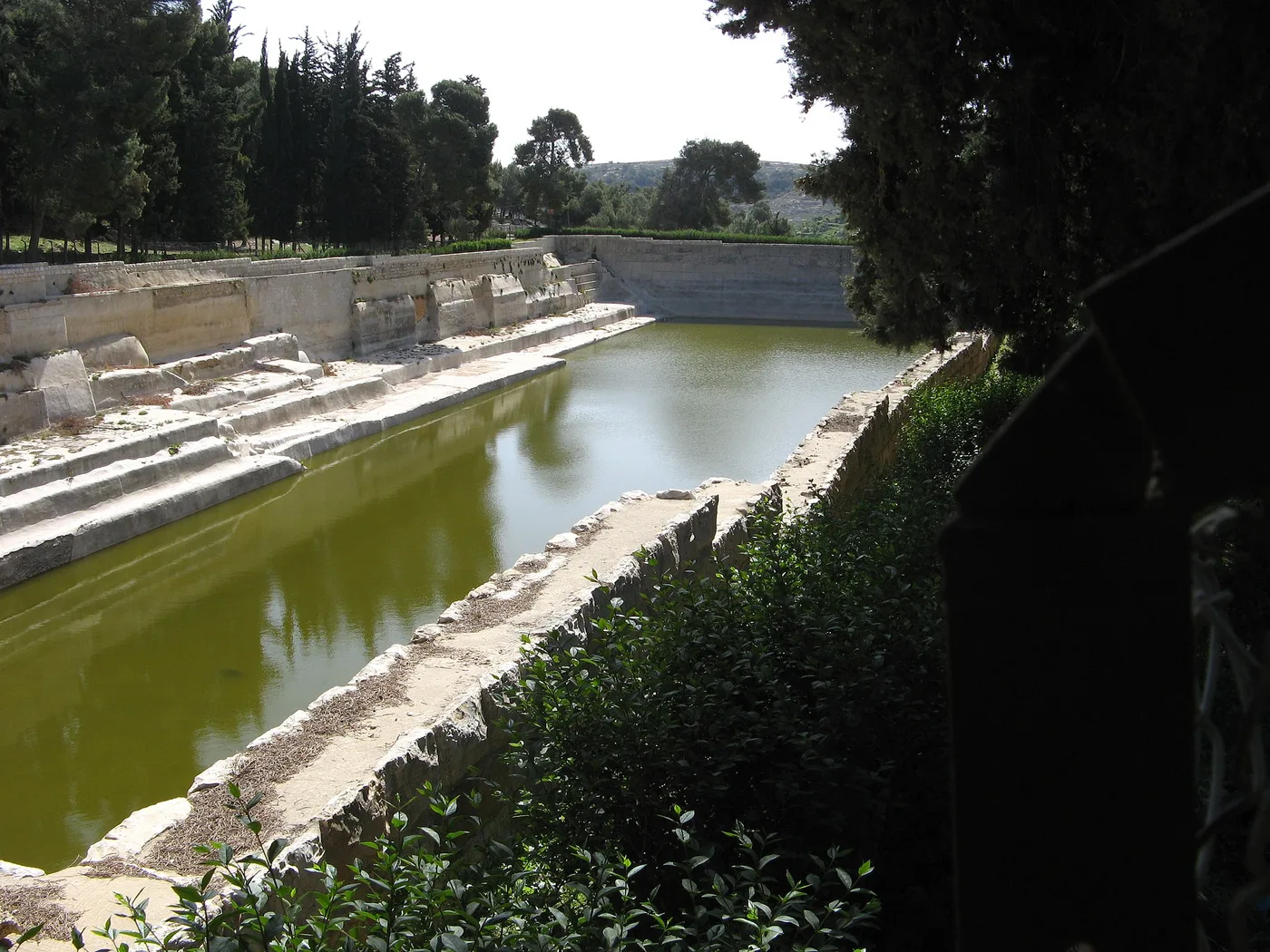
Description and usage
The pool was a relatively large, open construction for holding water.
Translation
EXO 7:19: The Hebrew word miqveh in this verse may mean a specific kind of reservoir, or, more likely, it is a general word that repeats the earlier phrase “the water of Egypt.”
ISA 22:11: The pool created between the city walls of Jerusalem may have served a dual purpose: storage of water during the siege, and a kind of moat or water-filled ditch to deter an attacker. Most translations render the Hebrew word miqvah here as “reservoir” (GNT, NIV).
NAM 2:9: There is a textual problem in the Hebrew of this verse, and many translations work from an emended text. Water escaping from a reservoir is a simile for the people of Nineveh fleeing from the city. For the first half of this verse NIV has “Nineveh is like a pool, and its water is draining away.” GNT also provides a useful model: “Like water from a broken dam the people rush from Nineveh.”
In JHN 5:2 the Greek term kolumbēthra refers to a pool having five porches, one on each of four sides and another porch that went across the middle of the pool. Even though the same Greek word is used, the pool mentioned in JHN 9:7 was considerably smaller and less elaborate. This pool has been excavated in Jerusalem.