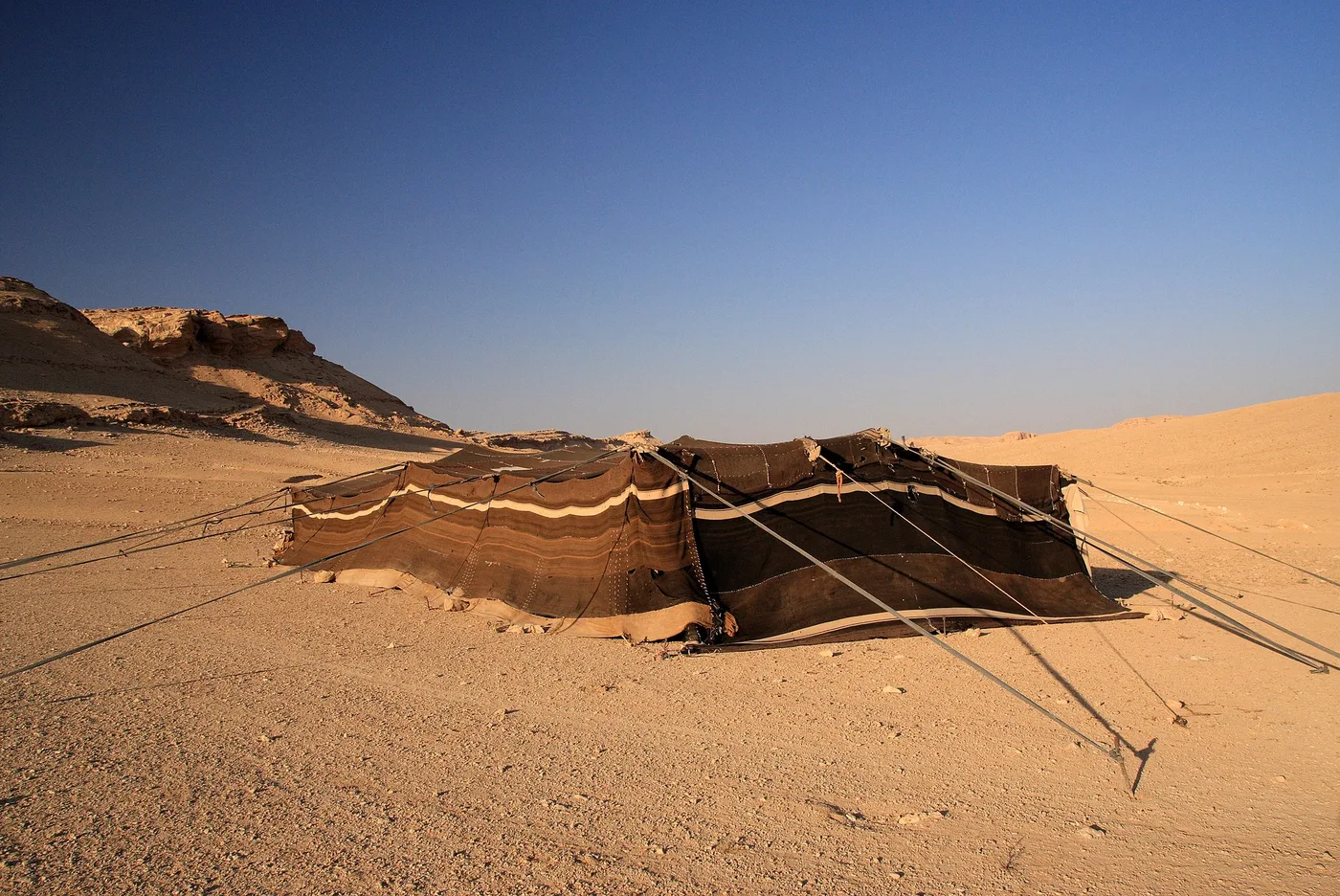
Description
The tent was a portable dwelling of cloth and/or skins, held up by poles and secured to the ground by cords tied to stakes. Tents were normally made of cloth woven from the hair of goats.
Usage
Tents served as the regular dwelling of nomadic peoples. They could also be used as temporary shelter by soldiers in the field or perhaps by people moving from one permanent house to another.
Translation
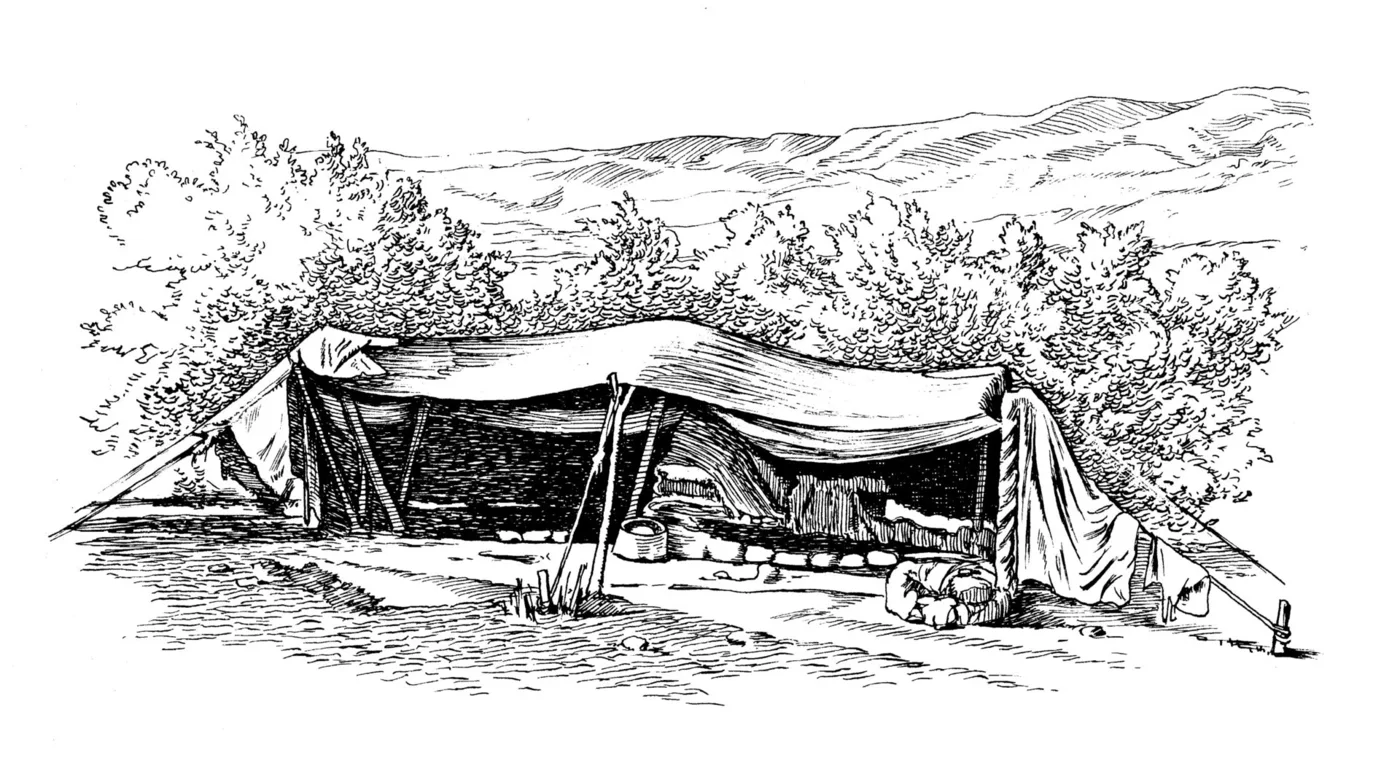
The Hebrew verb ’ahal means “to pitch a tent” (NIV), “to move a tent” (RSV, NASB), “to encamp, camp, set up camp” (GNT, TOB).
The word ’ohel serves in Hebrew to describe both dwellings used by nomads and tents used by soldiers on military campaigns (see also Tent of Meeting and Tabernacle). Where a language distinguishes between the two, the context should be checked carefully. The following passages seem to refer to military tents: JDG 7:13; 1SA 17:54; 2KI 7:7; 2KI 7:8; 2KI 7:9; 2KI 7:10. It has also been suggested that, in ACT 18:3 Paul, Aquila and Priscilla made tents for military use, although the Greek word traditionally translated “tentmaker” more properly means “leather worker.”
It should be kept in mind that in Israel’s earlier history, many people lived in tents. The phrase “went to his tent” or “fled to their tents” often means simply “went home”; for example, 2KI 14:12 is literally “every man fled to his tent,” but, because the context tells us that they lived in houses, RSV says “every man fled to his home.”
The Hebrew word mishkan means “dwelling place” and is used most often for the Tabernacle in the wilderness (see Tabernacle). In the passages listed above it refers specifically to a tent for people to live in (either as nomads or as soldiers). In NUM 24:5; ISA 54:2; and JER 30:18mishkan appears in poetic parallelism with a word for “tent.” In these places it will be best to use a general word meaning “dwelling place,” “residence.”
The meaning of the Hebrew word qubah in NUM 25:8 is uncertain. Many translations understand it to be a tent, perhaps with a high dome (GNT, NIV, KJV, NASB), while others take it to be a partition or room in a tent (RSV, NEB). Some translations (TOB, SPCL) believe it is a bedroom, but they give a footnote describing it to be a special tent dedicated to pagan religious rites, such as prostitution or divination. There seems no way to be certain which understanding is correct, so the translator will just need to choose one of them.
2MA 13:15: Originally the Greek word aulē referred to a courtyard and later to the court of a king. The context of this verse speaks of the part of the encampment where the king was located, so GNT says “the area near the king’s tent.” Most others have “the king’s pavilion” (RSV). At best the word “pavilion” will be obscure; at worst (in British English, for example) it could be misunderstood. Translators should follow GNT or say something like “the camp where Antiochus’ headquarters were located” (ITCL).
The Greek word proskēnion in JDT 10:22 refers to an area just inside the entrance to a tent. GNT renders it “outer part of the tent,” NJB has “entrance to the tent,” and NAB says “antechamber.”