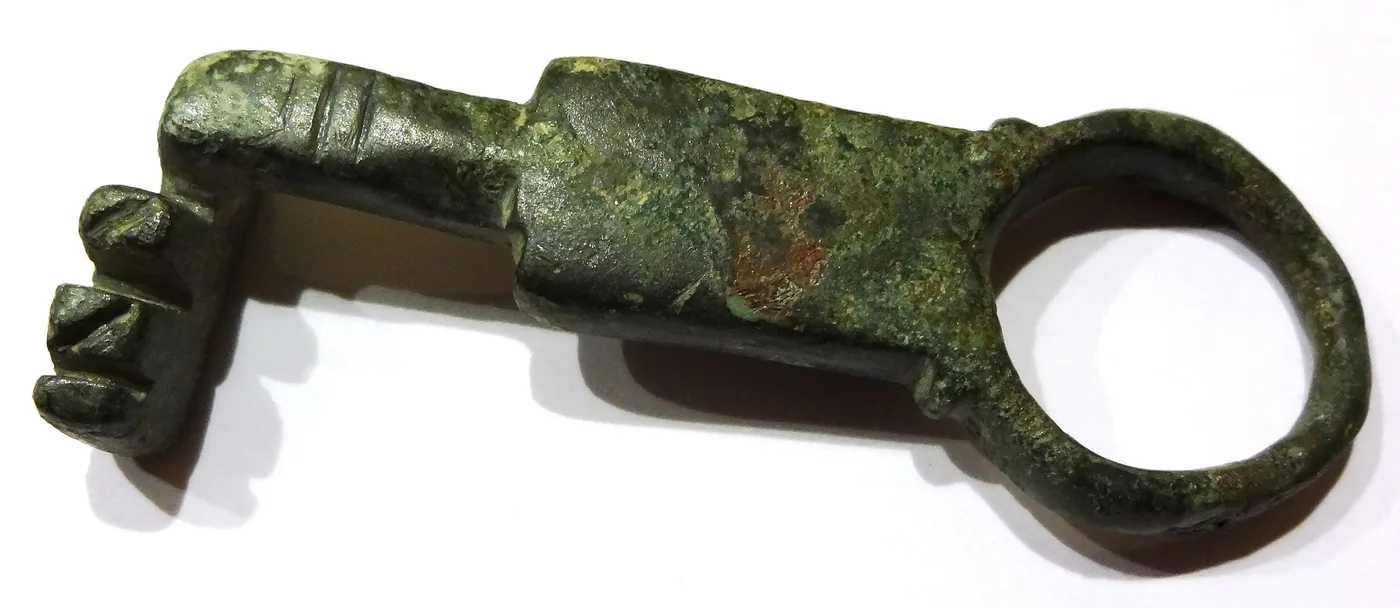
Description and usage
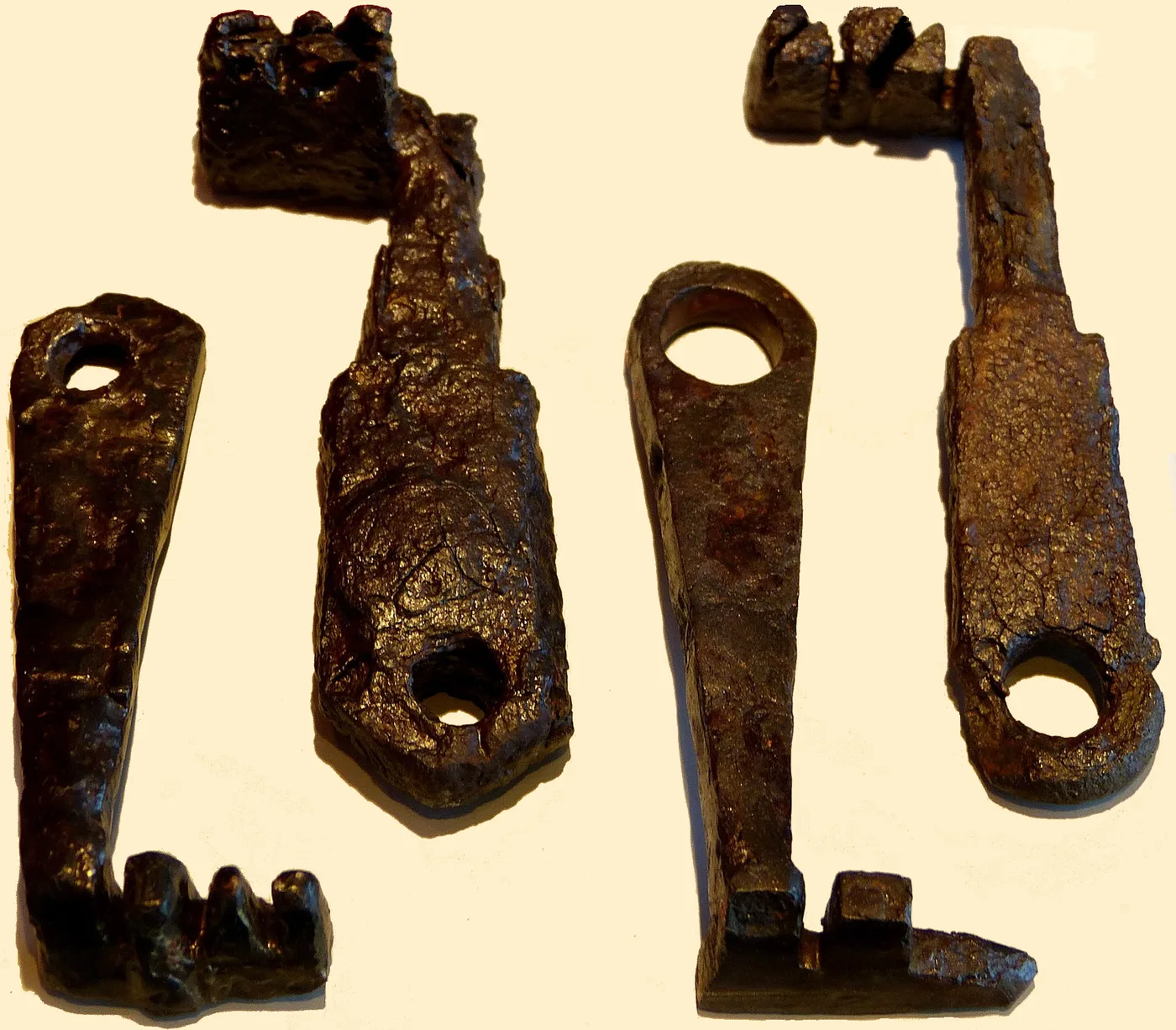
The key was an instrument used for locking and unlocking doors and gates. Ancient keys were generally much larger than anything commonly known today.
Translation
Except for JDG 3:25, all the references to “key” listed above are symbolic. Nevertheless, all translations consulted use the word “key” even in the symbolic contexts. Note the expansion of ITCL at ISA 22:22: where the text says literally “I will place on his shoulder the key of the house of David (RSV), ITCL has “To him will be given full authority over the palace of David. The keys will be entrusted to him.” Similarly, NLT says “I will give him the key to the house of David—the highest position in the royal court.”
It may not be possible to speak of the key to a place, such as “the abyss” (GNT) in REV 9:1 or “the kingdom of heaven” (RSV) in MAT 16:19. In such cases translators may have to say “the key to the entrance to …” or “the key used in opening or closing the gate to ….”