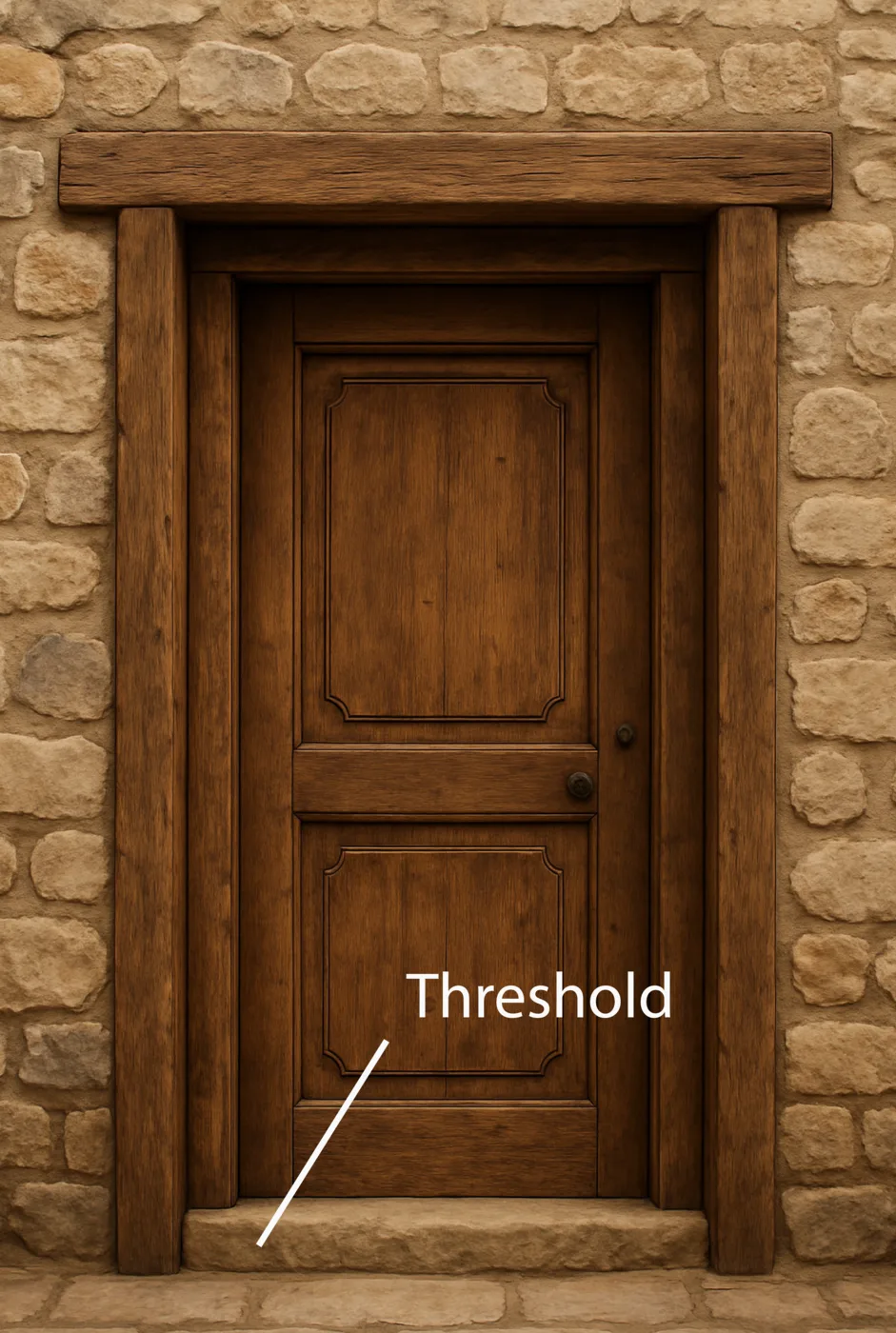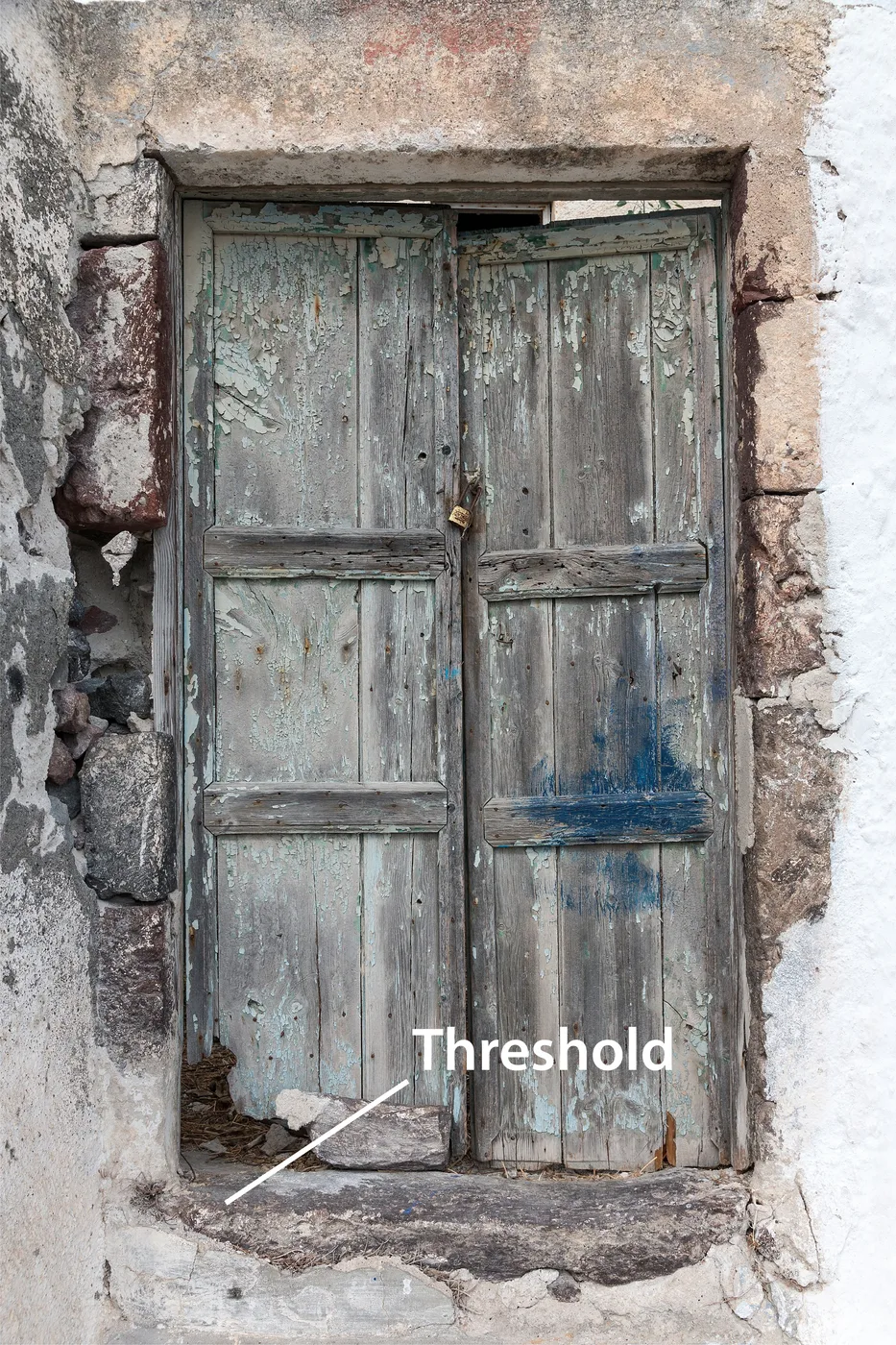
Description
The threshold was the bottom part of a doorframe (see Door, doorway); it was the piece that sat horizontally on the ground. It was usually made of stone.
Translation
Where a technical term for “threshold” does not exist or would not be generally understood, it may be necessary to use a descriptive phrase; for example, in EZK 9:3NCV has “place … where the door opened.”
ZEP 1:9: The literal phrase “all who jump over [or, on] the threshold” in this verse is obscure and has been rendered in various ways. It may refer to a Philistine religious practice, the origins of which are described in 1SA 5:4; 1SA 5:5. CEV reflects this by saying “worshipers of pagan gods” and adding a footnote. NCV is more specific with “those who worship Dagon” but does not add a footnote. Also possible is the expanded translation in FRCL, which reads “all those who, like the pagans, jump over the doorsill of the temple.” FRCL also includes a footnote with the following alternate rendering: “all those who go up on the [sacred] platform.” See also the discussion in A Handbook on The Books of Nahum, Habakkuk, and Zephaniah, pages 152–153.