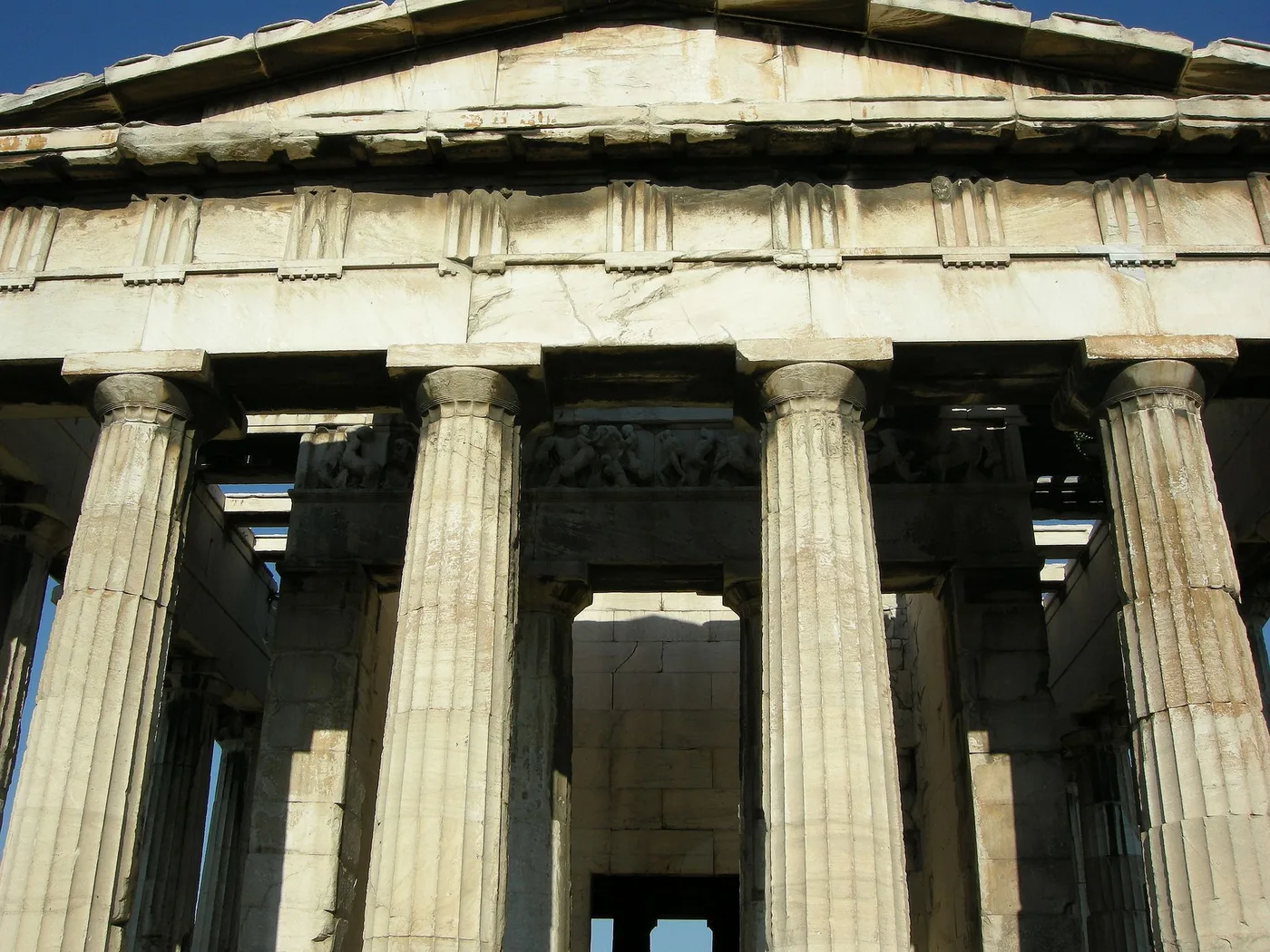
Description
The column was an upright shaft or structure used as a building support. It was usually made of stone, sometimes of wood. It was sometimes made of three parts. The central body of the column (often cylindrical and, for large columns, itself made of several pieces) stood on a base that was somewhat broader than the width of the column. On top of the column was sometimes placed a wider top, the capital. The size of the column and its parts varied widely according to the dimensions of the building or room in which they were found. See also Colonnade, porch, covered walkway, stoa, portico.
Usage
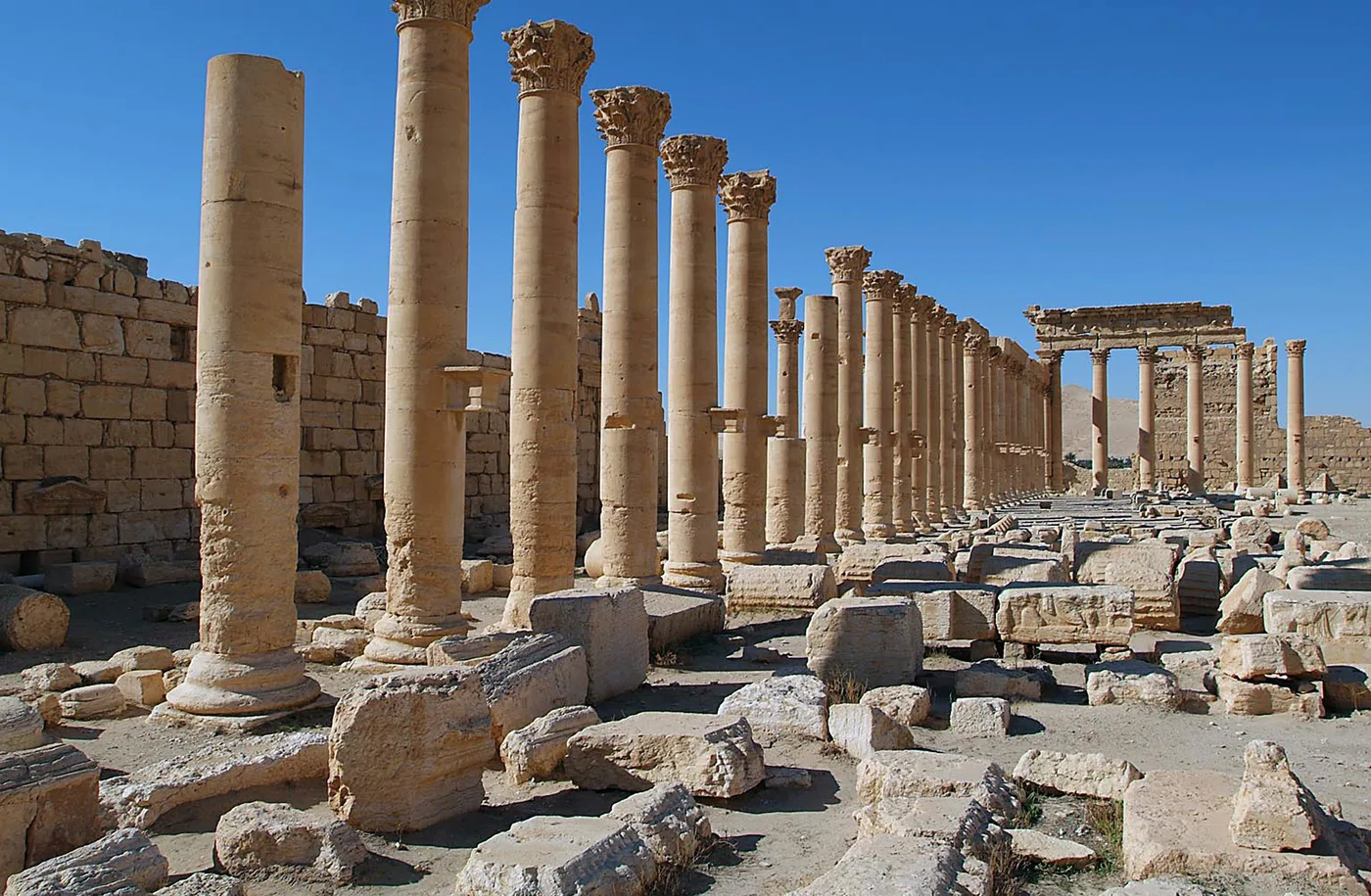
Translation
In a number of languages “pillars” may be rendered “poles that support the house” or “standing logs that hold up the roof.” Usually, however, there are rather specific terms to designate these important parts in the construction of houses or halls. GNT avoids the technical term “capitals” and has “tops of the … columns” (AMO 9:1).
The Hebrew word matsuq, by its etymology, refers to a pillar that has been formed by pouring molten metal. There will normally be no need to express this in translation. This word is used as a metaphor in 1SA 2:8 for God establishing the earth. Several translations choose to replace the “column” or “pillar” metaphor with “foundations” (for example, GNT, CEV, NIV, REB, NCV).
JDG 16:29: It is most likely that the columns which Samson pushed were made of wood, essentially large logs.
1KI 7:15; 1KI 7:16; 1KI 7:17; 1KI 7:18; 1KI 7:19; 1KI 7:20; 1KI 7:21; 1KI 7:22: Particular difficulties are presented by the description of the two special bronze columns placed by Solomon on either side of the entrance to the Temple. These columns were even given names.
While 1KI 7:15 describes the two columns, the Hebrew text makes use of a typical figure of speech, ellipsis: when speaking of the first column and its height, it is understood that the same applies to the second column too; when speaking, then, of the second column and its circumference, it is understood again that the same applies to the first column also. A translation should not try to retain this rather confusing device. While it is possible to describe the dimensions of one of the columns and then add that the second column was the same (so RSV, REB), it is better to give a combined description of the two. NCV has “He made two bronze pillars, each one twenty-seven feet tall and eighteen feet around.” CEV tries to make the picture even clearer by changing the circumference to an easier-to-visualize diameter: “Hiram made two bronze columns twenty-seven feet tall and about six feet across.” NIV ’s footnote gives the metric equivalents of the height and circumference: about 8.1 meters high and about 5.4 meters around.
There is an unclear text at 1KI 7:17, which describes the design of the capitals on these columns, and GNT and CEV both indicate the difficulty in a footnote. Nevertheless, the translator must supply a rendering that makes sense. Thus it is inadequate to provide a literal but unintelligible translation like that of NASB: “There were nets of network and twisted threads of chainwork for the capitals which were on top of the pillars; seven for the one capital and seven for the other capital.” It should be kept in mind that this is a description of a decorative design that somehow incorporated a network (or “mesh/lattice-work”) in which chains could be found. This should be conveyed to the reader in a description that is as simple as possible. Good examples are GNT “The top of each column was decorated with a design of interwoven chains,” and CEV “The caps [capitals] were decorated with seven rows of designs that looked like chains.” The same idea is probably reflected in the parallel text at 2CH 3:16, where the Hebrew word dvir (normally referring to the Holy of Holies) is thought to be a transposition of the Hebrew letters from the word ravid, which means a kind of chain or necklace. For the first half of this verse RSV has “He made chains like a necklace and put them on the tops of the pillars.”
1KI 7:19 speaks of capitals in the shape of “lilies” (shushan in Hebrew). It is impossible to know what their exact shape was. While the word shushan is usually translated “lily,” it probably served to designate several kinds of flower. So the Jerusalem Bible (JB) renders it “flower-shaped,” which, however, could be misleading in some contexts. Where lilies are not known, translators should choose a local flower with a head shaped like a cup.
As part of the description of the two bronze columns, 1KI 7:20 uses the Hebrew word beten, which literally means “belly.” This is understood by most translations to be a kind of projection protruding all around the top of each column. REB uses the technical architectural term “cushion,” which will be inappropriate for a common-language translation. Other renderings are “bowl-shaped part/section” (NIV /NCV) and “rounded section/tops” (GNT /CEV).
JOB 38:6: The Hebrew word ’adanim is used here in a manner similar to the use of matsuq in 1SA 2:8, discussed above. The writer of Job thought of the earth as a building set on pillars. These pillars in turn rested on bases. The reference is to the “bases” (RSV) or “footings” on which the pillars rest. NEB translates the first line of this verse clearly, saying “On what do its supporting pillars rest?” This line may require more information to make it clear, for example, “On what do the bases rest that hold up the pillars of the earth?” or “What is beneath the footings that support the pillars holding up the earth?”
All the New Testament references to “pillar” are figurative. Some translations prefer to express the meaning rather than retain the pillar figure; for example, in GAL 2:9, where “pillars” refers to the leaders in the church, CEV has “the backbone of the church,” while NCV says “the leaders.”