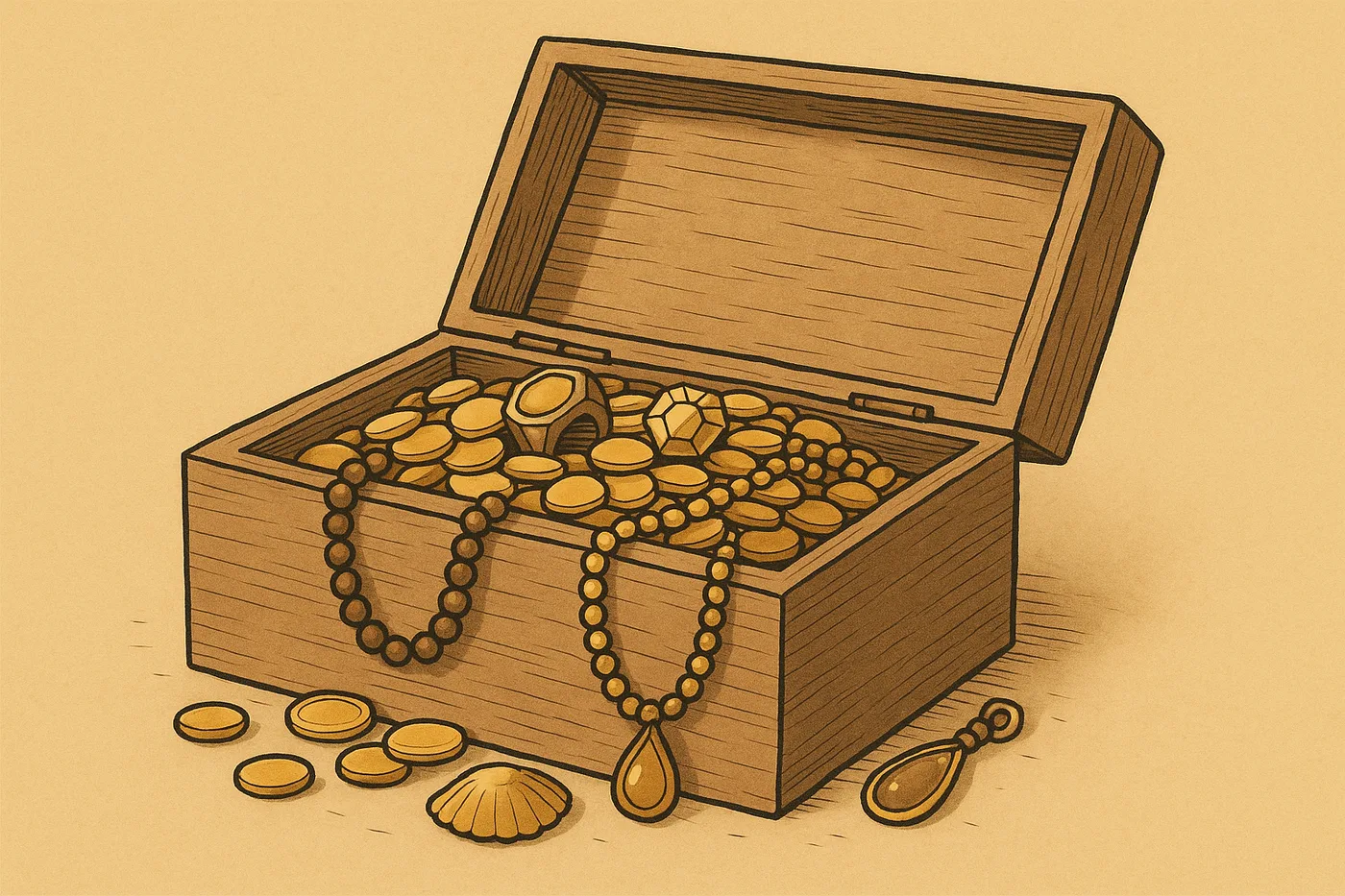
Description and usage
The money box was a container, perhaps made of wood, in which money or other small valuable objects were kept. The box would probably have been small enough to be carried easily in one hand or under the arm.
Translation
“Treasure box” may be rendered “box with valuable objects” or “box with objects costing a great deal of money.”
In JHN 13:29 the physical money box is not in focus but rather the function performed by Judas. Therefore, for the literal phrase “Judas had the money box,” it may be useful to say simply “Judas was in charge of the money” (CEV) or “Judas was the treasurer for the group.” The Greek expression here may be understood as an idiom.
MAT 2:11: The Greek word thēsaurus, translated “treasures” by RSV here, may refer either to something valuable that is stored away or to the place or object in which something valuable is stored away. In this verse the translations are divided between the meaning “treasure” and “treasure container”; and even where the second of these interpretations is followed, commentators do not agree concerning the nature of the container. For example, some suggest “treasure box,” while others deny this meaning and argue for “sack.” In light of the many possibilities, none of which is conclusive, the best solution is simply to translate thēsaurus in a way that is most natural in the receptor language yet does not contradict the biblical culture. Some examples of things that contradict the biblical culture would be “suitcases,” “trunks,” and “safes.” These words should be avoided. Many translators have used general expressions such as “baggage” and “sacks [or, containers] they carried their valuable things in.”