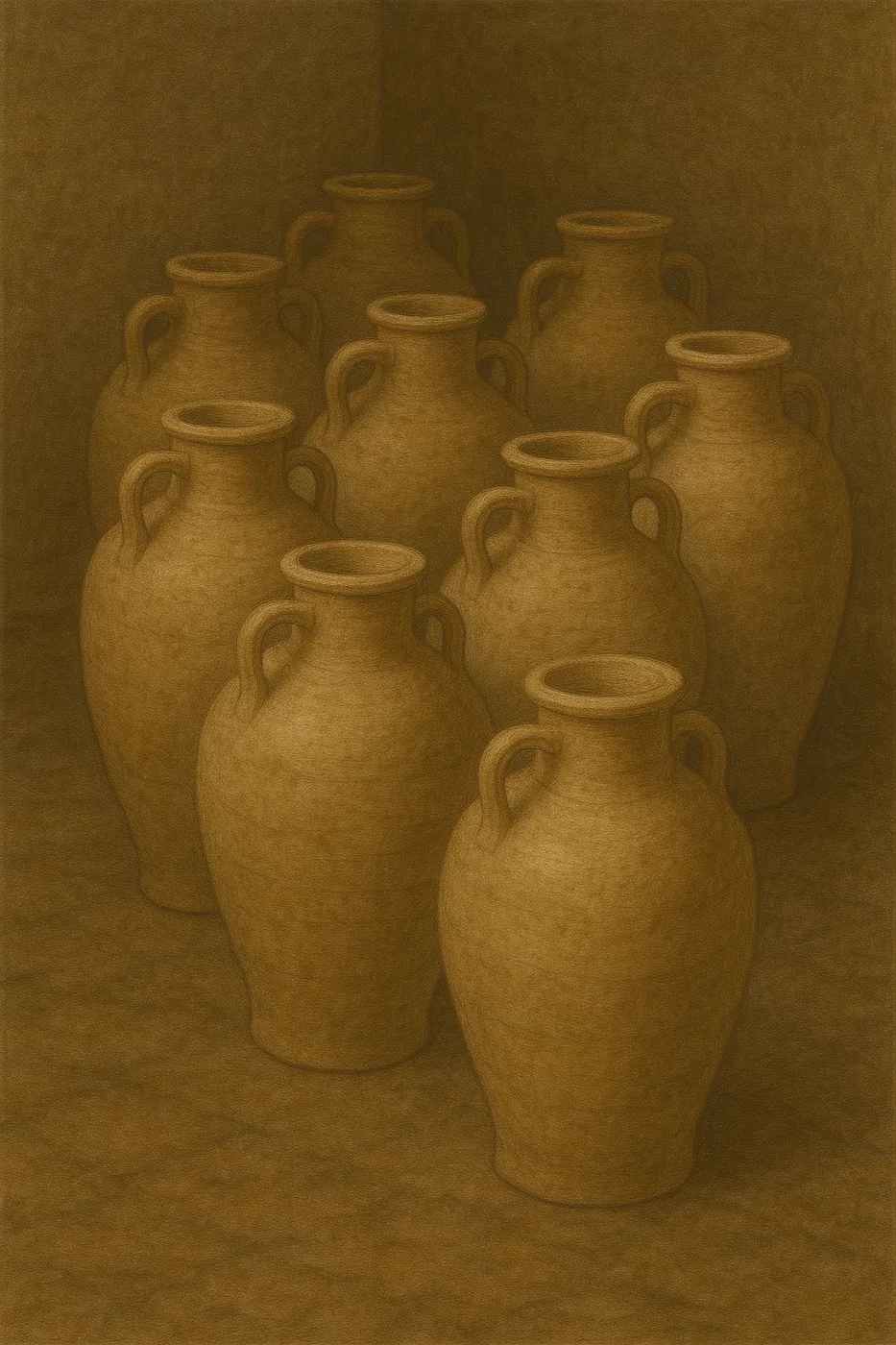
Description and usage
The container was a solid object for holding things. Containers were made of earthenware or metal, sometimes of wood. They varied widely in size and shape.
Translation
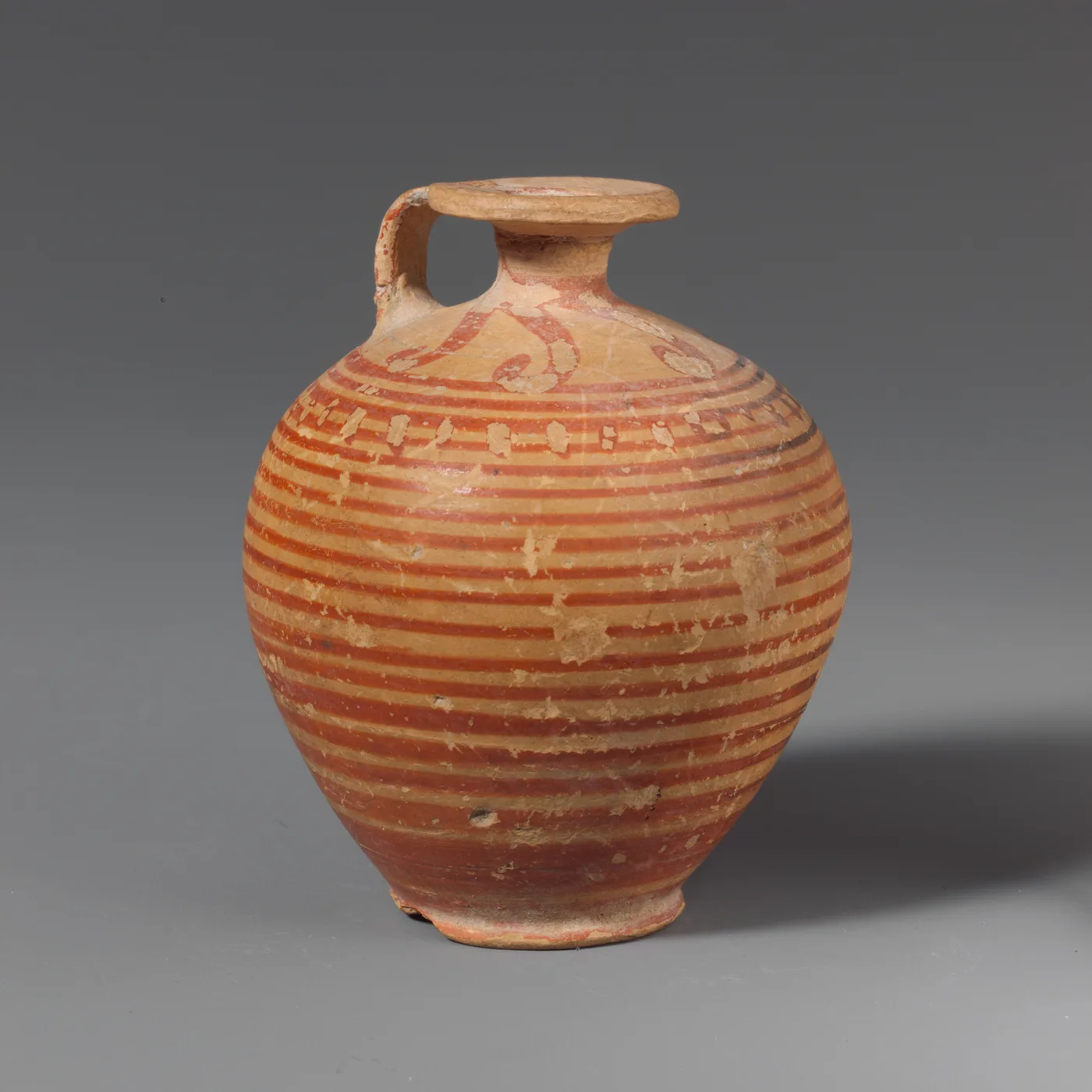
The Hebrew word ’asuk in 2KI 4:2 refers to some kind of jar or flask, probably made of earthenware. Most translations add the qualifier “small” (GNT, CEV).
The Hebrew word baqbuq refers to a small flask with a narrow neck. In modern Hebrew it is the word for “bottle.”
In PRO 26:23 the Hebrew word cheres refers to a vessel that is made from cheap and commonplace material.
JOB 28:17: At the end of this verse the Hebrew is literally “a vessel of fine gold.” While most translations have something like “jewels of fine gold” (RSV), GNT and others understand “vessel” (kli in Hebrew) to refer to a “gold vase,” which is probably more accurate than “jewels.” In some languages “a vessel of fine gold” may be rendered “a pot made of fine gold.” Since the focus is on the high value of wisdom, rather than on a comparison with any particular implement, translators may want to follow CEV for the whole verse: “Nothing is its equal—not gold or costly glass.”
The vessels referred to in MAT 25:4 would have been relatively small, containing not more than a liter (about a quart).
The containers in MAT 13:48 would have been rather large, containing perhaps 15–19 liters (4–5 gallons).
JHN 4:11: The Samaritan woman observes that Jesus has “nothing to pull up water with.” The Greek word antlēmaJHN 4:11 comes from a verb meaning “to draw water.” It gives no indication of its shape or of the material from which it was made. Many translations say “bucket.” This may imply a container made of metal, plastic or even rubber, which are all inappropriate. Even a bucket made of wood was probably unlikely in New Testament times. It was more likely a container made of leather. In many languages the best solution will be to avoid using a word for a specific object. An acceptable solution would be to begin the woman’s words in this verse with “Sir, the well is deep, but you have nothing to pull up water with.” A similar rendering is employed by GW, NCV, NIV, SPCL, PV, and others.
JHN 19:29: While RSV and GNT render the Greek word skeuos as “bowl,” others have “jar” (CEV, NIV, NLT, REB). Here it is best to use a generic term such as “vessel” or “container” (GECL). The word skeuos is used often in the New Testament with the broad meaning of “thing, object, stuff” (see MAT 12:29; MRK 3:27; MRK 11:16; LUK 17:31; ACT 10:11; ACT 10:16; ACT 11:5; ACT 27:17; 2TI 2:20; 2TI 2:21; HEB 9:21; REV 18:12; REV 18:12).