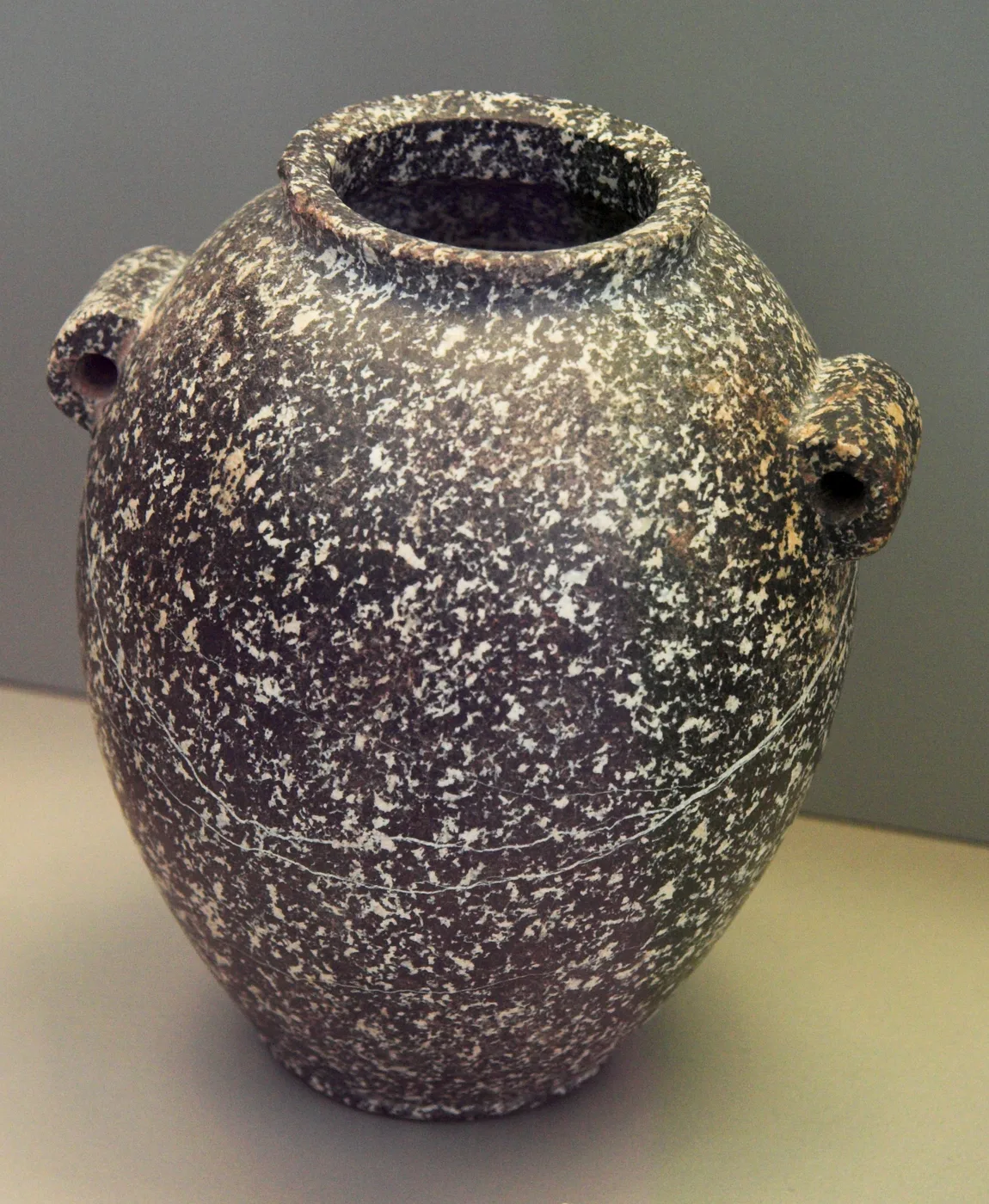
Description and usage
Stone jars were water containers. In the only place in the Bible where these water containers are mentioned, they are described in unusual detail. Their capacity is given as “between twenty and thirty gallons” (GNT; about 80–120 liters), and they are said to be made of stone. Stoneware in Bible times was made from soft stone. It could be carved with a hammer and chisel and made smooth with various tools, or it could be turned on a lathe much like wood was turned by a carpenter.
Translation
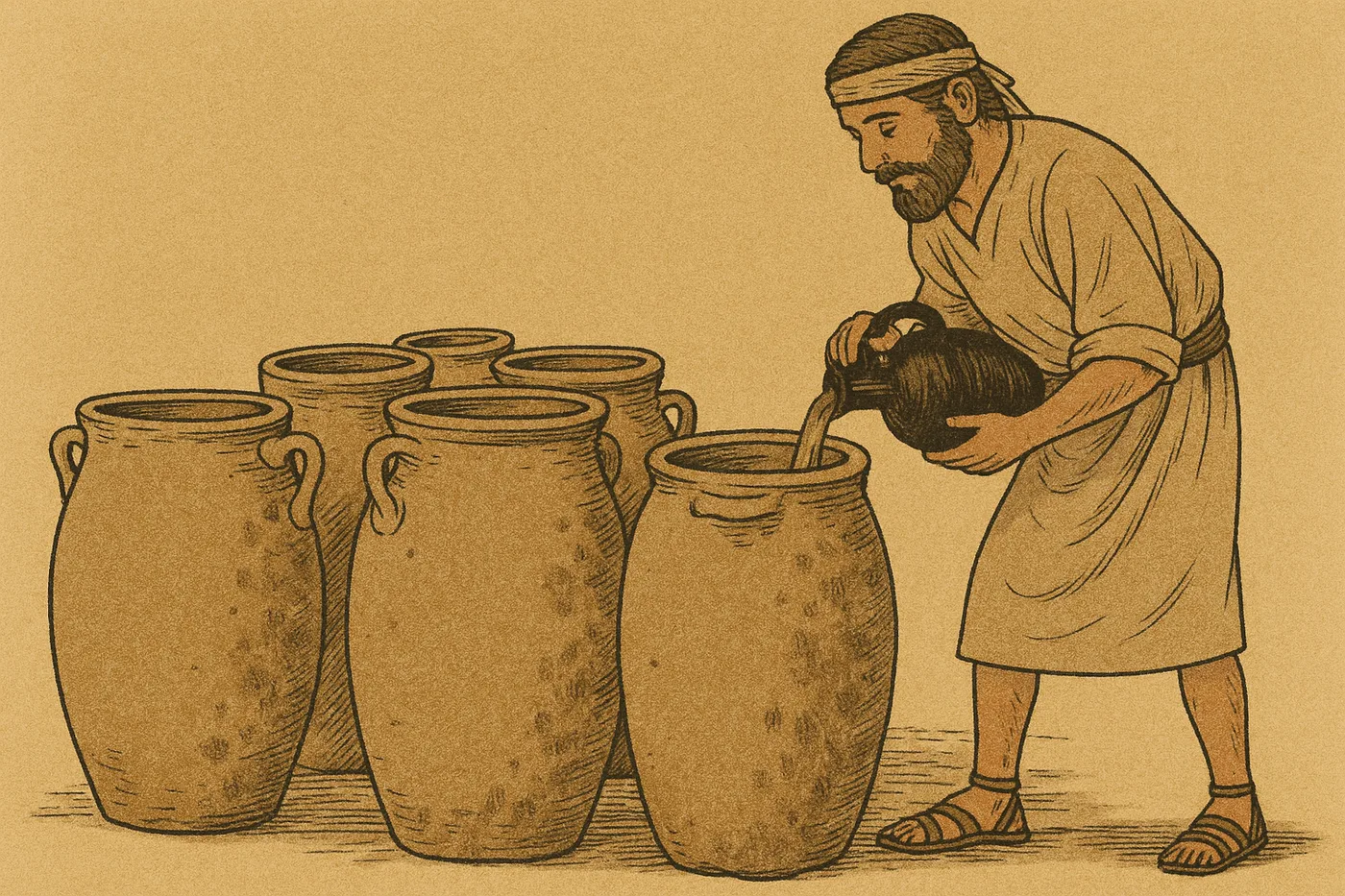
JHN 2:6: The fact that the jars here are stone, rather than earthenware, is important. According to Jewish law, earthenware jars, if contaminated, had to be broken, but contaminated stone jars could simply be washed. The Greek word hudria indicates that the jars were intended for water. The relation between the words in the phrase “six stone water jars” (GNT) must be made more explicit in some languages, for example, “six large jars made of stone and used for holding water.”