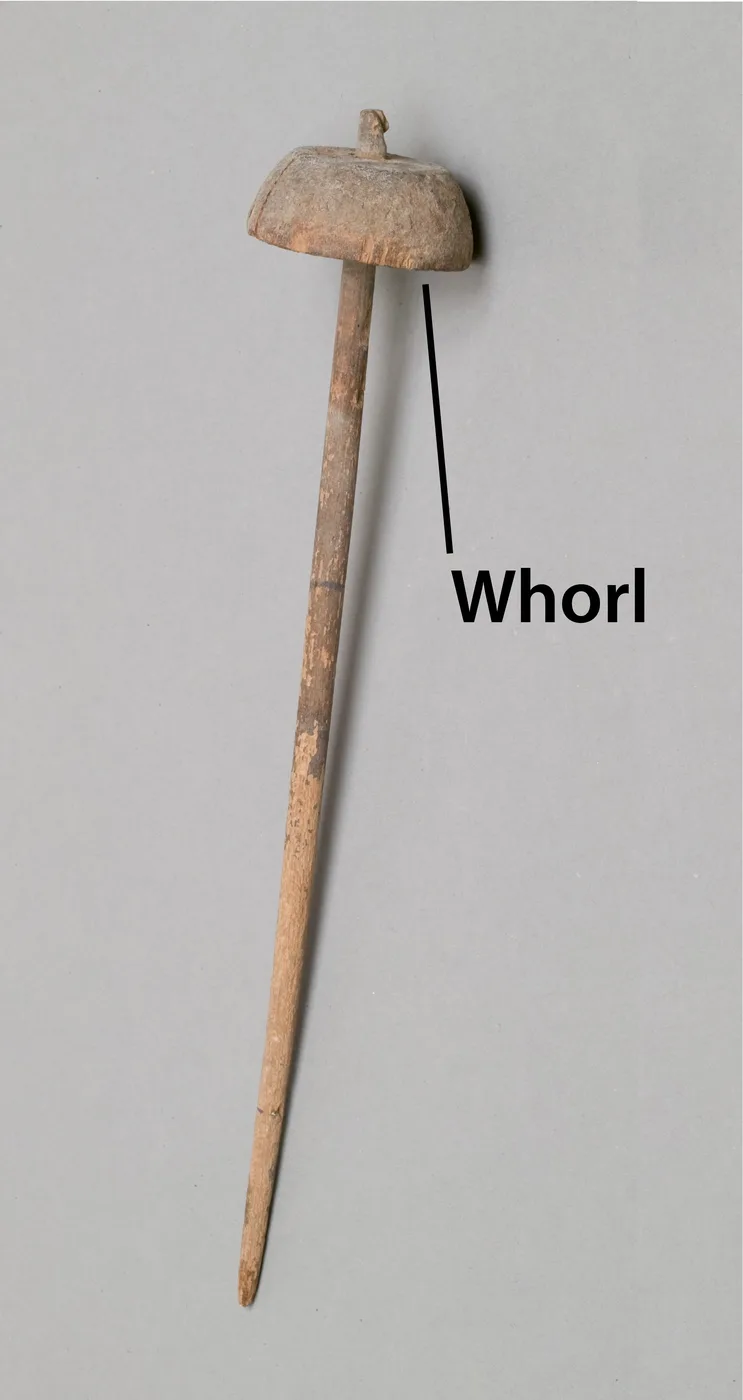
Spindle

Spindle
Spindle (Metropolitan Museum of Art, CC0, MMA)

Description and usage

After the fibers had been drawn out, one end of the fibers was attached to the spindle, which was a short, oblong stick with a weight on the top (the whorl). The spindle was suspended in the air and spun, thus spinning the attached fibers into a thread. As the thread grew longer, it was then wrapped around the middle of the spindle until all of the fiber had been drawn out and spun.

The action of the spindle resulted in a strong “spun thread.” The Hebrew word for this spun or twisted thread is shazar (always appearing in the form moshzar) in PRO 31:19, EXO 26:31, EXO 26:36; EXO 27:9, EXO 27:16, EXO 27:18; EXO 28:6, EXO 28:8, EXO 28:15; EXO 36:8, EXO 36:35, EXO 36:37; EXO 38:9, EXO 38:16, EXO 38:18; EXO 39:2, EXO 39:5, EXO 39:8, EXO 39:24, EXO 39:28; EXO 39:29, and the Greek word is klōthō in SIR 45:10.


Translation
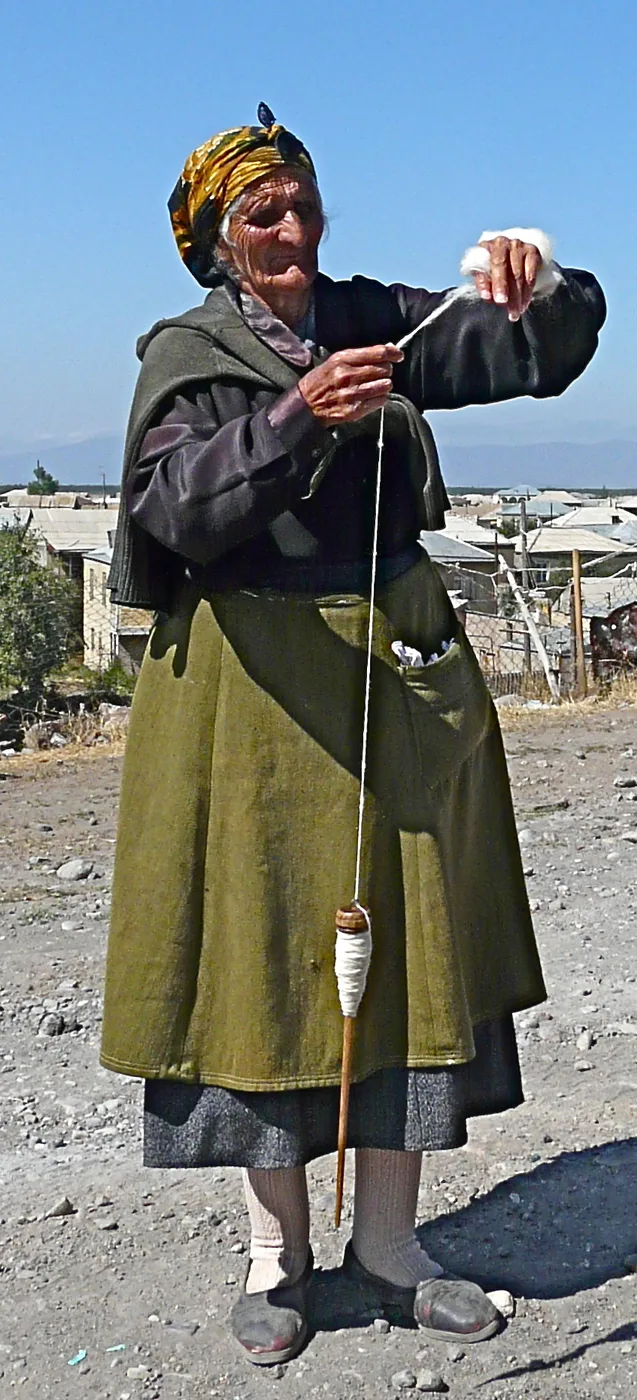
Woman using a spindle
Woman using a spindle (© Rita Willaert, CC BY 2.0, via Wikimedia Commons)
PRO 31:19: The literal RSV translation of this verse reads “She puts her hands to the distaff, and her hands hold the spindle,” but this will communicate little to modern readers in most cultures. Common-language translations generally describe the activity of the woman rather than the specific instruments she is using. GNT has “She spins her own thread and weaves her own cloth.” NCV goes one step further, describing the act of spinning: “She makes thread with her hands and weaves her own cloth.” CEV has attempted to simplify this verse even further but has probably gone too far with “She spins her own cloth”; a person does not “spin” cloth, even if the intended audience understands the operation of spinning.

Scripture References (22)