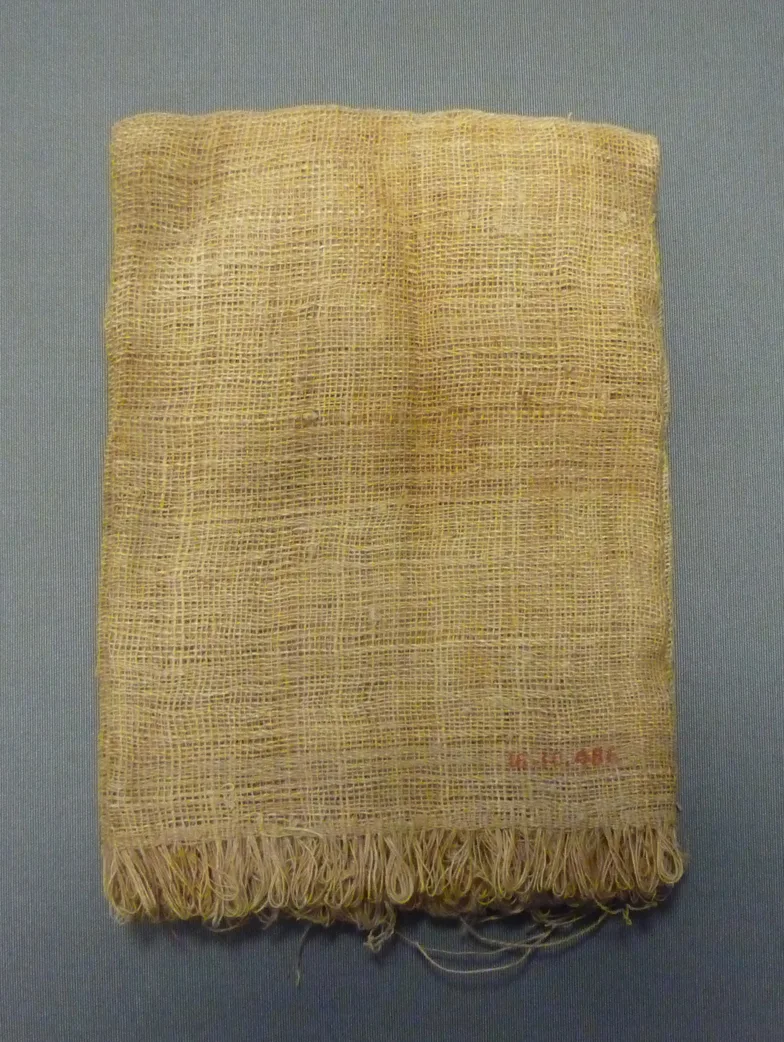
Description and usage
See Cloth manufacture.
Translation
The following is adapted from A Handbook on Leviticus at LEV 13:48 (page 200): Older translations such as the King James Version (KJV) and RSV translated the Hebrew words shthi and ‘erev as “warp” and “woof,” and this is the meaning that the words of the text have taken in modern Hebrew. Such a rendering indicates the threads going in different directions in the cloth. However, it is highly unlikely that this is the meaning of the text. It is difficult to see how the threads going in one direction could be affected by the mildew without affecting those running at right angles to them. The requirement that the affected part be torn out does not make sense either (verse 56), because this would destroy the whole garment. While the interpretation is far from certain, the meaning of these words is probably “woven or knitted material,” as in NAB, TOB and NIV (similarly American Translation [AT]). GNT has reduced this to “piece [of clothing],” but such a reduction should probably be avoided in the receptor language, if possible.
In ISA 38:12 Hezekiah is complaining that his life is to be cut short. He uses a weaving metaphor to say that his life is like cloth cut off from the warp, the vertical threads of the loom.