Discussion
‘Ez and tragos are the common words for “goat” used generally in non-ritual expressions. ‘Ez is usually a feminine form and since adult male goats were not often eaten it often has the connotation of a goat raised for meat or milk.
‘Atud refers to the dominant male goat in a flock. By extension it was also used to refer to a human leader.
Tsafir is an Aramaic or late Hebrew word appearing in Scripture in which were among the last books to be added to the Old Testament canon. It refers to the male goat, possibly to a castrated male.
Sa‘ir is used mostly in Leviticus and refers to goats as sacrificial animals. It literally means “hairy one” and may refer to the type of goat bred for its hair (see description below). Sa‘ir refers to a male goat with se‘irah being the feminine form.
Tayish is a word meaning “the one that butts” and is used to refer to male goats.
Aigeios is a Greek word for the type of goat bred for its long hair. The word aix may also have had this meaning.
Description
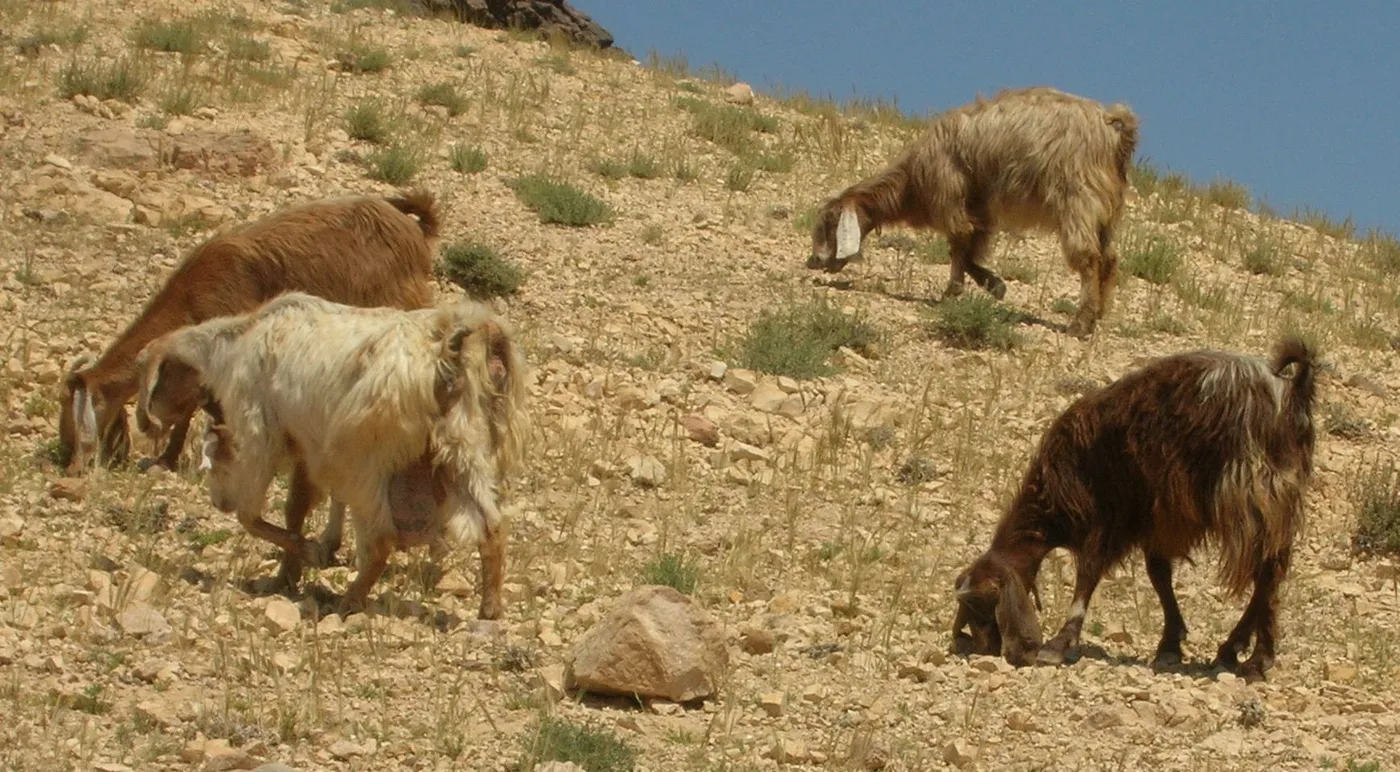
Goats are fairly small animals with hooves. They were domesticated very early in the Middle East. Both longhaired and shorthaired breeds were known, the former being raised for its hair, and the latter for its milk, meat, and skin. The shorthaired type was probably the Nubian Goat Capra hircus mambrica, a floppy-eared breed with black and white, or brown and white, patches. The longhaired breed was also floppy-eared, of the Angora type, Capra hircus angorensis. It was usually black with long silky fur.
Three passages in the Bible seem to liken this hair to human hair: SNG 4:1, SNG 6:5, and 1SA 19:13.
Goats were very important to the early Israelites. Like sheep they were a source of meat, milk, hides, hair, and horns. They prefer to browse on leaves and shoots rather than graze and thus do not compete with sheep for the grass in fact they can survive on desert shrubs even where there is no grass. They are excellent survivors of drought or desert conditions.
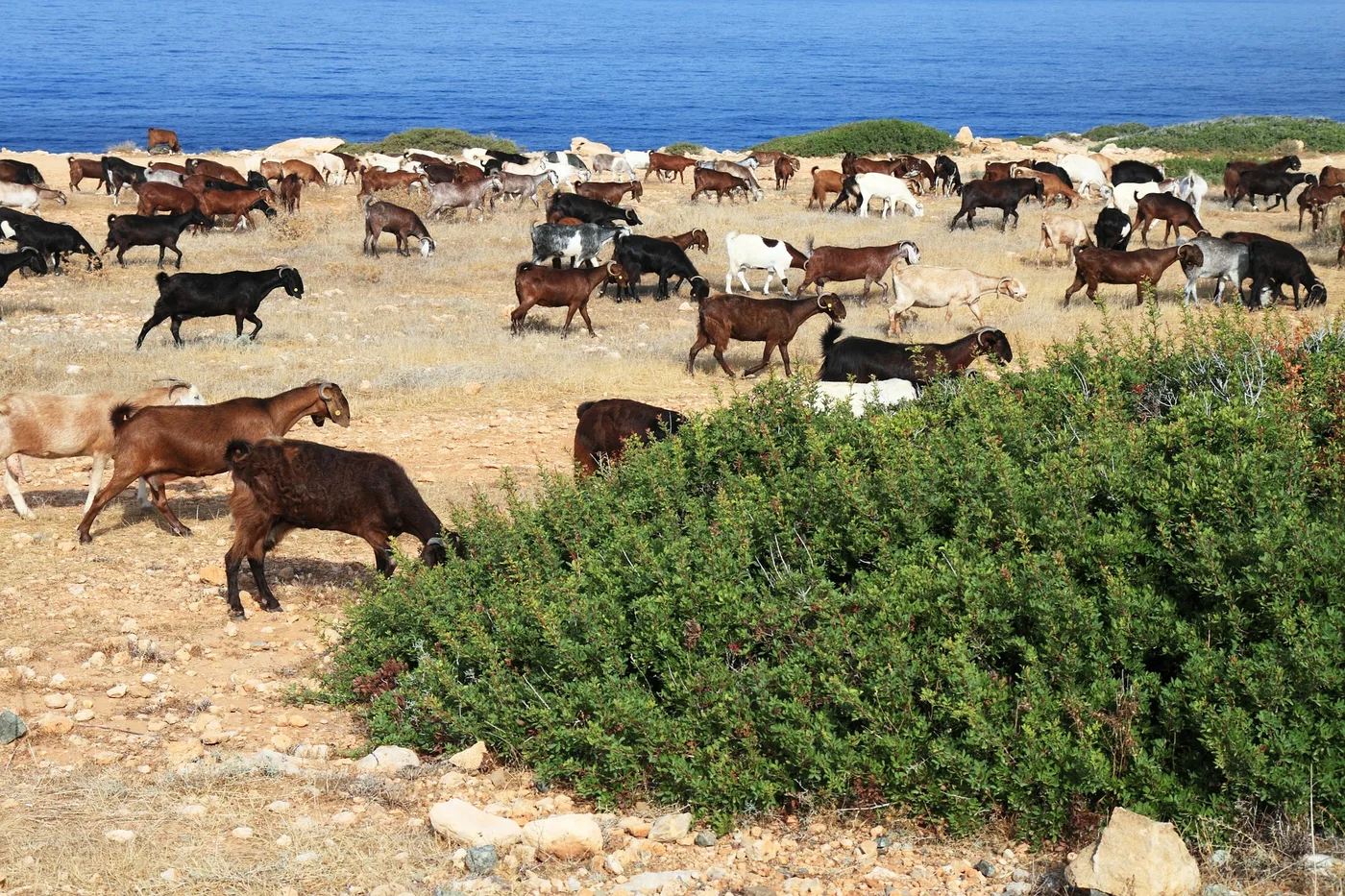
Goats were herded together with sheep although sheep were more numerous. Goats were actually quite helpful to the shepherds. While sheep are very dependent on each other lacking in self-confidence and thus tending to bunch together closely goats move about confidently in scattered groups following the general lead of a dominant male. When sheep and goats are herded together the goats feed on the shrubs on the slopes or edges of the valleys while the sheep keep to the grass on the more level areas. The goats scatter and the sheep follow their lead and thus graze in a more scattered pattern when with goats with all benefiting from the less dense grazing.
The meat of adult male goats has a strong flavor and smell and is usually avoided. However killing female goats is not a good policy as they are the reproducers. So even in Bible times young goats (kids) usually male were killed for food. It is also possible that castrated male goats were kept for butchering.
Goat hair was used to make tents and warm coats and for stuffing pillows and saddles.
The floppy-eared goats of the Middle East are not as easy to differentiate from sheep as other types of goat may be. Hence separating sheep from goats had to be done carefully.
See also Sheep, lamb.
Special significance or symbolism
While goats were a good source of food and clothing material in ancient Middle Eastern folk religions they were also associated with demons. In three passages especially this association is prominent. Two of them are discussed below. The third is LEV 16:5–LEV 16:28, where the goat chosen by lot as being “for Azazel” is sent away into the desert. Azazel was the name of the goat-demon of the wilderness. He is not being worshiped in this passage but the sins of Israel are being sent to him.
The Hebrew word ‘atud which refers to the dominant male leader of a flock of goats was also used for a human leader in much the same way as “shepherd".
Translation
In languages where goats are unknown, a borrowed word or a transliterated form is usually used. Elsewhere the normal word for goat should be used. When both ‘ez and another word for goat appear in the same context, ‘ez should be translated as “female goat". Similarly when both sa‘ir and another word for goat appear in the same context, sa‘ir should be translated as male goat.
Except for the Jeremiah and Zechariah passages mentioned below, ‘atud should be translated as “large male goat", “lead-goat", or “stud-goat".
LEV 17:7: The verse is referring to the heathen sacrifice of animals to goat-demons, rather than to goats. The use of “satyr” in some English translations is unfortunate, as this term reflects Greek beliefs from a much later period of history. The term goat-demon is to be preferred.
2CH 11:15: In this verse the wording is literally “priests for the high places and for the goats and for the calves which he had made.” It is clear that the “goats” were man-made, as were the shrines and the calves. In other words the meaning is “priests to serve the hill-shrines and the idols of goats and calves which he had made."
ISA 13:21; ISA 34:14: In both these passages the other animals mentioned are all wild animals associated with desolate or ruined towns. It seems likely that in such towns there would be surviving goats living like wild animals in the absence of human shepherds. What is literally “goats” in these passages should probably be translated “feral goats” or “wild goats". In some languages expressions for such animals include “rubbish goats", “goats turned wild", “bush goats", or “forest goats".
JER 51:40 and ZEC 10:3: In these verses, where ‘atud occurs, it should be translated as “leader of the flock” or something similar.
In all other passages the regular word for goat can be used.