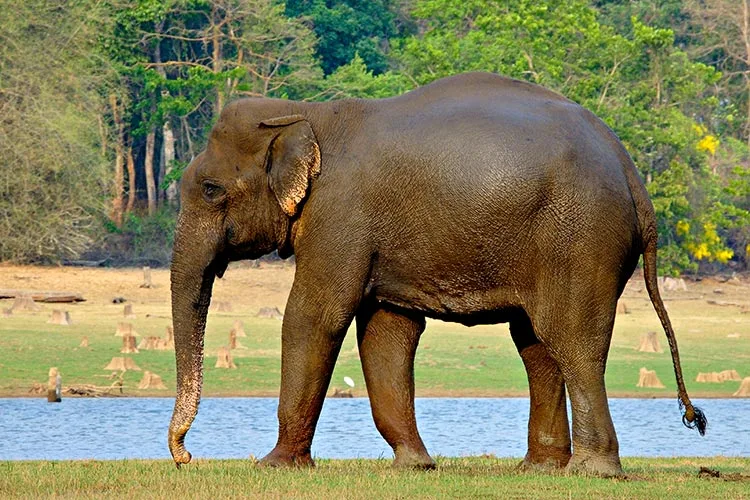
Discussion
Although the first definite reference to elephants in the Bible is in the Greek deuterocanonical book of 1 Maccabees, ivory (literally “tooth") is mentioned first in the time of Solomon. By this date there were already ivory trade routes from the Sudan down the Nile and by sea from where Djibouti is now on the African Red Sea coast to where Eilat is now on the Gulf of Aqaba. Some of the ivory may have been made from the teeth of the hippopotamus but two references, 1KI 10:22 and 2CH 9:21, specifically refer to elephant ivory (literally “elephant’s tooth"). Ivory was probably known even much earlier than this since ornaments dating from around 2300 B.C. have been found in Palestine.
The Indian Elephant Elephas maximus was domesticated and trained for use in war very early well before the second millennium B.C. When Alexander the Great extended his empire into India in the fourth century B.C. he obtained war elephants to incorporate into his army. The idea of using elephants in war then spread to the Middle East. There was a smaller variety of this elephant found in Syria and Mesopotamia. By the third century B.C. domestic Indian elephants had been introduced into Egypt. Ptolemy II is reported to have had ninety-six elephants, four to a chariot, and later that same century when Ptolemy IV defeated the Seleucid king of Syria, Antiochus III, he is reported to have captured Syrians’ elephants. However, the Seleucid kings continued to use war elephants, and the next king, Epiphanes, attacked Egypt with elephants. He and his son then used them in their campaign against the Jews. According to 1Maccabees each elephant with thirty-two soldiers mounted on it, besides the Indian handler went into battle ahead of one thousand Syrian soldiers and five hundred horsemen. One of Maccabeus’ brothers was able to kill the largest elephant by getting under it and stabbing it, but he was himself killed when the elephant fell on him. At a later time probably because the Indian elephants were difficult to obtain the African Elephant Loxodonta africana was tamed for use in war. Coins show that the elephants used by the Roman Emperor Hadrian to cross the Alps were African probably brought from North Africa. See also Behemoth.
Elephas is the word most commonly used in the deuterocanonical books although elephantarchēs which means commander of an elephant squadron is used in 2MA 14:12 and 3MA 5:4; 3MA 5:45, and thērion which means “monster” is used in 2MA 15:20; 2MA 15:21.
Description
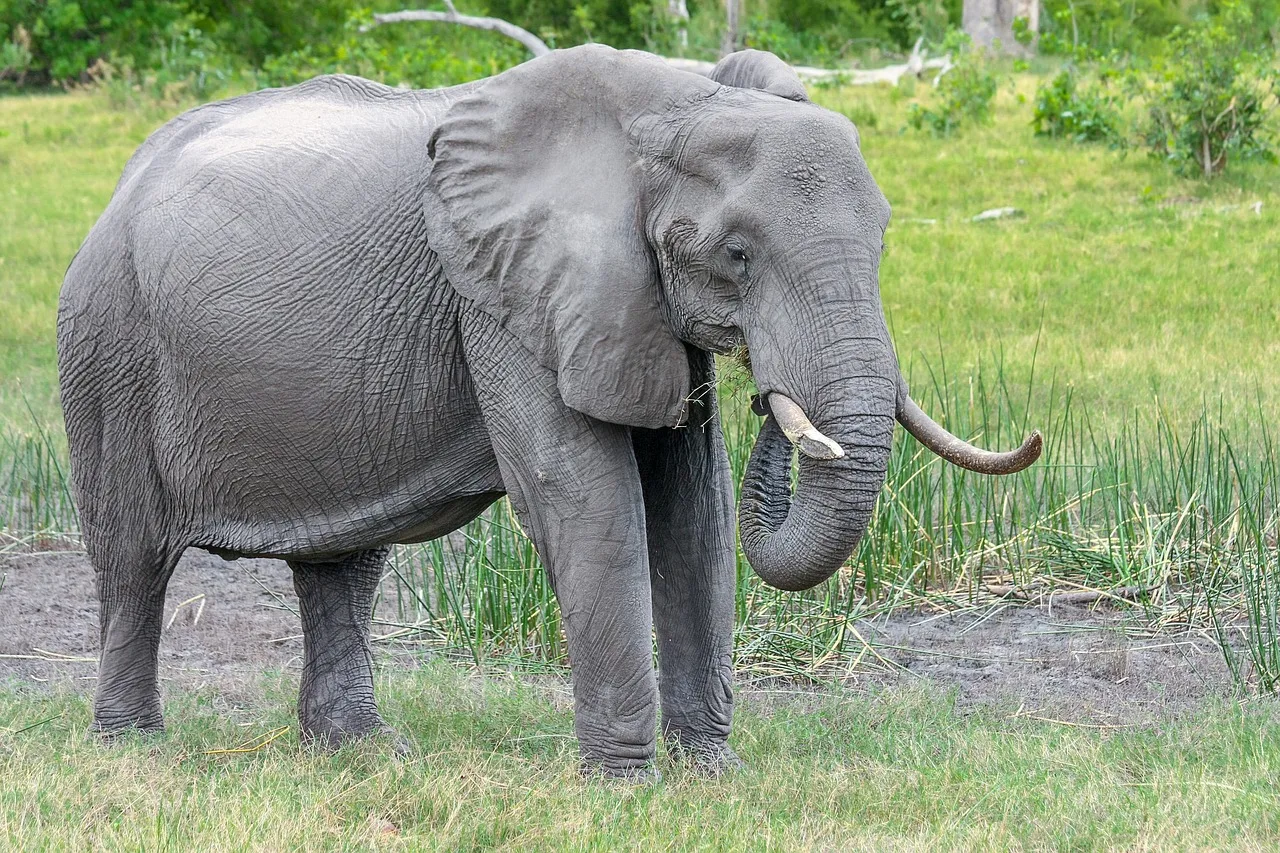
They are a dark gray color and have no fur. Their body looks almost hairless but in fact they are covered with bristly hairs. They feed on vegetation such as leaves roots shoots bark and fruit.
Special significance or symbolism
The elephant is the biggest and strongest animal.
Translation
There are local words for elephant in most African, Middle Eastern, and Asian languages, and many international languages use a word derived from the Greek name elephas. In some areas even though there are no elephants, the fossilized bones of mammoths, the ancient relative of the elephant, are known, and this local name is used for modern elephants too. In most other areas the word for elephant is a word that is borrowed from the dominant language of the area. Where this language is English, Spanish, French, Portuguese, German, or Dutch, the word is similar to elephant, elefant, elefantos, or olifant.