Reference:”
Discussion
The New Testament aloe must be distinguished from that mentioned in some versions of the Old Testament. In NUM 24:6; PSA 45:9; and some other places aloe refers to chips of fragrant wood from the agarwood tree found in northern India (see Agarwood (eaglewood, aloeswood, lignaloes)). However, the New Testament reference to aloe is to the True Aloe Aloe vera. This aloe originated in southern Africa, Arabia, and Madagascar. The gel-like substance in the leaves of the aloe has been used as medicine for centuries, especially to treat burns and abrasions of the skin. It is also used as a laxative, and in modern times as an ingredient in all kinds of skin creams, soaps, shampoo, and even as a drink (in Asia), or as an additive to tea.
Description
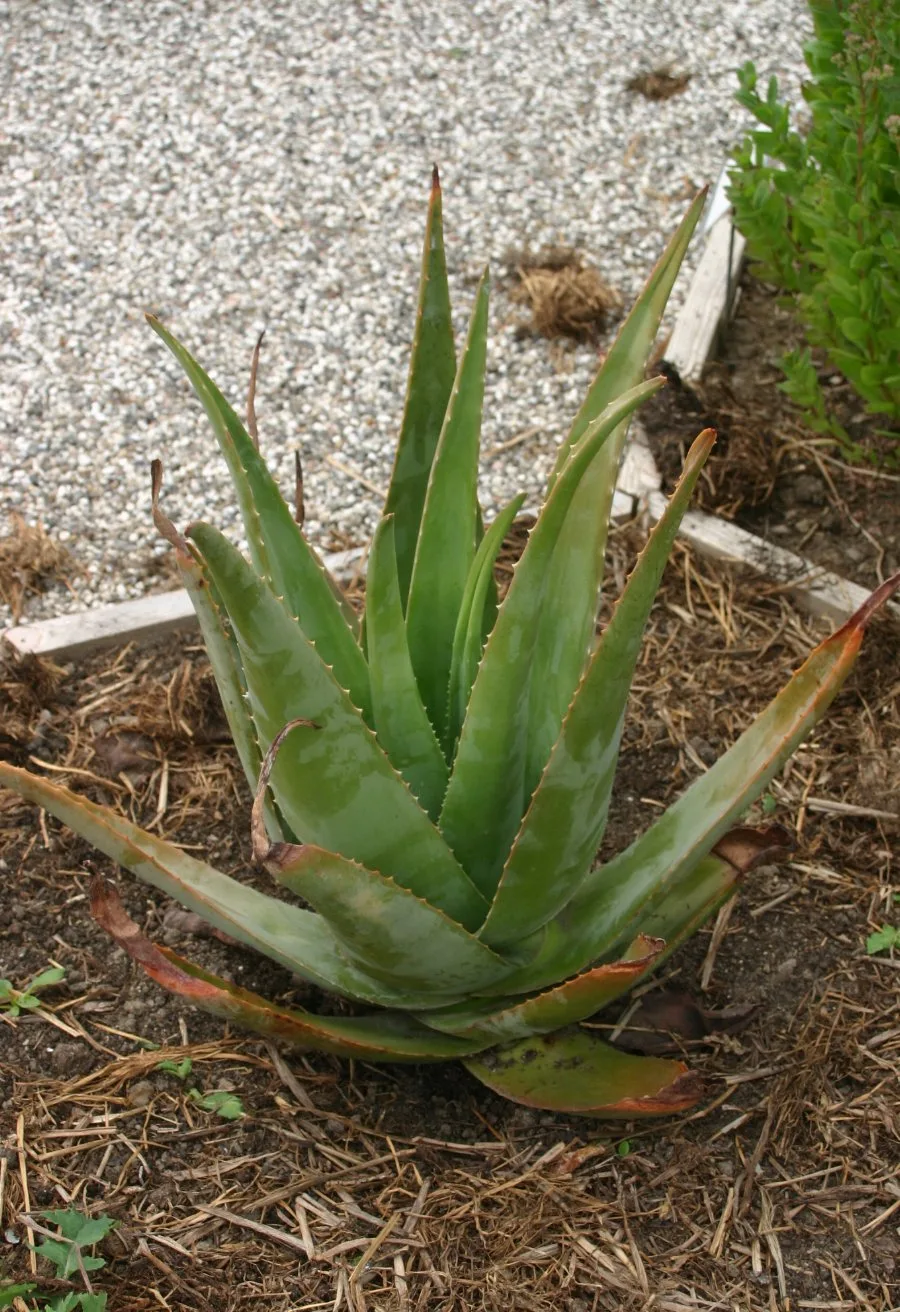
The leaves of aloe plants are stiff, fleshy spines that come out like fat knife blades from the center of the plant. They have spiny margins and are mostly solid green in color, but some are spotted or blotched. Most aloes have no visible stem, but some do have stems, and can reach a height of more than a meter (3 feet). The plants produce clusters of small red or yellow tube-like flowers that are borne on a stalk.
Special significance
JHN 19:39 mentions aloe along with myrrh as a mixture brought by Nicodemus to embalm the body of Jesus.
Translation
Aloes are native to southern Africa, Madagascar and Arabia, but are now found in tropical countries throughout the world. Translators in those areas will have local names for the plant. Since the one reference to aloe is a non-rhetorical passage, a transliteration from a major language is advised, but it will depend on what is done with myrrh, the other word in the pair. Possibilities are Latin alovera, French alowes, and Spanish asibar.