Discussion
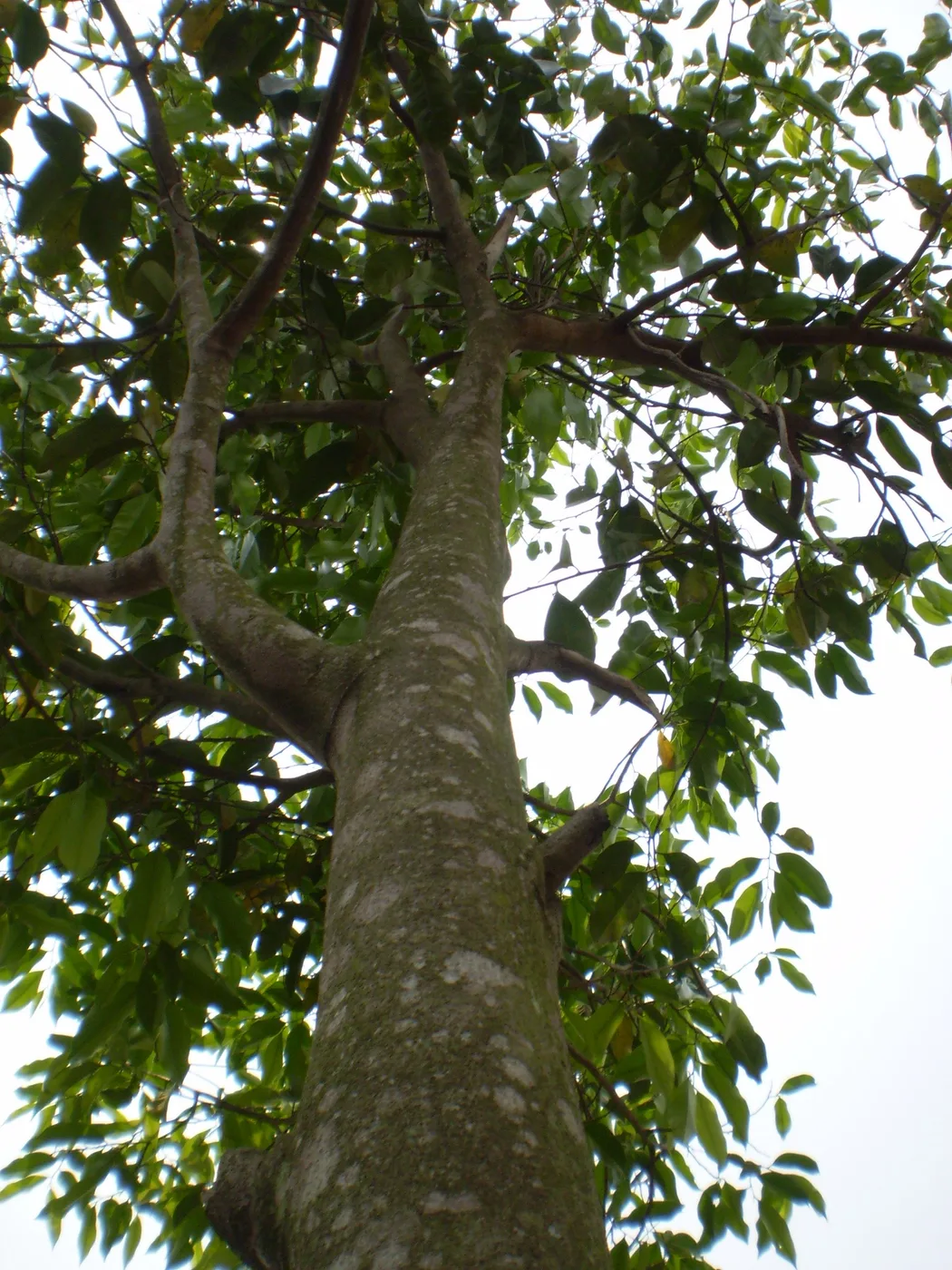
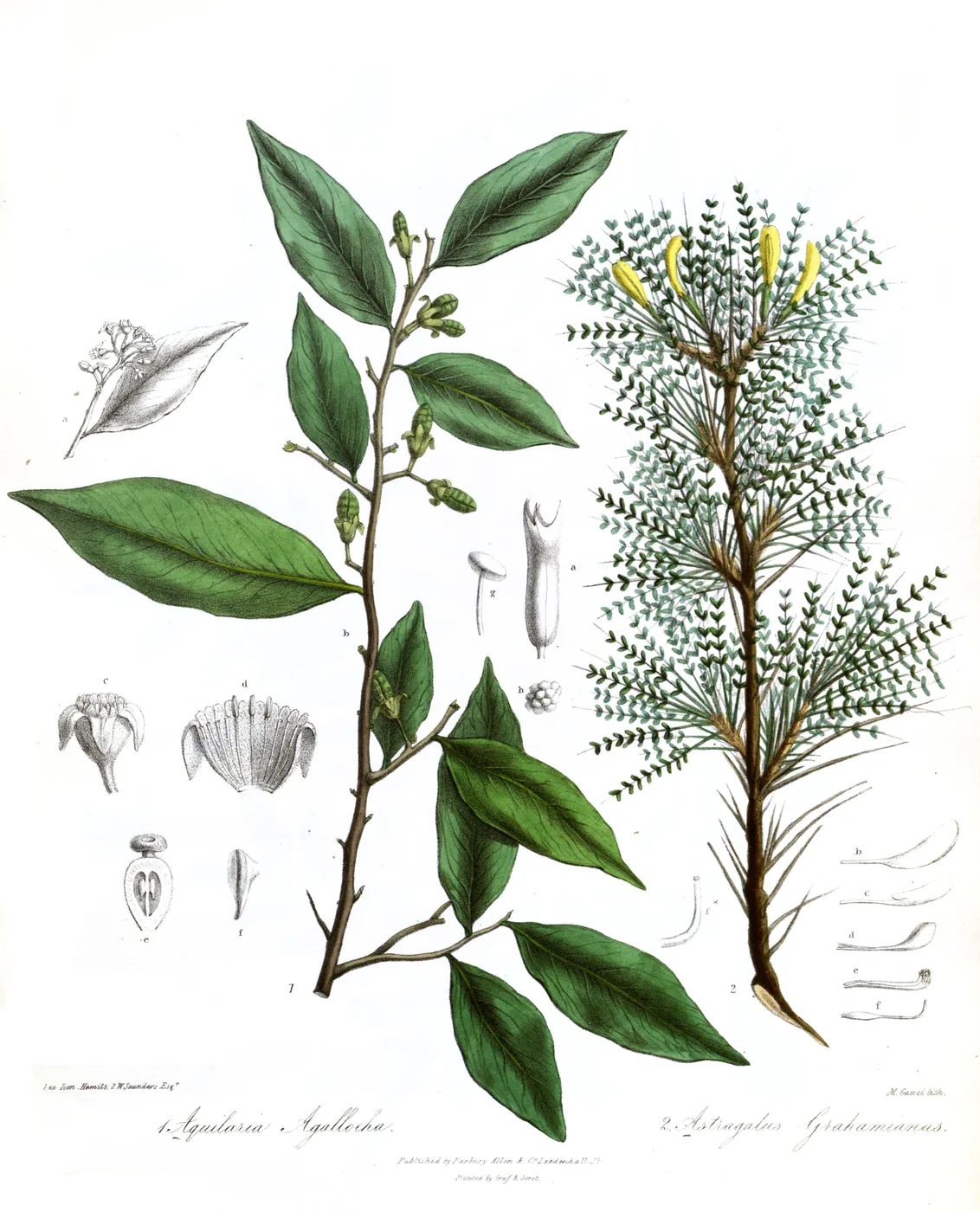
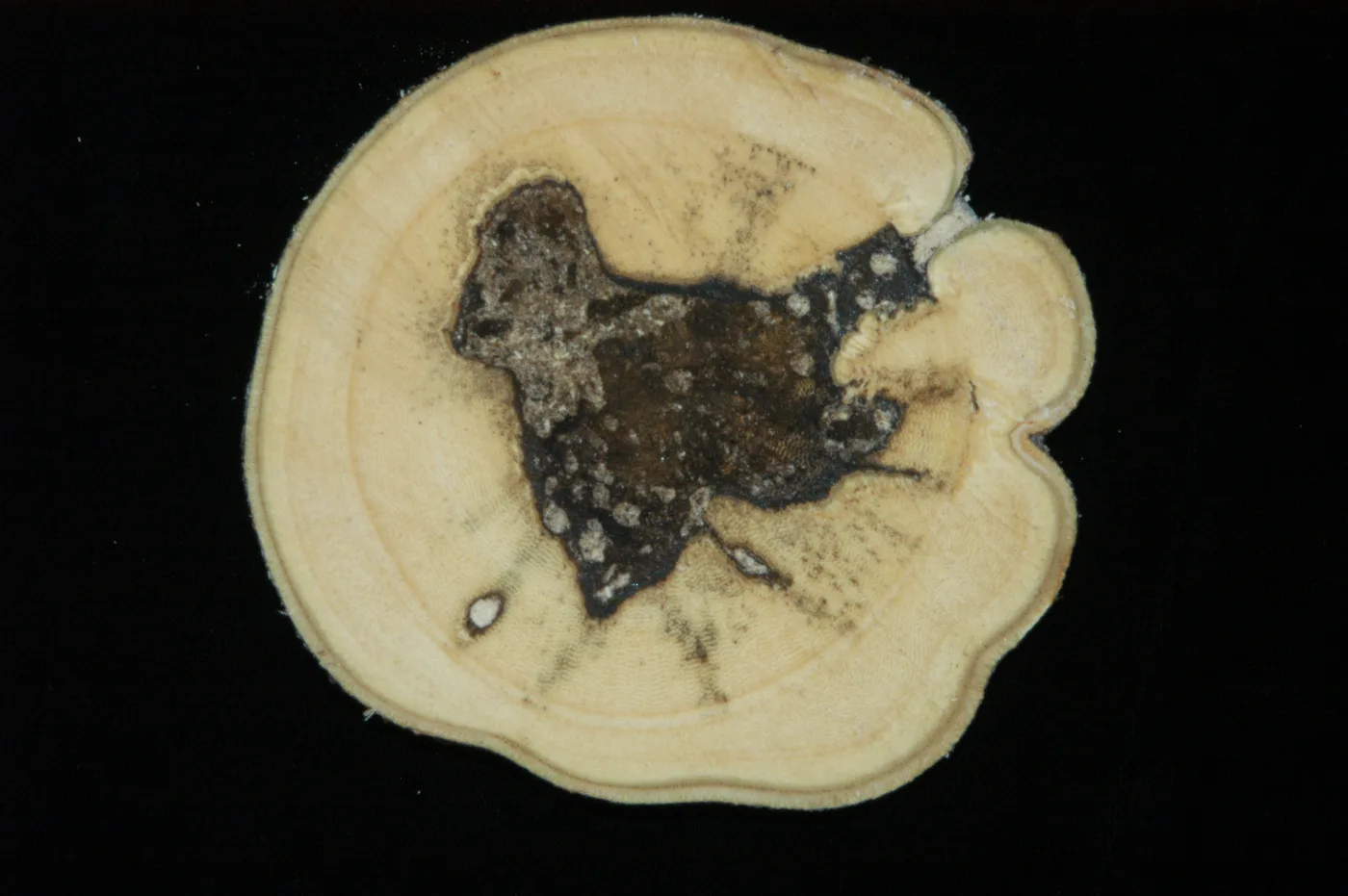
Zohary confidently identifies the Hebrew word ’ahaloth in PSA 45:9 (8) as referring to the Agarwood or Eaglewood Aquillaria agallocha, which is a tree native to northern India. (He also says it is native to East Africa, but this seems to be a mistake). The ancient Greek writer Dioscorides calls the eaglewood agallochon, a wood found in India and Arabia. This view is supported by Anderson and the commentators Snaith and Budd. Hepper, who is generally suspicious of claims about trade with the Far East in this period of history, doubts this identification but goes along with it for lack of an alternative. The chips of the wood are sold in India under the name agar (Hepper, page 140) and burned as incense. Expeditions like those of King Solomon (1KI 9:26–1KI 9:28) may have brought this precious commodity from India by way of mysterious places like Tema (JOB 6:19) or Dedan (ISA 21:13), possibly in the Arabian Peninsula.
In NUM 24:6 the Hebrew word ’ahalim does not refer to the fragrant chips of the agarwood tree, but the actual trees. The last two lines of this verse read “like aloes [’ahalim ] that the LORD has planted, like cedar trees beside the waters.” These parallel lines suggest verdant growth. If the agarwood trees actually grew only in the Far East, what would Balaam or the writer of Numbers know about how they looked? Budd and others suggest that in this verse various elements of nature are combined in an exotic vision of luxury and beauty. Mft renders ’ahalim as “oaks,” assuming that a Middle Eastern species was intended. Moldenke approves of this.
The agarwood tree is also known as lignaloes or aloeswood, but it has no relation whatever to the True Aloe Aloe vera that is native to the Middle East, Madagascar, and southern Africa (see Aloe (bitter aloe)).
Description
Special significance
Translation
Since the agarwood tree is well known in East Africa and India (Sanskrit aghal), translators in these areas should be able to find the local name. In Arabic agarwood is called oud (“wood”), the name used also by perfumers in Europe, but it is rarely seen because of its high cost. The tree is called jin-koh in Japanese, chen-xiang in Chinese, and gaharu in Indonesian. Elsewhere, translators will need to consider how they deal with the word pair myrrh and agar. If “myrrh” is transliterated, then “agar” could also be transliterated. In Asia the tree takes its name from the product (agar). In PSA 45:9; PRO 7:17; SNG 4:14, it is the name of the substance that would be transliterated (“agar”), not the tree (“agarwood”). It could be argued that these passages are rhetorical, and translators are thereby free to seek cultural equivalents for myrrh and agar. Balaam’s blessing of Israel in NUM 24:6, though rhetorical and even perhaps fanciful, is a more complicated case, since it pairs agarwood trees with cedars, which are also cited prominently in non-rhetorical contexts. There the translator will need to choose between being historically and geographically accurate and being rhetorically effective.