Discussion
Description
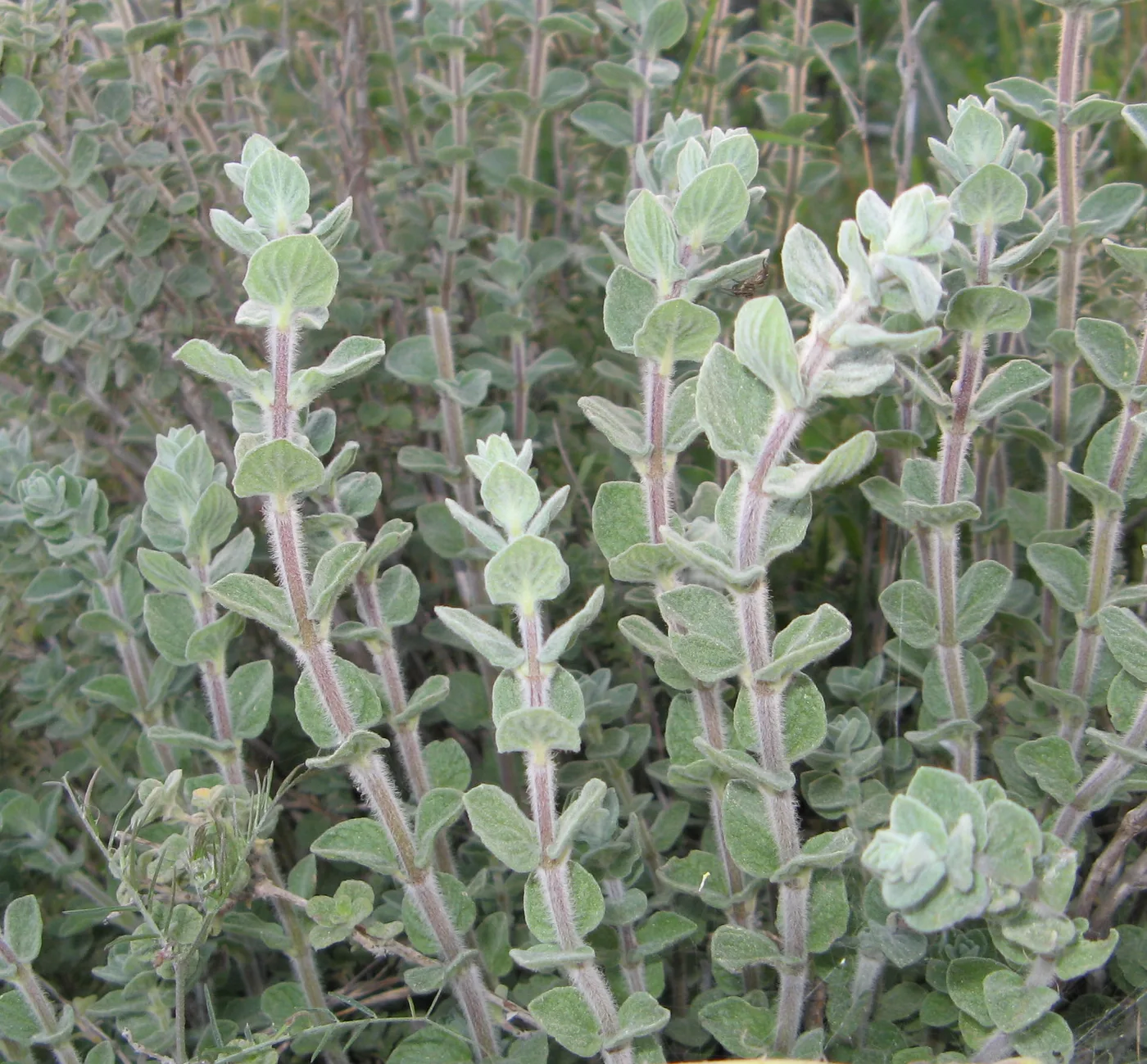
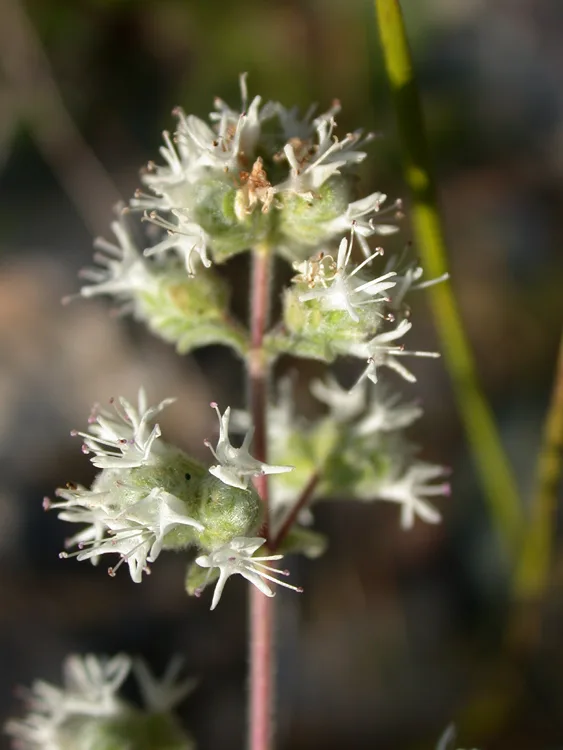
The marjoram plant stands 50–80 centimeters tall (20–32 inches) and has small leaves, and a many-branched, hairy stem. The hairs make it good as a brush. The plant has white flowers. Oil extracted from the leaves and stems is used to scent soaps and lotions.
Special significance
In Europe and the Middle East today, marjoram is used as a condiment, and it may have been so in Bible times as well, but the biblical use of the plant was as a brush. It was so used by the Israelites in the great Exodus from Egypt, when Moses ordered them to sprinkle blood on their doorposts as a sign to the Angel of Death to pass over their homes. This marked the beginning of the Passover Feast, commemorated ever since by Jews. In PSA 51:9 (7) ’ezov is used to symbolize spiritual cleansing. A third, and problematic, reference, occurs in 1KI 5:13 (4.33; see the comments below), where ’ezov is used to refer to a humble plant that contrasts with the might and grandeur of the cedar of Lebanon.
Translation
Many English versions, except for REB, bow under the pressure of tradition and use “hyssop” as the rendering for ’ezov. Translators are not obliged to follow suit. If the opportunity arises, they should follow the more scientifically correct “marjoram.”
EXO 12:22 a: “Take a bunch of hyssop [’ezov ] and dip it in the blood.” The function of ’ezov in Exodus is more important than the plant itself, and even if one uses a transliteration like “branch of esov,” a verb such as “sprinkle” helps to convey the picture. If the translator chooses to substitute a local plant typically used for sprinkling, a footnote is in order. If translators are used to transliterating from English, “marjoram” is preferred, not “hyssop.” On the other hand, a translator can transliterate from Latin majorana, Spanish mejorana, or Arabic mardakush. So some of the options for rendering “marjoram” are the following:
1. a generic expression, for example, “leaves”;
2. a transliteration (see above);
3. a substitution, that is, a local plant used for sprinkling (plus footnote).
For translators in West Africa who want to use a plant like marjoram, there are marjoram relatives. One such hairy-leafed plant grows in The Gambia and is used as a mosquito repellent. The Tiv of Nigeria call the same plant huuhuu, and the Etsako of Nigeria refer to it as “mosquito grass.” The leaves have a spicy smell and the plant, being hairy, is good as a kind of brush.
1KI 5:13 a (4.33a): “He [Solomon] spoke of trees, from the cedar that is in Lebanon to the hyssop [’ezov ] that grows out of the wall.” This verse has three puzzles:
1. Marjoram (like the European hyssop) is not a tree. It is a relatively low plant with tiny leaves and white flowers. If the translator has a generic word covering both “trees” and “plants,” that should be used. De Vries holds that the Hebrew word ‘ets (“tree”) has wider range of meaning than the English word “tree,” because it includes what we would call vines (see EZK 15:2). Still, stretching the word ‘ets to include a plant like marjoram is expecting quite a bit, which is partly why a few scholars are still unconvinced that ’ezov is the marjoram plant. Hepper, for example, is inclined to agree with Tristram and Balfour who, in the late nineteenth century, proposed that ’ezov here refers to the caper bush (see Caper (caper bush, caper berry)). Part of their argument rests on cognate evidence: Arabic for the caper bush is lassaf (derived from el asaf), which appears to be cognate with ’ezov, but the Arabic word for the marjoram (zaatar) is completely unrelated. Someone could argue that the caper is not a tree either, but, significantly, it does have a woody stem.
2. “’Ezov that grows out of the wall” is odd because, in real life, marjoram does not typically grow in the cracks of walls. It likes rocky soil, but is quite unlikely to find its way to walls. Was King Solomon, the great biologist, wrong on a botanical detail that would have been obvious even to school children?
3. Artistically, in this verse, something that grows out of a crack in a wall would make a more striking contrast to the mighty cedar than marjoram would. The caper bush, mentioned above, is an excellent candidate, because it does indeed grow in the cracks of city walls, apart from being a good contrast with the cedar. However, later botanists have not supported this opinion. Also, wider biblical usage votes against it. In Exodus ’ezov is used in bunches to sprinkle blood on doorposts. The marjoram, with its hairy stem, is quite suited for such a use. The caper bush is less so. Is it possible that ’ezov refers to two different plants in the different contexts? This would not be unprecedented. Zohary, for example, holds that the Hebrew word berosh refers to “cypress” in some contexts and to “fir” in others (see Cypress). The same is true of the Hebrew word suf, which can mean “cattail” or “seaweed” (see Cattail (reed-mace)).
A final piece of evidence that, unfortunately, does not resolve the issue is that the caper bush is abundant in the desert, whereas marjoram prefers cultivated, moister terrain. There may have been marjoram in Egypt when the Israelites left there, but once in the desert they would not have found it. Were they perhaps forced by necessity to use the caper bush for their sprinkling rituals?
The following is a summary of translation options for ’ezov in 1KI 5:13 (4.33):
1. transliterate from ’ezov (esobu, esofi) or marjoram (marjoramu, macora);
2. substitute a local plant that is capable of growing on a wall.
One possible model for the first half of this verse is “Solomon spoke of all kinds of plants/growing things, even the mighty kedari tree of Lebanon [Mountains], and the [little] majoram/esob/kaper/kafer/asafu that can grow on a city wall.”