Discussion
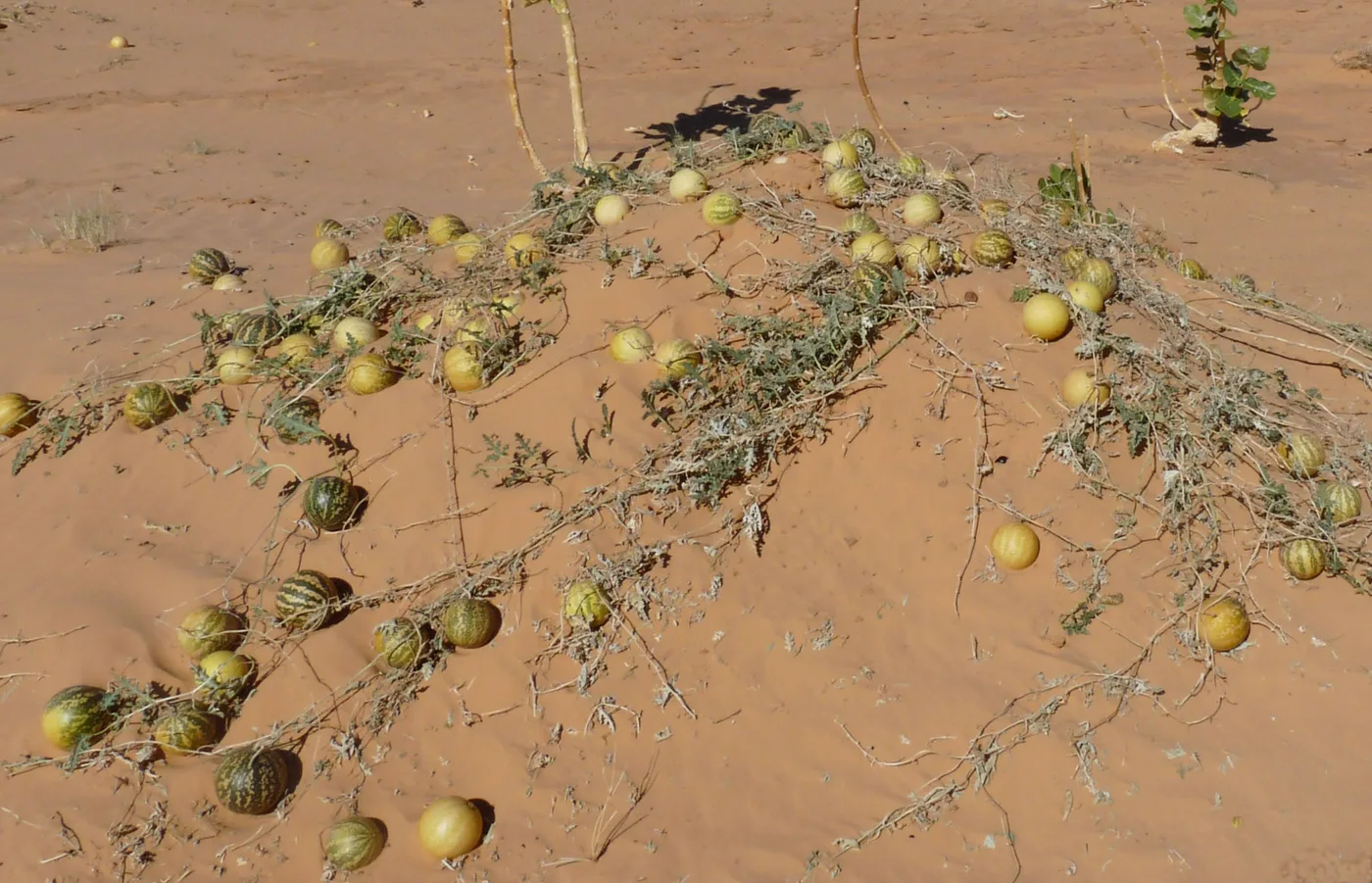
The young prophet in 2KI 4:39 was probably a city dweller. He may not even have had any particular species in mind when he set out to gather “herbs.” What he found was a gefen sadeh (literally “vine of the field”). Gefen is a general Hebrew word for climbing or twining plants but which, like the English word “vine,” can also be used to refer specifically to the grapevine. In this case it was the wild gourd or colocynth, a common vine in dry climates. Its fruit (paqu‘oth) are somewhat poisonous, although in powdered form the gourd was used for medicine. The colocynth gourd still grows in the Jordan Valley near Gilgal, where the story is said to have taken place, as well as in the coastal plain. Hepper informs us that the Roman emperor Claudius was poisoned with colocynth by his wife in 54 A.D. The related Hebrew word peqa‘im occurs elsewhere as the fruit of the bottle gourd (see Bottle gourd).
Description
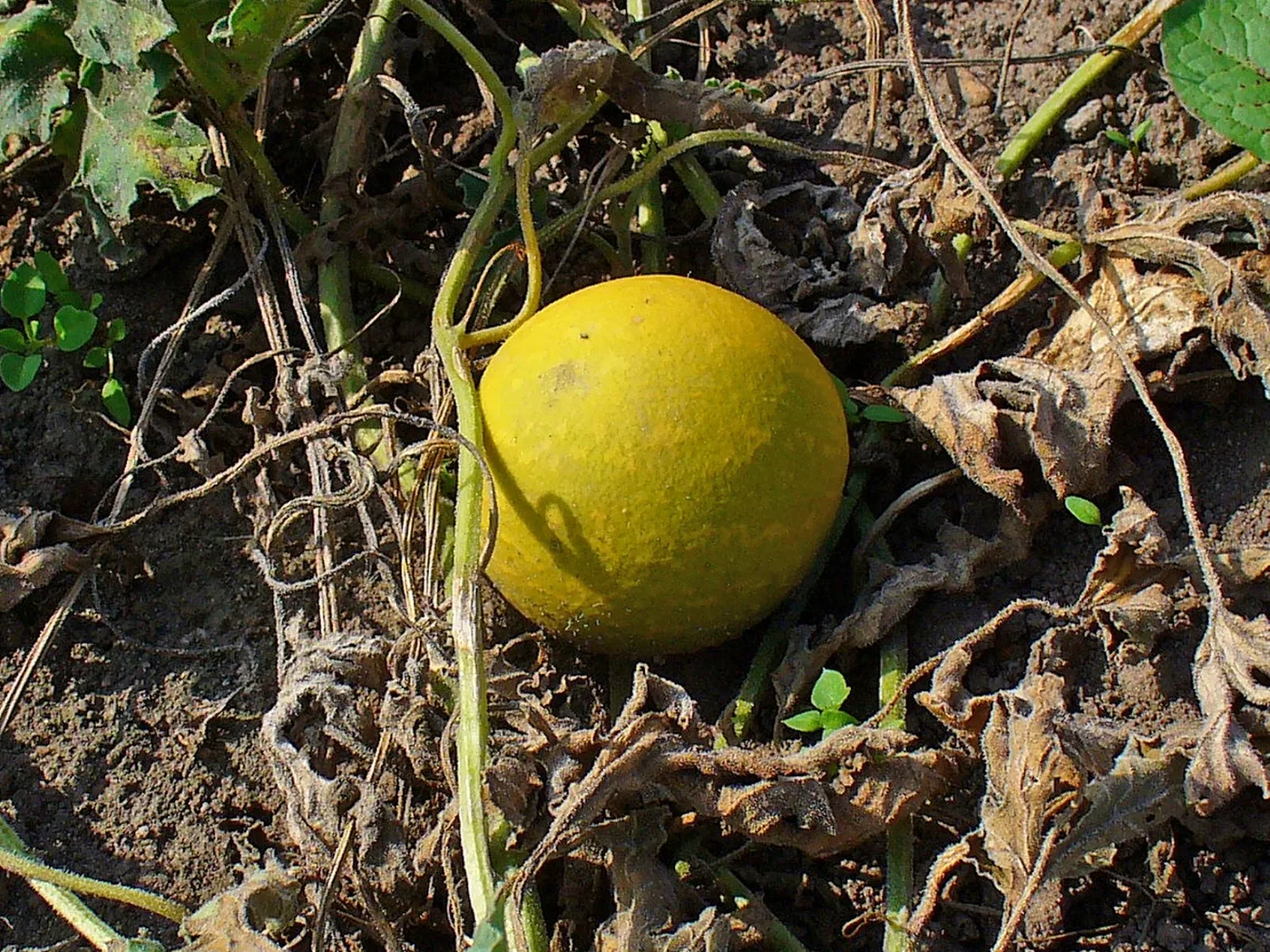
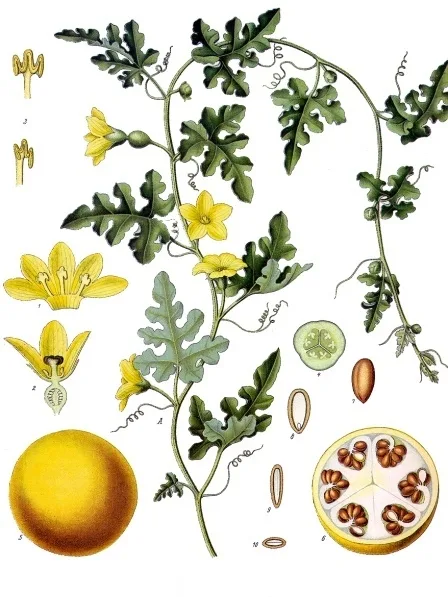
The colocynth vine is like a melon, cucumber, or calabash vine. It has a thick, watery root, which can penetrate deep into the ground. Its stems creep on the ground, clinging to bushes or fences with their tendrils. Its leaves are triangular and lobed like melon leaves. Its yellow flowers develop into round yellow fruits the size of a large apple or grapefruit. The shell of the fruit is hard and smooth, and inside is a spongy pulp with white or brown seeds.
Special significance
Translation
The colocynth grows throughout the Mediterranean region and in western Asia. Some translators will lack a generic word for climbing plants, but they may have a more general word “plant.” Alternatively, a phrase such as “wild cucumber” could be used. An important point to remember is that the Hebrew phrase paqu‘oth sadeh (“wild gourds”) in 2KI 4:39 is generic and that the young prophet himself did not recognize the fruit. So the story makes most sense if the expression is quite generic. Biblical botanists are fairly sure the vine he discovered was the colocynth, but this is, in a sense, beside the point of the story, since it is intended to demonstrate God’s miraculous power.
Possibilities for the transliteration of “colocynth” are French coloquinthe, Spanish/Portuguese coloquinta, and Arabic banzal.