Description and usage
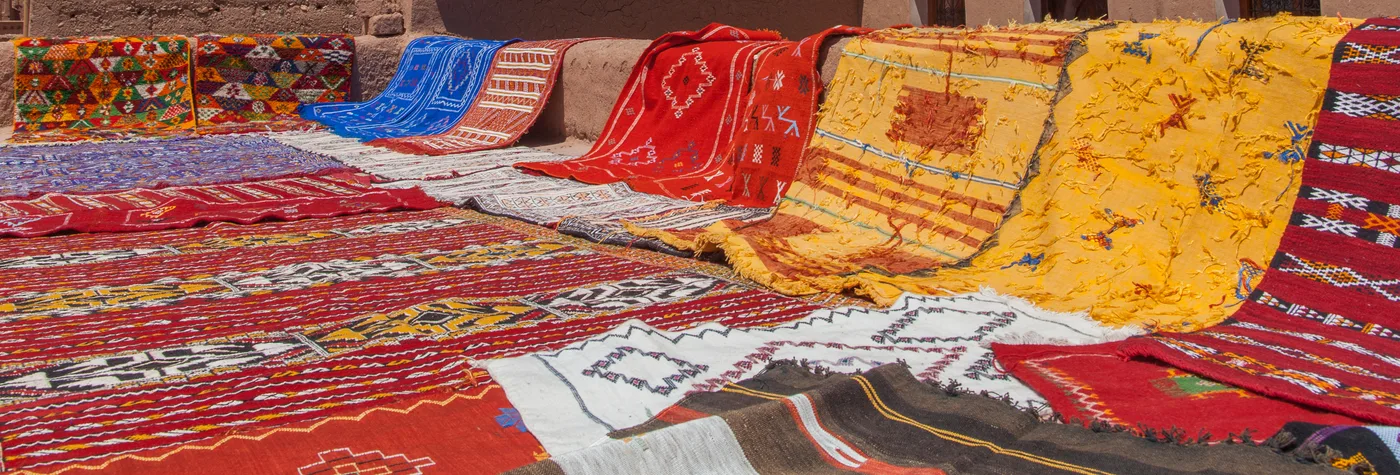
The carpet was a covering for the floor of a room. It could be made of skins or cloth, usually woven from the hair of animals.
Translation
EZK 27:24: Like the other words in this entry, the Hebrew word genez may appear only once in the Bible. REB understands it to mean “stores” (see EST 3:9; EST 4:7, and Treasury, strongroom), and GECL has “garments,” but most translations agree that it means “carpets” (RSV, GNT) or “rugs” (NIV).
JDG 5:10: The meaning of the Hebrew word mad here is uncertain, so translations vary widely. A brief survey shows the following renderings: “rich carpets,” “carpets” (RSV, NRSV, ITCL, GECL, SPCL, Luther, BE); “saddles,” “saddle-cloths,” “saddle blankets” (GNT, REB, NIV, NCV); “caparisons” (JB); “rich cloths” (the Jewish Publication Society’s The Holy Scriptures); “judgment” (Vulgate, KJV). In this verse the speakers address a broad range of society, but it is unclear if they divide society into three groups (RSV “you who ride on tawny asses, you who sit on rich carpets, and you who walk by the way”) or into two groups (CEV “Whether you ride on a donkey with a padded saddle or have to walk”). The decision on how many groups are in view depends on the meaning adopted for the Hebrew word mad. Since saddles were frequently made of a piece of cloth that closely resembled a floor rug, those riding on donkeys could be the same as those sitting on (a saddle made of) a carpet.
ISA 21:5: Some older translations (for example, KJV) rendered the Hebrew word tsafith here as “watchtower.” It is now commonly accepted that it probably means a floor carpet on which people sat while eating.
JDG 4:18: The Hebrew word smikah appears only here in Scripture. It designates a thick cloth, perhaps a vertical hanging in a tent or a floor rug that could serve as a cover against the cold. GNT follows the first option by rendering the last clause in this verse as “she hid him behind a curtain.” RSV selects the second option with “she covered him with a rug.” If the second option is chosen, the translator may want to follow the example of CEV by adding some implicit information here: “[Sisera lay down, and] Jael covered him with a blanket.”