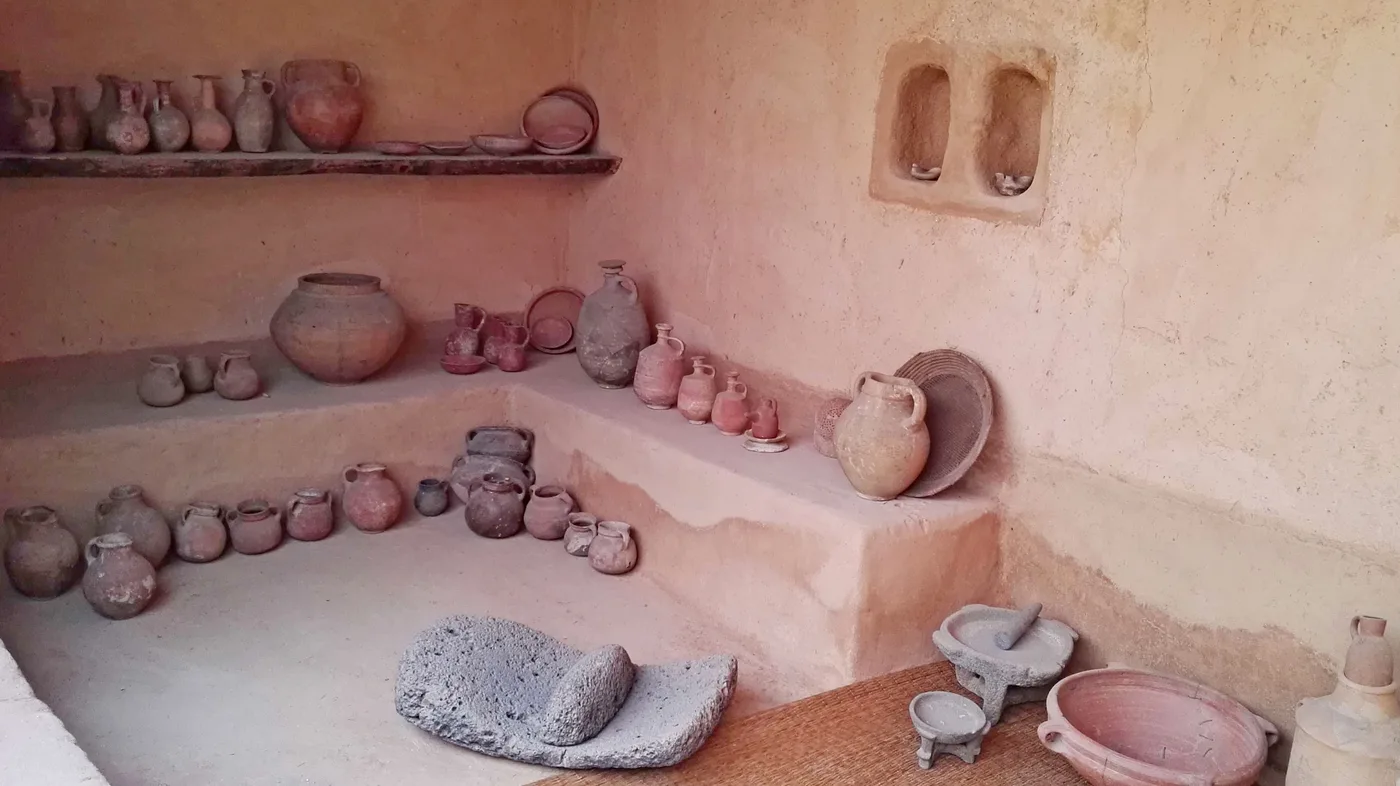
Cooking pot, kettle

Ceramic cooking and storage pots
Ceramic cooking and storage pots (© Bukvoed, CC BY 4.0, via Wikimedia Commons)

Description and usage

The cooking pot was a deep container made of metal or fired earthenware. It was filled with water and placed over a fire. Food was boiled in the water.


Translation

All cultures know some kind of pot for cooking. A distinction will usually need to be made between a flat cooking pan and one that is deeper and is used to boil liquids. The latter is intended here.

In 1SA 2:14 and 2CH 35:13 several words for cooking vessels are listed in a series. It is possible to use an inclusive term rather than try to find separate words for each one; for example, for the list of four containers in 1SA 2:14, GNT and CEV have simply “cooking pot.”
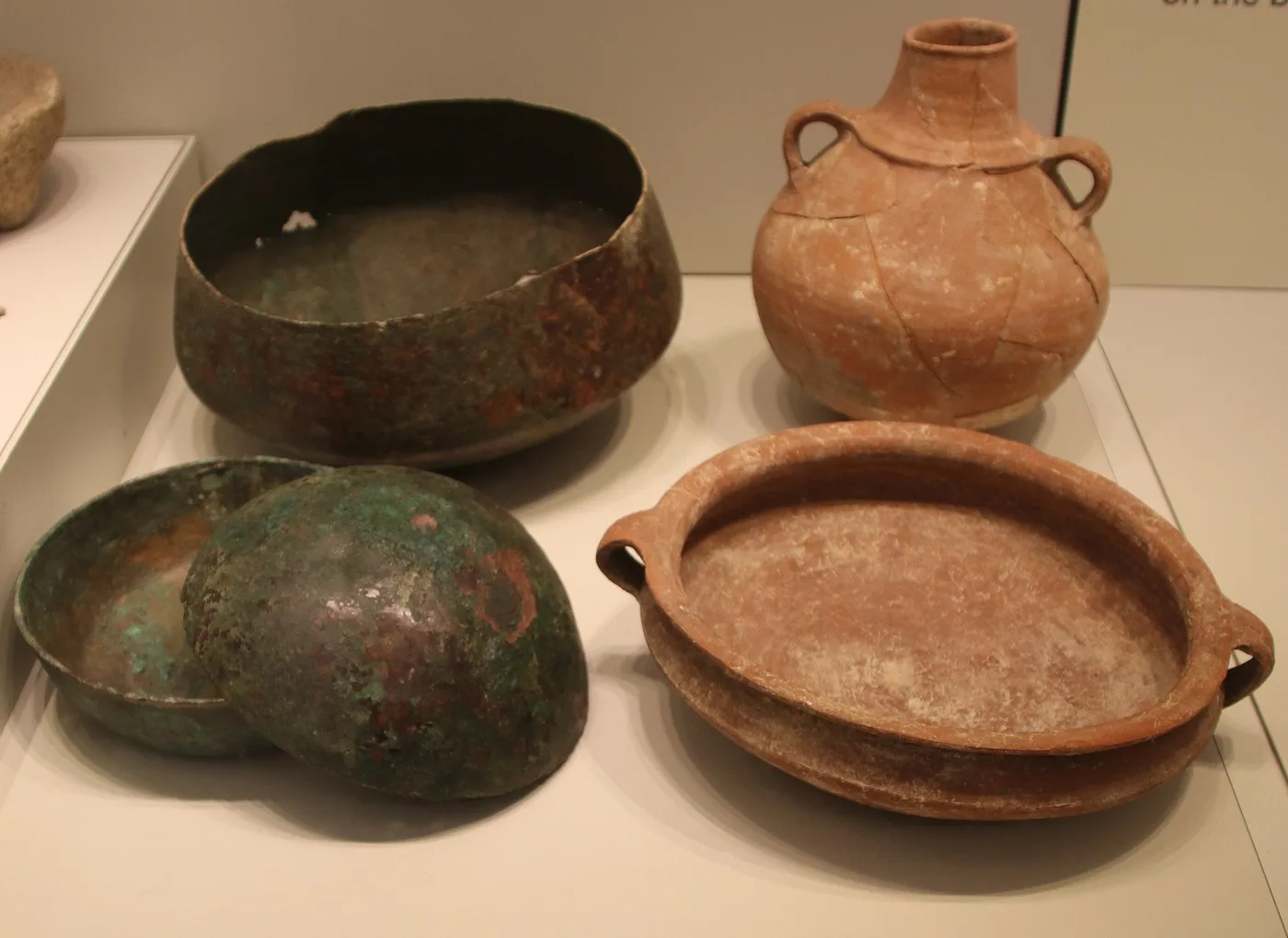
Metal and ceramic cooking pots
Metal and ceramic cooking pots (Gary Todd, Israel Museum, CC0, via Wikimedia Commons)
JOB 41:23 (following comments adapted from A Handbook on The Book of Job): The second line of this verse is literally “like a blown pot and rushes.” RSV, NIV, and GNT all have somewhat different translations, since, as in JER 1:13, “a boiling pot” is literally “a blown pot,” suggesting that it means a pot under which the flame is blown so that its contents boil from the increased heat. RSV interprets the “rushes” as “burning rushes,” while GNT describes the smoke pouring out of Leviathan’s nose as being “like smoke from weeds burning under a pot.” The word “weeds” is a shift to a more general term. The GNT rendering is not a very close translation of the Hebrew. NIV apparently likens the smoke from Leviathan’s nostrils to the vapor “from a boiling pot over a fire of reeds.” This represents the Hebrew more closely than either RSV or GNT, but it is doubtful whether the reeds are really part of the picture in the writer’s mind. A more satisfactory translation for the whole verse is “Smoke pours forth from his snout as from a boiling cooking pot.”

PSA 58:10: The Hebrew of this verse is particularly difficult. Refer to A Handbook on Psalms, page 519.

In MRK 7:4 the vessels in question were kitchen tools, used in preparing or serving food. Most modern translations render the Greek word chalkion here as “pots” (NCV) or “bowls” (CEV). In a number of languages the most natural equivalent for this word is “metal vessel” or “kettle.”

In 2MA 7:3 the Greek words lebēs and tēganon occur together. The lebēs seems to have involved boiling water, so it may be rendered “caldrons” (RSV) or “kettles” (GNT). The tēganon was for cooking without water, that is, frying. In this context both implements would have been very large, so REB renders tēganon as “great pans,” and GNT has “huge pans.”

Scripture References (34)

Scripture References (34)

Leviticus

Numbers

Judges

1 Samuel

1 Kings

2 Chronicles

Ecclesiastes

Micah

Zechariah

Mark