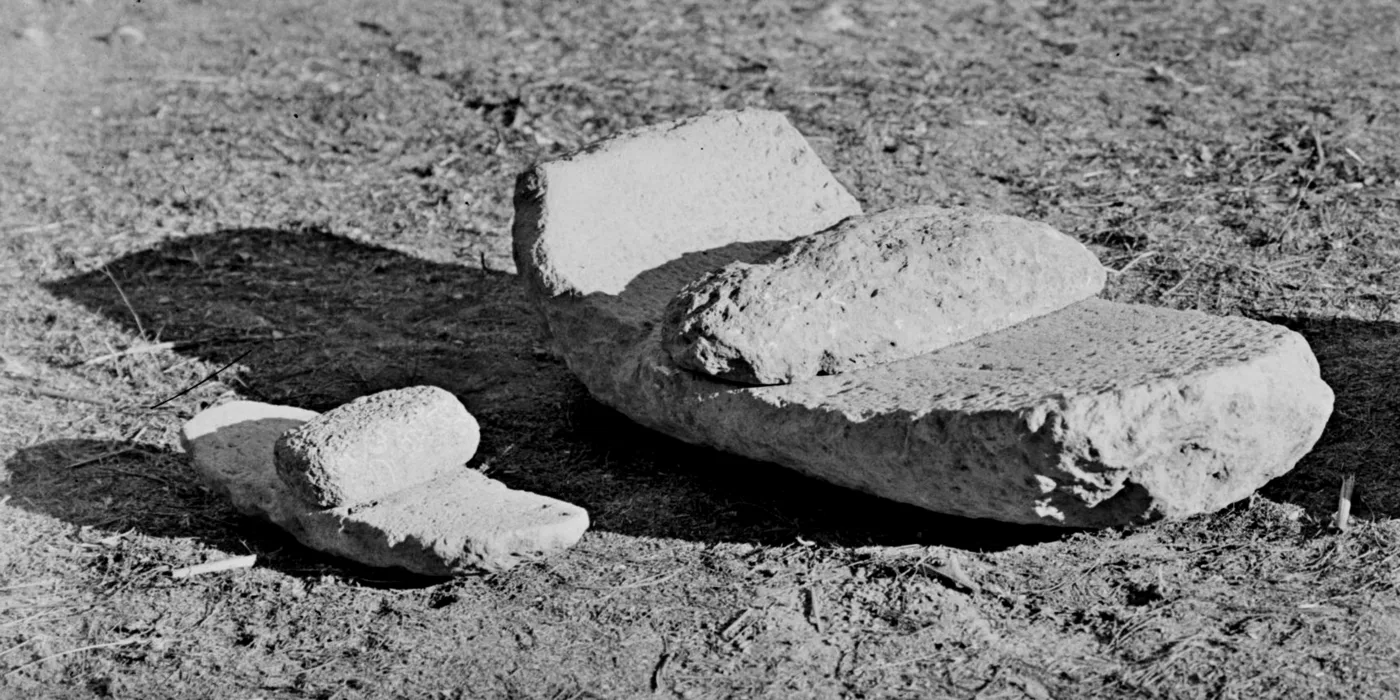
Handmill (Matson Collection, Library of Congress, Public domain, via Wikimedia Commons)
Description and usage
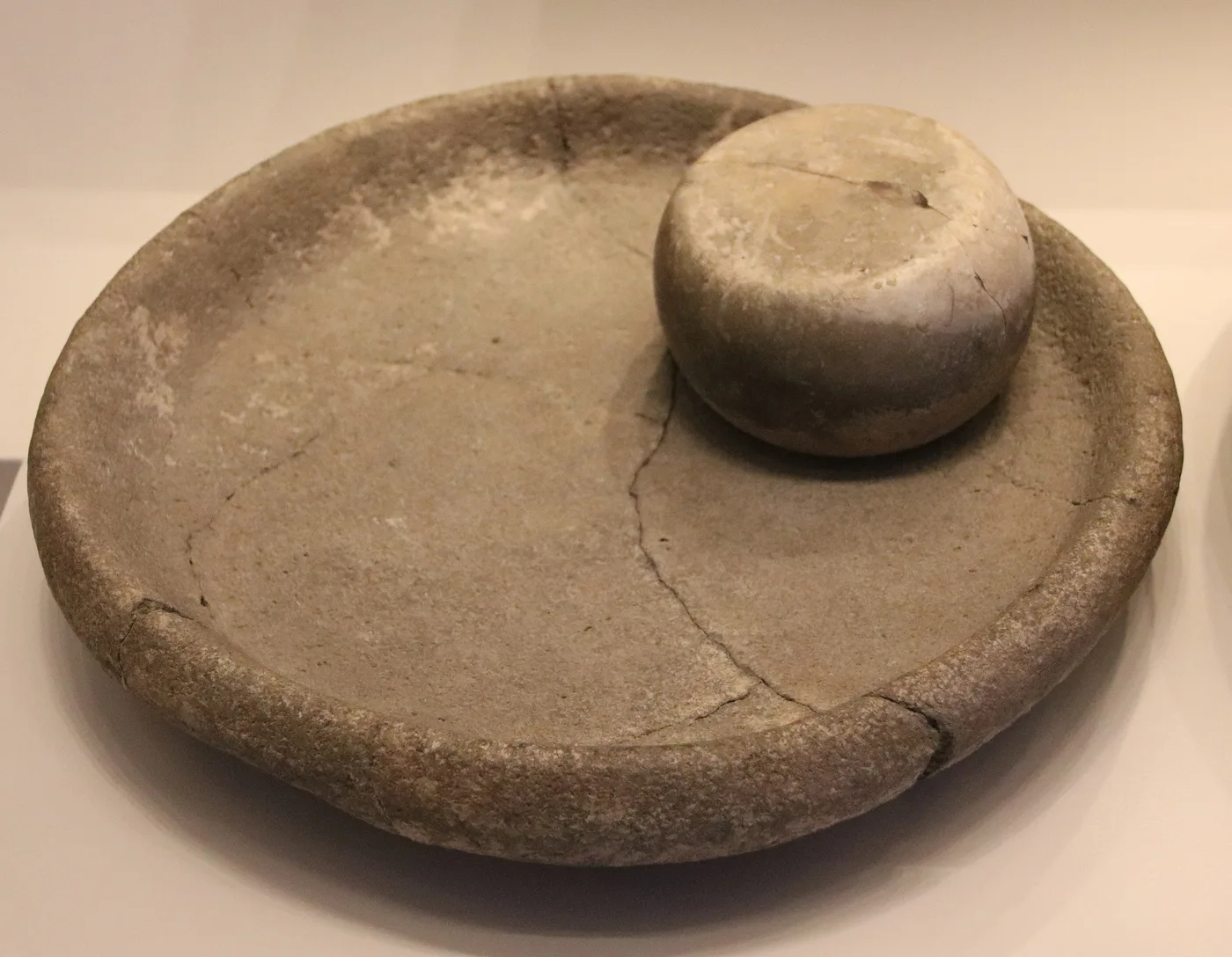
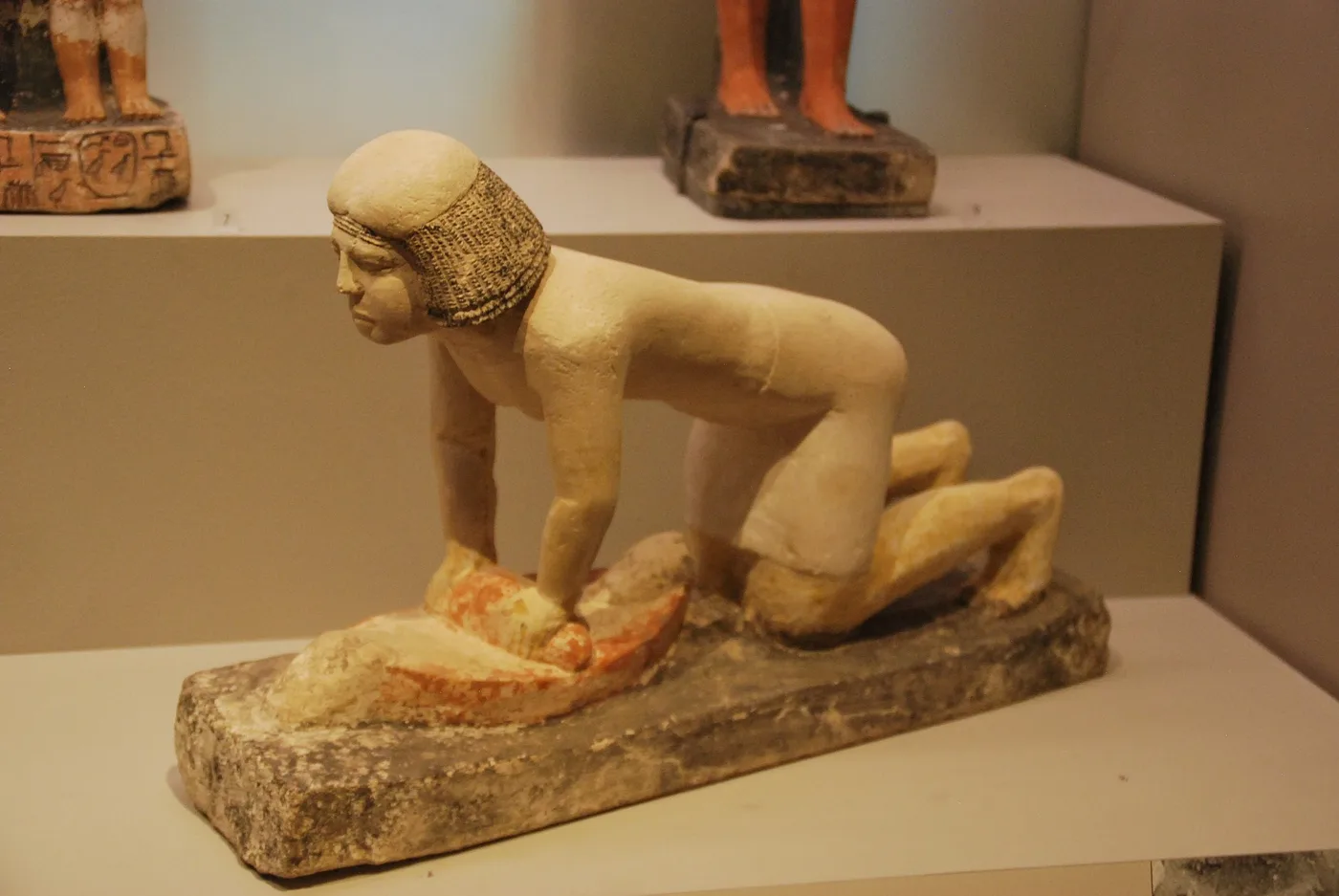
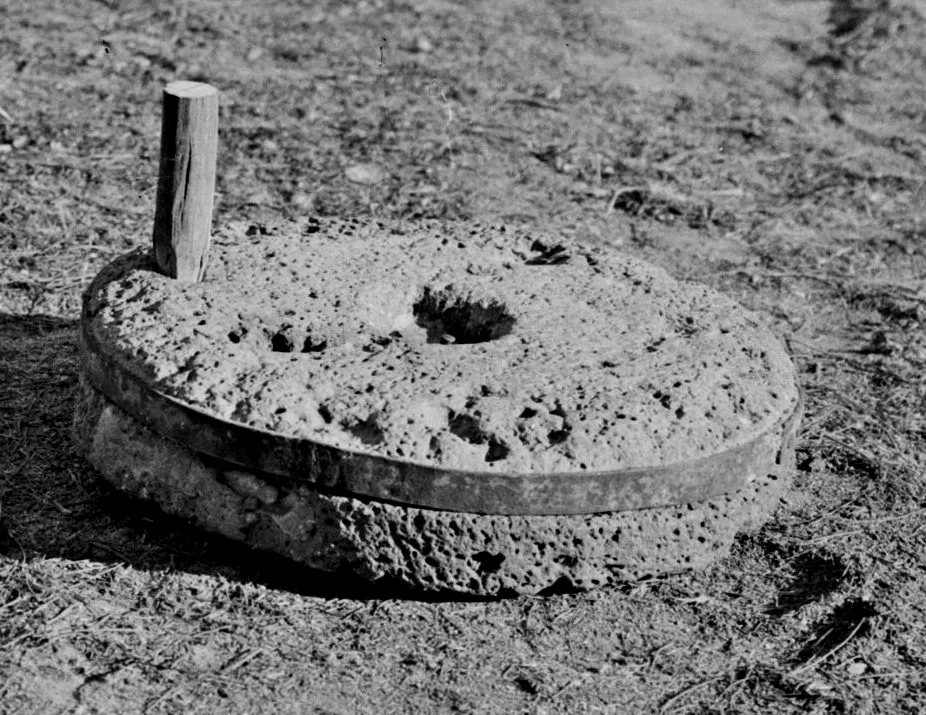
Handmill (Gary Todd, Israel Museum, CC0, via Wikimedia Commons) The mill was two flat stones between which grain was ground into flour by scraping the top stone against the bottom one. In Old Testament times the normal mill was relatively small and operated by hand. The grain was placed on the stationary bottom stone, and the top stone was pressed down on top of the grain and scraped back and forth to grind the grain into flour. The work of grinding was normally done by women in the early hours of the morning before sunrise. It was hard work and took a lot of time. It is estimated that to produce enough flour to make bread for a family of five, a woman would have needed to grind for over three hours each day. The sound of grinding in the early hours by the light of an oil lamp symbolized stability and security. JER 25:10 describes the tragedy that is to come upon the people of Judah when Jeremiah quotes God as saying “I will remove from them … the sound of the millstone and the light of the lamp.”
In many parts of the world, grain is ground in one way or another. Quite frequently mills are of the same general structure as those used in ancient times, in which two relatively large, flat stones were placed one on top of the other, and the grain was ground between the two stones. In some parts of the world, a mortar and pestle are used for the grinding or pounding of grain.
Translation
Frequently the word “millstones” may be rendered “stones for grinding grain.” In other instances, even a more generic expression may be used, for example, “large stones.” In most contexts what is important is either the large size of the stones or the function of grinding grain, not necessarily the particular form of the mill. However, in the context that speaks about tying a millstone to a man’s neck and his being thrown into the depths of the sea (MAT 18:6; MRK 9:42; LUK 17:2), it is important to refer to relatively large stones that would cause a person to sink immediately. In such a context the use of a term for “mortar,” especially one of wood, would hardly be appropriate since it would normally float.