Chariot

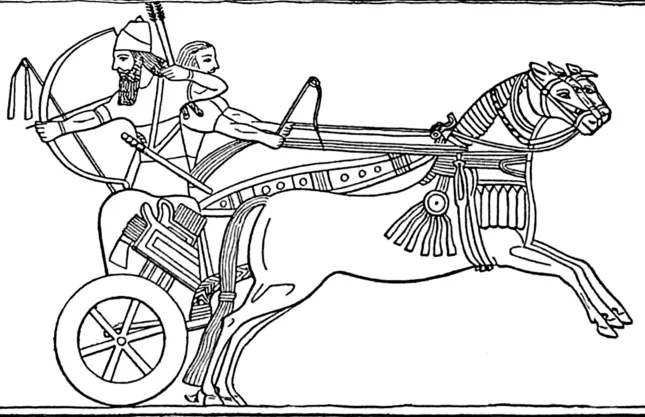
An Assyrian archer shoots from a war chariot
An Assyrian archer shoots from a war chariot (William C. Morey (Outlines of Greek History, pg. 40), Public domain, via Wikimedia Commons)

Description

The chariot was an open vehicle with two or four wheels, used in war or for traveling. War chariots were at first heavy, made of wood, with solid wooden wheels. In later biblical times, they were constructed with a light wooden frame with a standing platform and two wheels set toward the back of the frame. The wheels were a rim with four or six spokes and were set wide apart (about twice the width of the chariot frame) to give extra mobility. The wooden frame was sometimes covered with leather. A pole extended from the center of the front of the frame, and to its end were yoked animals to pull it. It was about 2.5 meters (8 feet) long.


Usage
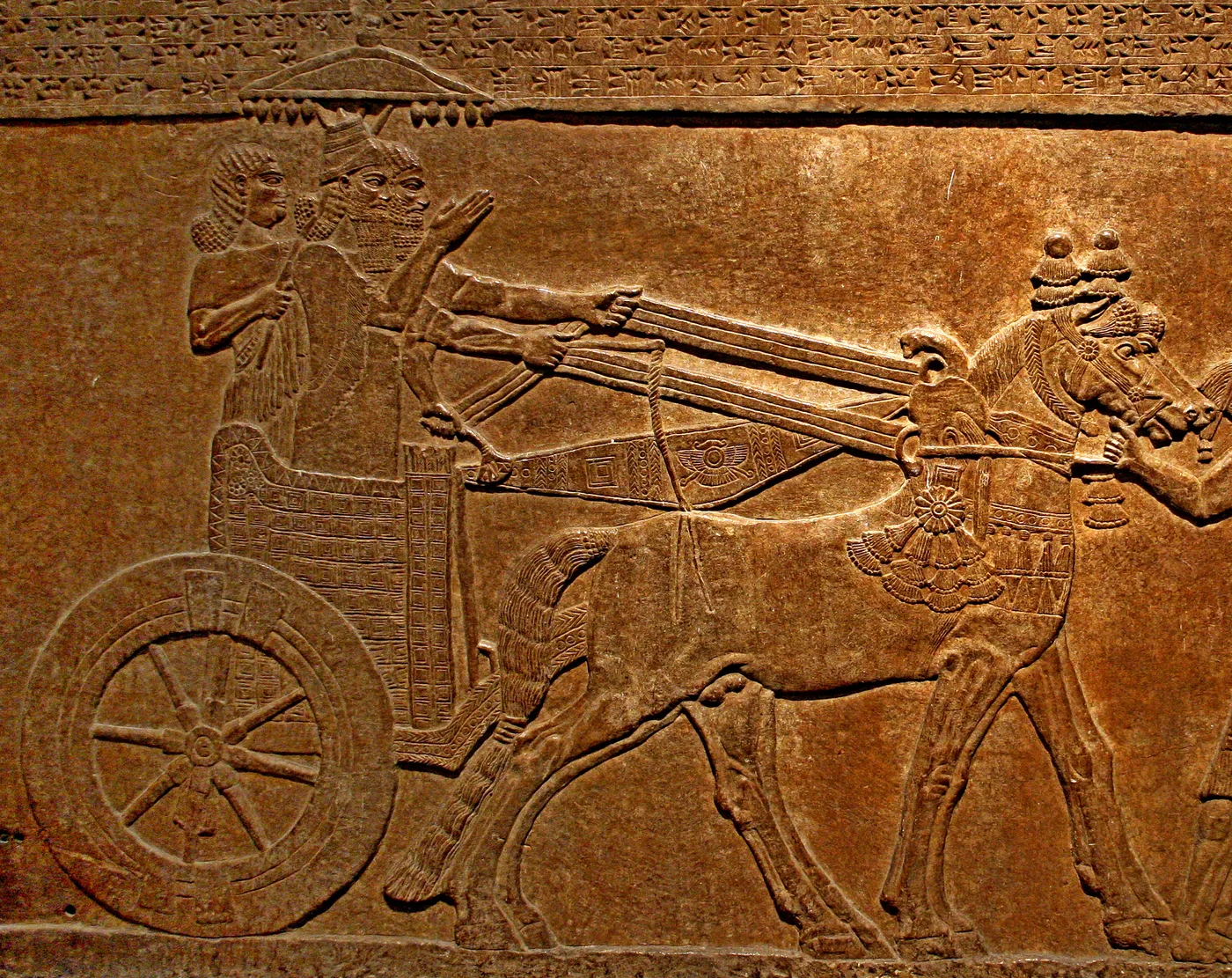
The Assyrian king Tiglath-Pileser III rides in his chariot (ca. 730–727 BCE; palace relief, British Museum)
The Assyrian king Tiglath-Pileser III rides in his chariot (ca. 730–727 BCE; palace relief, British Museum) (David Castor (dcastor), Public domain, via Wikimedia Commons)
The chariot was harnessed to and drawn by two or four horses. It was manned by a driver and usually another soldier. From its platform the soldier could shoot arrows, throw projectiles, or engage in sword combat. It provided speed of movement on the battlefield but was limited to relatively flat and unobstructed terrain. In combat highest priority was given to mobility and speed of movement, so chariots were made of the lightest materials possible, although several references speak of iron chariots. Note that all these references are to early times (JOS 17:16, JOS 17:18; JDG 1:19; JDG 4:3, JDG 4:13). While most translations have simply “iron chariots,” it is possible that these were wooden chariots overlaid with iron (REB “iron-clad chariots”). However, it is more likely that the wood was reinforced at certain places with iron and that the wheels had iron rims, making them much less liable to break on rough ground.

Chariots were also used as a form of transportation, primarily by wealthier people.


Translation

In languages that have no technical term for “chariot,” it is possible to speak of a war chariot as “war carriage,” “horse-drawn war cart,” “war cart pulled by horses,” or “horse-drawn cart for fighting.” A traveling chariot, such as the one mentioned in ACT 8:29, may be rendered “traveling carriage” or “horse-drawn vehicle.”

In SNG 3:10 the Hebrew word merkav indicates the fancy “bench” or “seat” on which the honored chariot rider sat. For the same word at LEV 15:9, see Saddle, saddle cloth.

Scripture References (145)