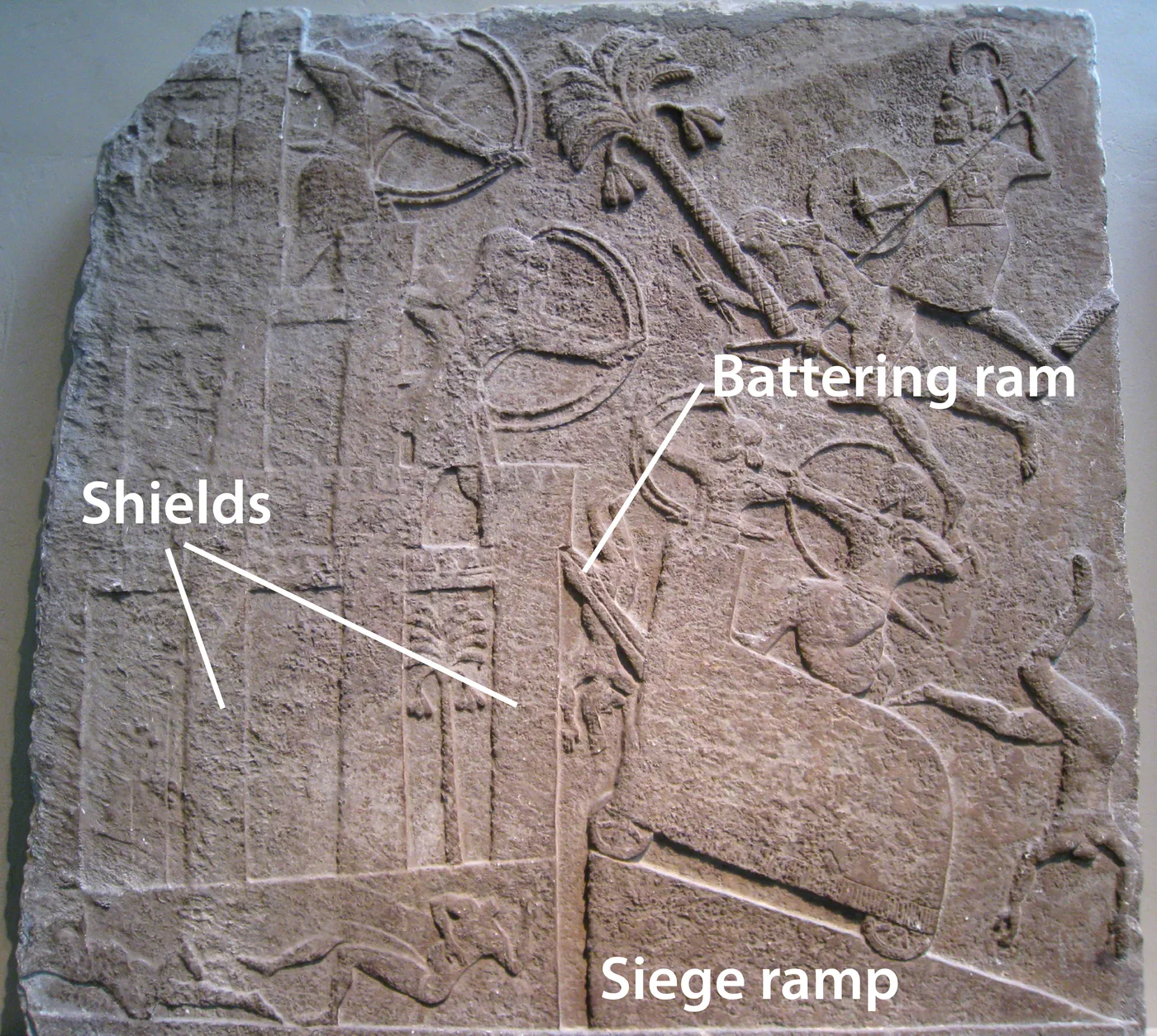
Many ancient cities were surrounded by a high wall for protection. In wartime an attacking army had to find a way to get past the wall and into the city. Five methods were available to the attacker to conquer a fortified city, all of which are reflected in the Bible: 1) penetration over the top of the fortifications; 2) penetration through the fortifications; 3) penetration below the fortifications; 4) penetration by ruse or trickery (JOS 8:0); and 5) siege. Penetration from above was usually done by scaling the walls using ladders (JOL 2:7; JOL 2:8; JOL 2:9). Going through the wall could be done by chopping it with hammers, axes, and other tools, by breaking it down using a catapult, or by breaking or burning the gates (JER 51:58). Frequently, however, this was accomplished with a battering ram (EZK 21:22). The attack on the wall was often aided by the building of a siege tower, which put the attackers on a level with the defenders on the wall, making it easier to attack them with arrows and javelins. Penetration from below usually meant the long process of digging a tunnel under the wall. Sometimes, however, it was possible to use an existing tunnel, such as a shaft connecting the city to its water supply (2SA 5:8).
Defenders of a city were equally ingenious in finding methods to neutralize the efforts of the attacking army. Ladders were pushed over, second walls were built behind the first wall that was about to fall, and large stones or even burning objects could be thrown down on attackers who got close to the wall. In order to protect soldiers working or attacking near the wall, the attacking army would build a large kind of shield that covered the soldiers from above. This device is mentioned by the prophet Nahum: “The attackers rush to the wall and set up the shield for the battering ram” (GNT; NAM 2:6 b).
When an army did not have the equipment to use one of these methods, or when the terrain was too difficult for an attack, the attacking army could just close off all exits from the city and sit tight. This was called a siege. Its objective was to wait until the people inside the city ran out of food or water and were then ready to surrender (2KI 25:0).